Ever found yourself watching a cricket match and wondering, “What are all those white lines doing on the pitch?”
You’re definitely not alone. Those mysterious markings confuse thousands of new cricket fans every single day.
Commentators casually throw around terms like “popping crease” and “return crease” without really explaining what they mean.
Batters desperately dive toward them. Bowlers carefully measure their steps around them. And umpires constantly reference them for crucial decisions.
But here’s the thing: once you understand what these lines actually do, cricket suddenly becomes way easier to follow.
So, how many creases are there in cricket? The simple answer is eight. But they’re just three types of lines that repeat at both ends of the pitch.
Think of them as cricket’s invisible rulebook—painted right onto the field for everyone to see.
How Many Creases Are There in Cricket?
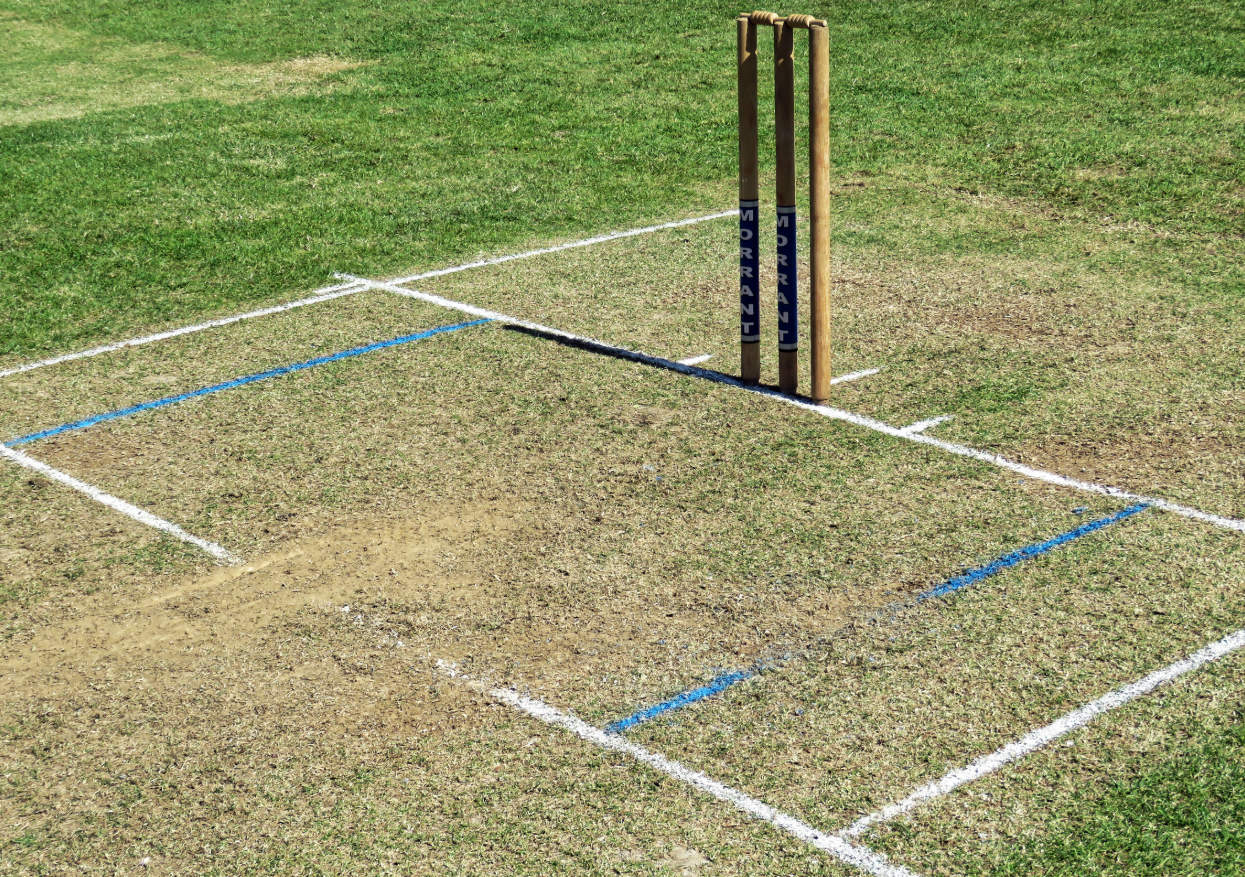
Whether you’re watching IPL matches with friends, trying to understand T20 rules, or just want to follow the game better, this guide will break down everything you need to know about cricket creases.
No complicated jargon. No confusing diagrams. Just straightforward explanations that actually make sense.
Let’s jump in.
Why Do Cricket Creases Even Exist?
Before we count them, let’s talk about why they matter.
Imagine playing a game where nobody knows where the boundaries are. Where batters don’t know if they’re safe. Where bowlers can deliver from anywhere. That would be chaos, right?
That’s exactly why creases exist—they bring order to cricket.
- For Batters: Creases mark the safety zone. Cross the line, ground your bat, and you’re protected from being run out. Stay outside, and you’re vulnerable.
- For Bowlers: Creases define where you can legally deliver the ball from. Step over them incorrectly, and you’ve committed a no-ball—giving away free runs and sometimes a free hit.
- For Umpires: Creases provide crystal-clear reference points. When decisions come down to millimeters—and trust me, they often do—these white lines become the ultimate authority.
In professional cricket, careers have been made or broken by inches on these lines. Matches worth millions of dollars have been decided by whether a player’s bat crossed the crease in time.
That’s the power of these simple painted markings.
How Many Creases Are There in Cricket? Breaking Down the Numbers
Here’s your straightforward answer: there are eight creases total on a standard cricket pitch.
Now, before that number sounds overwhelming, here’s the really simple part:
There Are Only 3 Types:
- Popping Crease
- Bowling Crease
- Return Crease
Each Type Appears at Both Ends:
Since cricket is played from both ends of the 22-yard pitch, these three types get repeated. That’s how we reach eight.
Here’s the exact breakdown:
- 2 Popping Creases (one at each end)
- 2 Bowling Creases (one at each end)
- 4 Return Creases (two at each end, one on each side)
Total = 8 creases
And here’s something important: whether you’re asking how many creases are there in cricket T20, how many creases are there in cricket IPL, or even how many creases are there in cricket in India—the answer never changes. It’s always eight.
The format doesn’t matter. Test cricket, ODI, T20, IPL, BBL, PSL—they all use identical pitch markings. The Laws of Cricket, governed by the Marylebone Cricket Club (MCC), standardize these measurements globally.
Even in video games like Cricket 24, developers use the same eight creases to maintain realism.
Quick Visual Guide: All Creases at a Glance
Sometimes a table just makes everything clearer. Here’s your cheat sheet:
| Crease Type | How Many? | Where Is It? | What’s It For? | Key Measurement |
|---|---|---|---|---|
| Popping Crease | 2 (one per end) | 4 feet in front of stumps | Batter safety & no-ball line | 4 feet from stumps |
| Bowling Crease | 2 (one per end) | Directly under the stumps | Legal delivery mark | 8 ft 8 in long |
| Return Crease | 4 (two per end) | Vertical lines on the sides | Controls the bowler’s back foot | 8 ft 8 in apart |
Bookmark this table. Seriously. Next time you’re watching a match and get confused, just pull this up and everything will click.
The Popping Crease: Your Lifeline
Let’s start with the most famous one—the popping crease. This is the line that appears in dramatic slow-motion replays when batters dive desperately to save their wicket.
- Where Exactly Is It?
The popping crease sits exactly 4 feet (1.22 meters) in front of the stumps. It runs horizontally across the pitch, parallel to the bowling crease.
- What Does It Actually Do?
Think of it as your safety zone. When you’re batting and running between wickets, you need to get your bat or any part of your body grounded behind this line to be considered “safe.”
If fielders break the stumps before you cross them—you’re out. Run out. Gone. Walking back to the pavilion.
The same applies to stumpings. If you step out to play a shot and the wicketkeeper whips off the bails while you’re outside the crease, you’re stumped. Out.
- The No-Ball Connection
Here’s where it gets interesting for bowlers. When delivering the ball, the bowler’s front foot must land behind (or on) the popping crease. If any part of their foot completely crosses over this line, no-ball.
And no-balls are expensive. The batting team gets a free run. In limited-overs cricket (T20s, ODIs), it usually triggers a “free hit”—meaning the next ball can’t dismiss the batter except through run-out.
- Real-Life Drama:
Remember when Ben Stokes bowled what seemed like a match-winning wicket, only for replays to show his toe had marginally crossed the popping crease? The wicket got overturned. The no-ball stood. Momentum completely shifted.
That’s cricket at its finest—where half an inch determines everything.
- Cricket Crease Length in Feet:
The popping crease extends across the entire width of the pitch with no specified endpoints. But its critical measurement is always 4 feet from the stumps.
The Bowling Crease: Where It All Begins
The bowling crease might seem less dramatic, but it’s literally the foundation of cricket—because the stumps stand on it.
- Where Is It Located?
Right underneath the three wooden stumps at each end. It runs perpendicular to the pitch direction (horizontally when you’re looking down the pitch).
- What’s Its Purpose?
This crease marks the base position for everything. The stumps are placed exactly along this line. It defines the legal delivery area for bowlers and serves as a reference point for multiple rules.
- The Measurement That Matters:
The bowling crease is exactly 8 feet 8 inches long (2.64 meters). This measurement is identical worldwide—whether you’re playing in Mumbai, Melbourne, or Manchester.
- Why Bowlers Care:
While the popping crease controls the front foot, the bowling crease works with return creases to manage the back foot. Together, they create the legal “box” from which bowlers must deliver.
- Stump Placement:
The three stumps are centered perfectly on the bowling crease. The middle stump sits dead center, with the leg and off stumps positioned 4.5 inches apart on either side.
This precise placement ensures fairness. Batters know exactly where they’re defending. Bowlers know exactly what they’re aiming at.
The Return Crease: The Forgotten Hero
Most casual fans focus on the first two creases and completely ignore this one. Big mistake.
- What Makes It Different?
Unlike the popping and bowling creases (which run horizontally), return creases run vertically—up and down alongside the pitch.
- Where Are They?
There are two at each end, positioned on either side of the stumps. They extend at right angles from the bowling crease.
- What Do They Control?
Return creases govern where a bowler’s back foot can land during delivery. The back foot must land inside or touch these vertical lines. Step outside? No-ball. Illegal delivery. Penalty runs.
- Why Does This Rule Exist?
Imagine if bowlers could deliver from extreme angles—way off to the left or right of the stumps. It would be nearly impossible for batters to judge line and length. The game would become unfair.
Return creases keep bowling within reasonable boundaries, ensuring batters have a fair chance.
- The Critical Distance:
The two return creases at each end are 8 feet 8 inches apart—matching the bowling crease length. They form a rectangular zone within which bowlers must operate.
- What Is Return Crease in Cricket?
In simple terms: it’s the vertical boundary line that prevents bowlers from delivering at unfair angles. Ignore it at your own risk—because umpires are watching closely.
Do Different Formats Use Different Creases?
Great question. The short answer: Nope. Not at all.
Whether you’re watching:
- Five-day Test cricket
- 50-over ODIs
- 20-over T20 internationals
- IPL franchise matches
- Local club cricket
The pitch markings stay identical. Eight creases. Same measurements. Same rules.
- How many creases are there in cricket in India? Eight.
- What about in Australia or England? Eight.
- Even in video games like Cricket 24? You guessed it—eight.
The MCC Laws of Cricket standardize these measurements globally.
This ensures that whether you’re playing street cricket in Delhi or a Test match at Lord’s, the fundamental structure remains consistent.
Only the pitch surface changes (grass length, hardness, moisture). The crease markings? Always the same.
Why Groundsmen Repaint Creases Before Every Match?
Ever noticed those fresh, bright white lines at the start of play? There’s a good reason for that.
Creases fade incredibly fast. Players run over them constantly. The ball lands on them. Weather (rain, sun, dew) affects visibility. By the end of a long match, those lines can become barely visible.
And here’s the problem: umpires need clear markings for split-second decisions. During tight run-outs or marginal no-balls, even slightly faded lines can cause controversy.
That’s why professional groundsmen meticulously repaint every crease before play begins—using specialized white paint and measuring tools to ensure perfect accuracy.
In international cricket, officials actually verify measurements before matches. Even a half-inch error could affect gameplay and potentially change match outcomes.
Real Match Moments Where Creases Made History
- 1. MS Dhoni’s Lightning-Fast Run-Out (2016)
In a T20 match against New Zealand, Ross Taylor attempted a risky second run. Dhoni received the ball, turned, and broke the stumps in one fluid motion—all before Taylor’s bat could cross the popping crease. Out by inches. Match-winning moment. Pure brilliance.
- 2. The 2019 World Cup Final Drama
England versus New Zealand. The most dramatic cricket match ever played. Multiple run-outs came down to frame-by-frame analysis. Batters dove desperately. Third umpires examined every angle. The popping crease became the most scrutinized line in sports history that day.
- 3. Stokes’ Costly No-Ball
Ben Stokes bowled a wicket-taking delivery in a crucial Test match. Celebrations erupted. Then replays showed his front foot had marginally crossed the popping crease. Wicket overturned. No-ball called. The momentum shifted entirely, potentially changing the match result.
These aren’t just statistics—they’re moments where millimeters on a white line determined sporting destiny.
Common Mistakes Even Experienced Players Make
- Not Grounding Properly:
Some batters reach the crease but don’t actually ground their bat or body behind it. Just touching the line isn’t enough—you must be grounded behind it.
- Overstepping During Delivery:
Even international bowlers sometimes get their rhythm wrong and overstep the popping crease. It’s embarrassing, costly, and completely avoidable with proper practice.
- Confusing Return Creases with Boundaries:
New players sometimes think return creases mark the pitch boundaries. They don’t. They’re purely for controlling bowler positioning.
- Ignoring the Back Foot:
Bowlers focus so much on their front foot (popping crease) that they forget about back foot placement (return crease). Both matter equally for legal deliveries.
Types of Creases in Cricket: The Final Summary
Let’s wrap up the types of creases in cricket one last time with crystal clarity:
1. Popping Crease
- Horizontal line 4 feet in front of stumps
- Batter’s safety zone for run-outs and stumpings
- Bowler’s front foot no-ball line
- Most frequently referenced in matches
2. Bowling Crease
- Horizontal line under the stumps
- 8 feet 8 inches long
- Base position for stump placement
- Mark’s legal delivery zone foundation
3. Return Crease
- Vertical lines on both sides of the stumps
- Controls the bowler’s back foot placement
- 8 feet 8 inches apart
- Prevents unfair angle deliveries
Together, these three types (repeated at both ends) create the eight creases that structure every cricket pitch worldwide.
Why These Lines Matter More Than You Think?
Cricket is a game of inches. Literally.
Championships have been won because a batter’s bat crossed the line a fraction of a second before the stumps were broken.
Matches have been lost because a bowler’s toe landed half an inch over the crease.
Understanding creases transforms you from someone who just watches cricket to someone who truly gets it.
You’ll start noticing the tactical decisions. The split-second judgments. The athletic brilliance is required to execute perfectly around these boundaries.
Next time you watch a match, pay attention to:
- How batters accelerate that final step to reach the crease
- How bowlers carefully measure their run-ups to avoid overstepping
- How fielders target the crease during run-out attempts
- How umpires instantly glance at crease positions for every decision
Those white lines aren’t just paint. They’re the invisible referees that keep cricket fair, competitive, and endlessly dramatic.
Frequently Asked Questions
- How many creases are there in cricket?
There are eight creases total: 2 popping creases, 2 bowling creases, and 4 return creases (two at each end of the pitch).
- What is a bowling crease in cricket?
The bowling crease is the horizontal line underneath the stumps, measuring 8 feet 8 inches long. It marks the base position for stump placement and helps define the legal bowling zone.
- What is a return crease in cricket?
Return creases are vertical lines on both sides of the stumps that control where a bowler’s back foot can land. Stepping outside them results in a no-ball.
- How many creases are there in cricket T20?
Exactly eight, just like in Test cricket and ODIs. All formats use identical crease markings regardless of match length.
- How many creases are there in the cricket IPL?
Eight creases. IPL matches follow the same MCC Laws as all other cricket formats, so the pitch markings remain standard.
- What’s the cricket crease length in feet?
The popping crease is 4 feet in front of the stumps. The bowling crease measures 8 feet 8 inches long. Return creases are 8 feet 8 inches apart.
- Can a batter be safe if their bat touches the crease line?
No. The bat or body must be grounded behind the line, not on it. Touching the line while bales are removed means you’re out.
- Do they repaint creases before every match?
Yes. Groundsmen freshly mark all creases before each match to ensure visibility and accuracy for umpiring decisions.
- How many creases are there in the Cricket 24 game?
The video game Cricket 24 accurately replicates real cricket rules, featuring all eight creases with correct measurements and positioning.
- What happens if a bowler crosses both the popping and return creases?
It’s still just one no-ball, but it shows seriously poor bowling technique. The batting team gets one extra run (and often a free hit in limited-overs cricket).
Also Check:
- How Many Innings in Cricket
- Cricket Team Names and Logos
- Types of Bowling in Cricket
- Worst Pitch in Test Cricket History
About the Author
