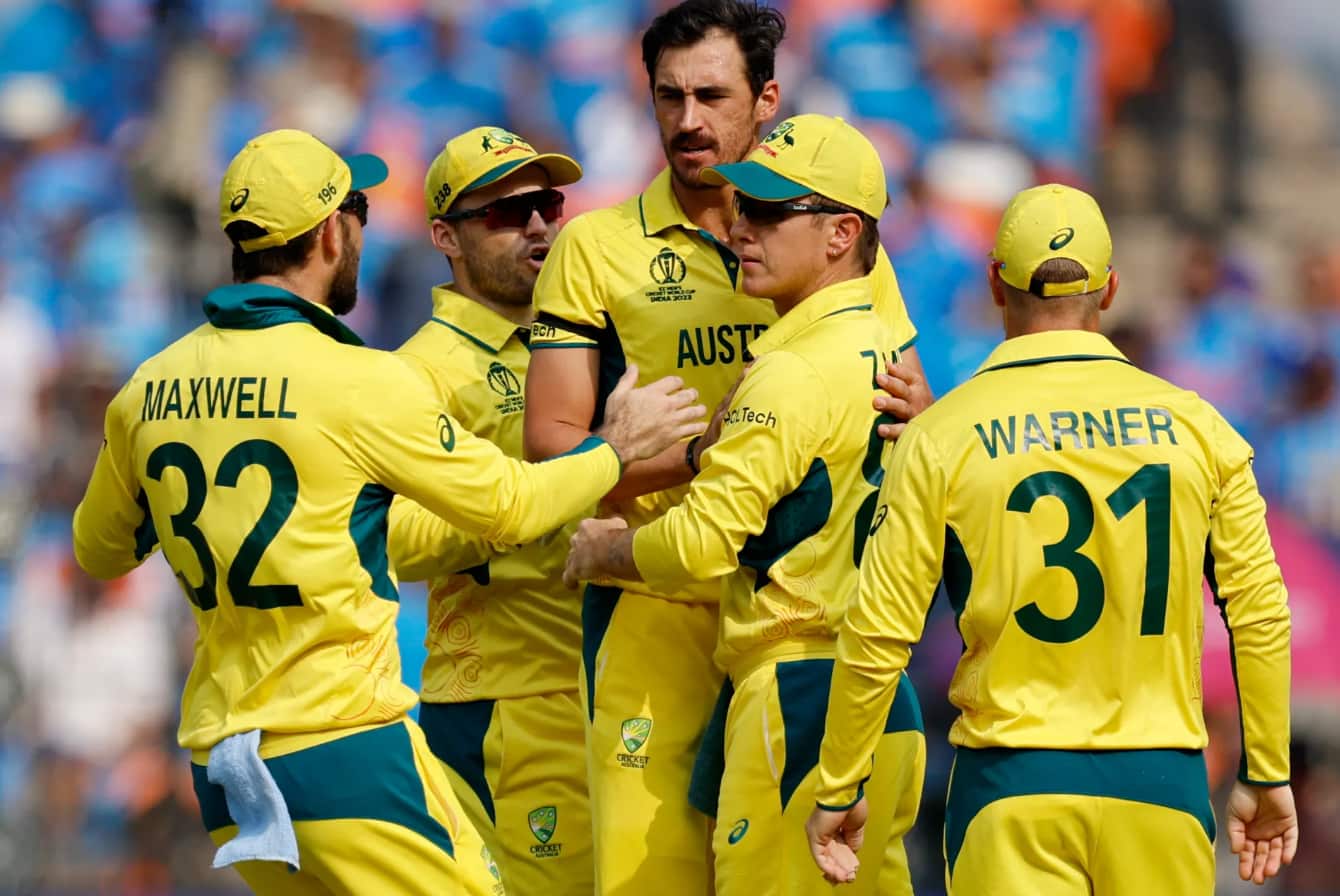
Australia fields format-specific squads built around core multi-format players.
Selection policies balance experience with emerging talent across batting, bowling, and all-round departments.
The Australia cricket team squad for odi, t20i and Test 2026-2027 demonstrates Cricket Australia’s strategic approach to workload management and performance optimization.
Leadership remains consistent in red-ball cricket while white-ball formats prioritize tactical flexibility.
Squad compositions reflect format requirements.
Tests demand technique and endurance, ODIs balance aggression with stability, and T20Is emphasize power-hitting and death-overs execution.
Australia Cricket Team Squad for ODI, T20I, and Test 2026-2027
Also Check:
Australia Cricket Team Squad for ODI, T20I, and Test 2026
| Format | Captain | Core Batters | Lead Bowlers | All-Round Options | Wicketkeepers |
|---|---|---|---|---|---|
| ODI | Pat Cummins | Steven Smith, Travis Head, Marnus Labuschagne | Mitchell Starc, Josh Hazlewood, Adam Zampa | Glenn Maxwell, Aaron Hardie, Sean Abbott | Josh Inglis, Alex Carey |
| T20I | Mitchell Marsh | Travis Head, Jake Fraser-McGurk, Tim David | Pat Cummins, Mitchell Starc, Adam Zampa | Glenn Maxwell, Marcus Stoinis, Cameron Green | Josh Inglis |
| Test | Pat Cummins | Steven Smith, Marnus Labuschagne, Usman Khawaja | Josh Hazlewood, Mitchell Starc, Nathan Lyon | Mitchell Marsh, Beau Webster | Alex Carey, Josh Inglis |
The Australia Cricket Team Squad for ODI, T20I, and Test 2026 shows strategic overlap in key positions.
Travis Head, Josh Inglis, and Pat Cummins feature across multiple formats, providing continuity during concurrent series.
Format specialists include Nathan Lyon and Usman Khawaja in Tests, while Tim David and Jake Fraser-McGurk focus on white-ball cricket.
This separation allows targeted skill development without format-switching fatigue.
Australia Cricket Team Squad for ODI 2026-2027
| Player Name | Playing Role | Batting Style | Bowling Style |
|---|---|---|---|
| Pat Cummins | Captain / Pace Bowler | Right-hand | Right-arm fast |
| Steven Smith | Batter | Right-hand | Right-arm leg-spin |
| Marnus Labuschagne | Batter | Right-hand | Right-arm leg-spin |
| Travis Head | Batter | Left-hand | Right-arm off-spin |
| Josh Inglis | Wicketkeeper-Batter | Right-hand | – |
| Alex Carey | Wicketkeeper-Batter | Left-hand | – |
| Glenn Maxwell | All-Rounder | Right-hand | Right-arm off-spin |
| Mitchell Starc | Pace Bowler | Left-hand | Left-arm fast |
| Josh Hazlewood | Pace Bowler | Right-hand | Right-arm fast-medium |
| Adam Zampa | Spin Bowler | Right-hand | Right-arm leg-spin |
| Jake Fraser-McGurk | Batter | Right-hand | – |
| Matthew Short | Batter | Right-hand | Right-arm off-spin |
| Aaron Hardie | All-Rounder | Right-hand | Right-arm fast-medium |
| Sean Abbott | All-Rounder | Right-hand | Right-arm fast-medium |
| Nathan Ellis | Pace Bowler | Right-hand | Right-arm fast-medium |
| Spencer Johnson | Pace Bowler | Right-hand | Left-arm fast |
- Top-Order Structure: The Australia Cricket Team Squad for ODI 2026-2027 places Smith and Labuschagne at three-four, anchoring the innings. Head opens with explosive intent while Fraser-McGurk provides powerplay acceleration as a backup option.
- Bowling Combinations: Starc, Hazlewood, and Cummins form the pace trio with 850-plus combined ODI wickets. Ellis and Johnson offer rotation options during multi-match series to manage workload.
- Middle-Overs Control: Zampa bowls through the 10-40 over phase with Maxwell supporting as a part-timer. This spin-pace balance suits subcontinental and home conditions equally.
- Leadership Core: Cummins captains with Smith as vice-captain. Starc, Hazlewood, and Maxwell bring World Cup experience spanning multiple tournaments and bilateral series.
Australia Cricket Team Squad for T20I 2026-2027
| Player | Key Skill | Tactical Role | Powerplay / Death Overs Value |
|---|---|---|---|
| Mitchell Marsh | All-Rounder | Opener / Pace option | Powerplay aggression |
| Travis Head | Batter | Opener | Powerplay boundary-hitting |
| Jake Fraser-McGurk | Batter | Top-order | Powerplay strike-rate |
| Josh Inglis | Wicketkeeper-Batter | Middle-order | Middle-overs acceleration |
| Glenn Maxwell | All-Rounder | Finisher / Spin | Death-overs striking |
| Tim David | Batter | Finisher | Death-overs power |
| Marcus Stoinis | All-Rounder | Finisher / Pace | Death bowling and batting |
| Cameron Green | All-Rounder | Top-order / Pace | Powerplay and death bowling |
| Pat Cummins | Pace Bowler | Death specialist | Yorker execution |
| Mitchell Starc | Pace Bowler | New-ball specialist | Powerplay wickets |
| Josh Hazlewood | Pace Bowler | Middle-overs control | Economy maintenance |
| Spencer Johnson | Pace Bowler | Death bowler | Yorker accuracy |
| Adam Zampa | Spin Bowler | Middle-overs wicket-taker | Dot-ball pressure |
| Sean Abbott | All-Rounder | Pace backup | Death-overs utility |
| Aaron Hardie | All-Rounder | Middle-order / Pace | Middle-overs flexibility |
| Cooper Connolly | All-Rounder | Middle-order / Spin | Left-arm spin variation |
| Ben Dwarshuis | Pace Bowler | Left-arm pace | Powerplay angle variation |
- Power-Hitting Resources: The Australia Cricket Team Squad for T20I 2026-2027 features six players with T20 strike-rates above 140. Head and Fraser-McGurk attack in the powerplay while David and Stoinis finish in overs 16-20.
- Finishing Depth: David averages 38 at a strike-rate of 160-plus in death overs across franchise cricket. Stoinis provides pace-bowling capability alongside late-innings hitting against spin and pace.
- Bowling at the Death: Cummins, Johnson, and Starc specialize in yorkers and slower-ball variations. This trio concedes under nine runs per over in the final four overs across recent T20I series.
- Athletic Fielding Unit: Green, Head, and Stoinis cover ground in the outfield with boundary-saving range. Marsh’s catching at mid-off, and Maxwell’s work at poin,t create pressure through multiple dismissal methods.
Australia Cricket Team Squad for Test 2026-2027
| Player | Role | Batting Slot | Bowling Discipline | Red-Ball Strength |
|---|---|---|---|---|
| Pat Cummins | Captain / Pace Bowler | 8-9 | Right-arm fast | New-ball movement |
| Steven Smith | Batter | 4 | Right-arm leg-spin | Technique and concentration |
| Marnus Labuschagne | Batter | 3 | Right-arm leg-spin | Application across sessions |
| Usman Khawaja | Batter | 1 | – | Opening stability |
| Travis Head | Batter | 5 | Right-arm off-spin | Counter-attack capability |
| Alex Carey | Wicketkeeper-Batter | 7 | – | Lower-order runs |
| Josh Inglis | Wicketkeeper-Batter | 6-7 | – | Backup glovework |
| Mitchell Marsh | All-Rounder | 6 | Right-arm fast-medium | Fourth seamer option |
| Beau Webster | All-Rounder | 6 | Right-arm medium | Batting depth |
| Mitchell Starc | Pace Bowler | 10-11 | Left-arm fast | Reverse swing |
| Josh Hazlewood | Pace Bowler | 9-10 | Right-arm fast-medium | Line and length accuracy |
| Nathan Lyon | Spin Bowler | 11 | Right-arm off-spin | Turn extraction |
| Sam Konstas | Batter | 1-2 | – | Youth and technique |
| Scott Boland | Pace Bowler | 11 | Right-arm fast-medium | Seam movement |
| Sean Abbott | All-Rounder | 8 | Right-arm fast-medium | Sheffield Shield consistency |
| Jhye Richardson | Pace Bowler | 10-11 | Right-arm fast | Pace and bounce |
- Opening and Top-Order Security: The Australia Cricket Team Squad for Test 2026-2027 positions Khawaja and Konstas as opening options with contrasting profiles. Smith and Labuschagne have averaged 50-plus in positions three-four across the last four years.
- Lower-Order Contributions: Carey averages 28 in Test cricket with five half-centuries in the last 18 months. His ability to occupy the crease with tail-enders extends innings beyond position seven collapses.
- Fast-Bowling Workload Management: Cummins, Starc, and Hazlewood rotate through series with Boland and Richardson providing coverage. This prevents over-bowling during back-to-back Tests while maintaining strike rates under 55.
- Spin Options in Long Spells: Lyon bowls 25-30 overs per Test on average, controlling run-rate while attacking footmarks. His 530-plus Test wickets provide reliability in Asian conditions and fourth-innings chases.
Australia Cricket Team Coaching and Support Staff
| Staff Name | Designation | Functional Responsibility |
|---|---|---|
| Andrew McDonald | Head Coach | Strategic planning and player development |
| Andre Borovec | Assistant Coach | Opposition analysis and tactics |
| Daniel Vettori | Assistant Coach | Spin bowling strategy |
| Michael Di Venuto | Batting Coach | Technique and match preparation |
| Adam Griffith | Bowling Coach | Pace and spin development |
| Matthew Wade | Fielding & Wicketkeeping Coach | Standards and skills training |
McDonald’s coaching tenure emphasizes adaptability and data-driven decisions across formats.
The support staff remains consistent between series, maintaining institutional knowledge during squad rotations and ensuring technical messaging stays uniform regardless of format changes.
Australian Players To Watch Out For in The Future
- Sam Konstas: The 19-year-old opener debuted in Tests against India with mature shot selection against quality pace. His technique against short-pitched bowling and ability to occupy the crease suggest long-term viability as Khawaja’s successor.
- Cooper Connolly: Left-arm spin and middle-order batting create value in subcontinental T20I and ODI conditions. His all-round capability balances squads where spin options strengthen both batting depth and bowling variety.
- Jake Fraser-McGurk: Powerplay striking in BBL and domestic cricket shows consistency beyond isolated performances. His ability to attack pace and spin in overs 1-6 positions him as a long-term white-ball opener.
- Spencer Johnson: Left-arm pace with yorker accuracy at death overs fills specific T20I requirements. BBL performances demonstrate execution under pressure in high-scoring matches requiring defensive bowling skills.
- Beau Webster: Sheffield Shield consistency earned Test selection through all-round capability. His medium pace and middle-order batting provide tactical flexibility when conditions favor seam movement over raw pace or spin dominance.
Conclusion:
The Australia cricket team squad for odi, t20i and Test 2026-2027 reflects strategic planning across immediate and long-term timelines.
Established internationals anchor each format while younger players integrate through managed exposures in bilateral series.
Squad depth supports workload management during overlapping schedules.
Multi-format players maintain continuity while format specialists maximize performance in designated roles without adaptation fatigue.
- Format Preparedness: Current selections contain players with recent competitive match experience in their respective formats and conditions.
- Squad Rotation Depth: Injury coverage exists across all departments without a significant performance drop-off between first-choice and backup options.
- Transition Planning: Youth integration occurs through structured pathway exposure rather than forced selections during crisis-driven rebuilding phases.
- Long-Term Competitiveness: Leadership groups remain stable with succession planning visible through vice-captaincy roles and senior player mentorship structures.
About the Author
