Cricket stumps form the foundation of every wicket in the game. These vertical posts determine dismissals and structure match play across all formats.
Understanding cricket stumps explained requires knowledge of official specifications, material types, and placement rules.
Cricket Stumps Explained
This guide covers height requirements, distance measurements, and the different stump variations used in professional and amateur cricket.
Whether you’re setting up a practice pitch or learning the sport’s fundamentals, knowing the exact dimensions and rules ensures proper gameplay.
Cricket Stumps Types, Height, Specs & Rules
Cricket stumps must meet precise official standards set by the Marylebone Cricket Club. Each wicket comprises three stumps topped with two bails.
The cricket stumps size follows strict regulations for professional matches. All measurements apply uniformly across international cricket formats, including Test, ODI, and T20 games.
| Specification | Measurement | Official Requirement |
|---|---|---|
| Height | 28 inches (71.1 cm) | Above pitch surface |
| Total Width | 9 inches (22.86 cm) | Across three stumps |
| Bail Length | 4.31 inches (10.95 cm) | Must rest in grooves |
| Projection Above Stumps | 0.5 inches (1.27 cm) | Maximum allowed |
Purpose of Cricket Stumps
- Wicket Foundation: Stumps and bails combine to form the wicket structure. The bails must fall from the stumps to confirm a dismissal. This fundamental setup applies to both batting ends of the pitch.
- Scoring & Dismissals: Bowled, run-out, and stumped dismissals require broken wickets for valid dismissals. The use of cricket stumps in determining these outcomes makes them essential to match officiating. Umpires watch for bail movement to confirm dismissal decisions.
- Match Structure: Two complete wicket sets are positioned at opposite pitch ends. Bowlers alternate between these ends after each over. This dual-wicket setup maintains continuous play throughout innings.
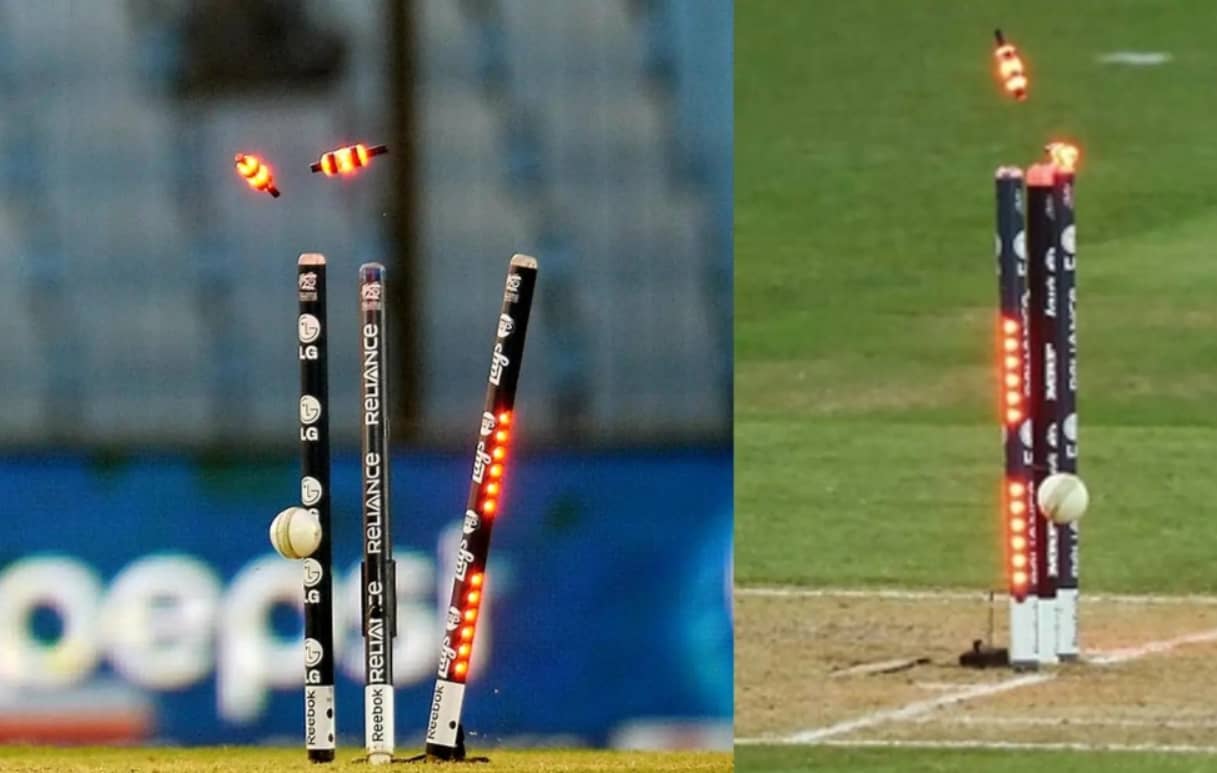
- Technology Integration: Stump cameras inserted into one post provide unique viewing angles during broadcasts. LED stumps light up instantly when bails dislodge, helping umpires make accurate decisions in split-second situations.
Types of Cricket Stumps
Wooden Cricket Stumps
- Traditional Material: Ash wood, remains the preferred choice for professional cricket grounds. The material provides appropriate weight and durability for international matches. Wooden stumps require varnishing to extend their lifespan.
- Advantages: Classic appearance maintains cricket’s traditional aesthetic. Match-standard compliance ensures acceptance in all official competitions. Natural wood grain provides an authentic cricket experience for players.
- Limitations: Repeated ball impact can cause warping over time. Regular maintenance and replacement become necessary for heavily used practice facilities. Weather exposure accelerates deterioration compared to synthetic alternatives.
Metal Cricket Stumps
- Freestanding Design: Metal stumps feature base plate,s eliminating ground insertion requirements. This design protects lawns and allows easy repositioning. Practice sessions benefit from a quick setup without tools.
- Durability Factor: Steel or aluminum construction withstands outdoor storage and harsh weather conditions. Long-lasting materials reduce replacement costs over time. Metal stumps maintain structural integrity despite frequent use.
- Game Limitation: Some metal designs feature fixed bails as single units. This construction prevents bail dislodgement required for authentic dismissal practice. Competitive matches require detachable bail systems.
Plastic Cricket Stumps
- Affordable Option: Plastic stumps offer budget-friendly solutions for schools and recreational players. Lower manufacturing costs make them accessible for youth programs. Multiple sets can be purchased within limited budgets.
- Lightweight Setup: Easy transportation suits mobile coaching sessions and temporary practice areas. Children handle plastic stumps safely during skill development activities. Storage requires minimal space compared to wooden alternatives.
- Professional Suitability: Official cricket matches exclude plastic stumps from competition use. Fixed bail designs limit realistic game simulation. However, cricket stumps explained for beginners often start with plastic options before advancing to regulation equipment.
LED Stumps
- Modern Innovation: Light-emitting diode technology integrates into stump construction for international fixtures. Microprocessors detect bail displacement, triggering instant illumination. Major tournaments adopt LED systems for enhanced officiating accuracy.
- Visibility Advantage: Bright lights confirm dismissals clearly for umpires and spectators. Low-light conditions benefit from improved wicket visibility. Slow-motion replays show exact bail dislodgement timing through light activation.
- Higher Cost: LED stumps cost significantly more than traditional wooden alternatives. Electronic components require careful handling and battery management. Professional venues justify expenses through broadcast-quality improvements.
How Tall are Cricket Stumps?
Cricket stumps measure exactly 28 inches above the pitch surface according to official laws.
This height converts to 71.1 centimeters in metric measurement.
The cricket stumps’ height in feet equals 2.33 feet. This precise specification applies uniformly across all cricket formats worldwide.
Junior cricket sometimes uses shorter stumps for age-appropriate gameplay.
| Measurement Unit | Height |
|---|---|
| Inches | 28 inches |
| Centimeters | 71.1 cm |
| Feet | 2.33 feet |
Bails rest in grooves carved into stump tops. They project no more than 0.5 inches above the stump surface. This measurement ensures bails dislodge appropriately when contacted by ball or bat.
What is the Distance Between Stumps?
The total wicket width measures exactly 9 inches across all three stumps.
This distance equals 22.86 centimeters in metric measurement.
Individual stumps are positioned close together, allowing bails to rest securely in grooves.
The two bails each measure 4.31 inches in length, sitting across the three-stump formation.
Professional cricket demands precise measurements for fair competition. Match officials verify wicket dimensions before play commences.
Any deviation from official specifications invalidates the playing area for sanctioned matches.
How Do You Hold Cricket Stumps in the Ground?
- Tapered Spike Base: Traditional wooden stumps feature sharpened, pointed ends. This spike design penetrates soil for stable vertical positioning. The taper angle allows secure anchoring without excessive ground disturbance.
- Stump Gauge Tool: Specialized measuring devices create properly spaced holes before insertion. The gauge ensures accurate 9-inch wicket width compliance. Pitch preparation includes marking exact stump locations using this tool.
- Manual Insertion: Mallets or cricket bats hammer stumps into prepared holes. Firm strikes drive spikes deep enough for stability during play. Each stump requires individual insertion and vertical alignment checking.
- Freestanding Alternatives: Metal and plastic stumps often include weighted base frames. These platforms eliminate ground penetration while maintaining stability. Portable designs suit hard surfaces where spike insertion proves impossible.
The Cricket Wicket Rules According to Lord’s
- Two Sets Per Pitch: Every cricket pitch requires wickets at both bowling ends. This dual-wicket configuration enables continuous over-alternation. The distance between wicket sets measures 22 yards along the pitch length.
- Positioning: Each wicket centers perfectly within its respective bowling crease. Alignment perpendicular to pitch length ensures fair bowling angles. Groundskeepers use precise measurement tools during pitch preparation.
- Exact Width: The 9-inch wicket width represents non-negotiable official requirements. All three stumps must align within this specification. Umpires verify measurements before authorizing match commencement.
- Official Compliance: Professional cricket matches demand strict adherence to Lord’s Cricket Ground regulations. Practice facilities may relax standards slightly for training purposes. However, cricket stumps explained in coaching contexts should reference official dimensions for player education.
Average Cricket Stumps Prices of Different Cricket Stumps Types
| Type | Average Price (INR) | Average Price (USD) |
|---|---|---|
| Wooden Stumps | ₹1,500 – ₹4,000 | $20 – $50 |
| Metal Stumps | ₹1,000 – ₹3,000 | $15 – $40 |
| Plastic Stumps | ₹500 – ₹1,500 | $8 – $20 |
| LED Stumps | ₹25,000 – ₹50,000+ | $300 – $600+ |
Wooden stumps represent mid-range pricing suitable for serious amateur and professional use.
Quality ash wood construction justifies higher costs compared to synthetic alternatives.
Metal and plastic options provide budget-conscious solutions for schools and recreational facilities.
Lower prices enable multiple set purchases for large training programs.
LED stumps command premium pricing due to integrated electronic components.
Professional venues and broadcasters justify expenses through enhanced match officiating and viewer experience improvements.
Conclusion:
Understanding cricket stumps types, height, specs & rules ensures proper pitch setup and gameplay compliance.
The 28-inch height and 9-inch width represent fundamental specifications across all cricket formats.
Material selection between wooden, metal, plastic, and LED stumps depends on usage requirements and budget constraints.
Each type serves specific purposes, from professional matches to casual practice sessions.
- Correct Height All stumps must measure exactly 28 inches above the pitch surface for official matches.
- Proper Width The 9-inch wicket width applies uniformly across both batting ends of the pitch.
- Material Choice Wood remains traditional for competitions while metal, plastic, and LED serve specialized functions.
- Match Compliance Following official laws ensures fair play and acceptance in sanctioned cricket competitions, where cricket stumps explained principles apply consistently.
Also Check:
About the Author
