A batsman connects perfectly. The ball rockets off the middle of the bat.
The crowd rises. Commentators scream, “That’s gone!”
But wait—the fielder catches it comfortably, ten meters inside the rope.
Welcome to cricket’s most expansive battlegrounds, where even the sweetest strikes fall short. Where power hitters become mortal.
Where boundaries aren’t gifts—they’re hard-earned rewards.
I’ve watched countless matches where ground dimensions completely changed outcomes.
A venue like Melbourne Cricket Ground turns potential sixes into regulation catches.
Sydney Cricket Ground makes straight hits feel like climbing Mount Everest.
These aren’t just big stadiums—they’re psychological warfare zones for batsmen.
Boundary size matters more than most fans realize. It decides whether a match scores 180 or 220 in T20s.
It determines if bowlers attack fearlessly or defend desperately. It separates genuine power from lucky edges.
Top 10 Largest Cricket Stadium in the world by Boundary 2026
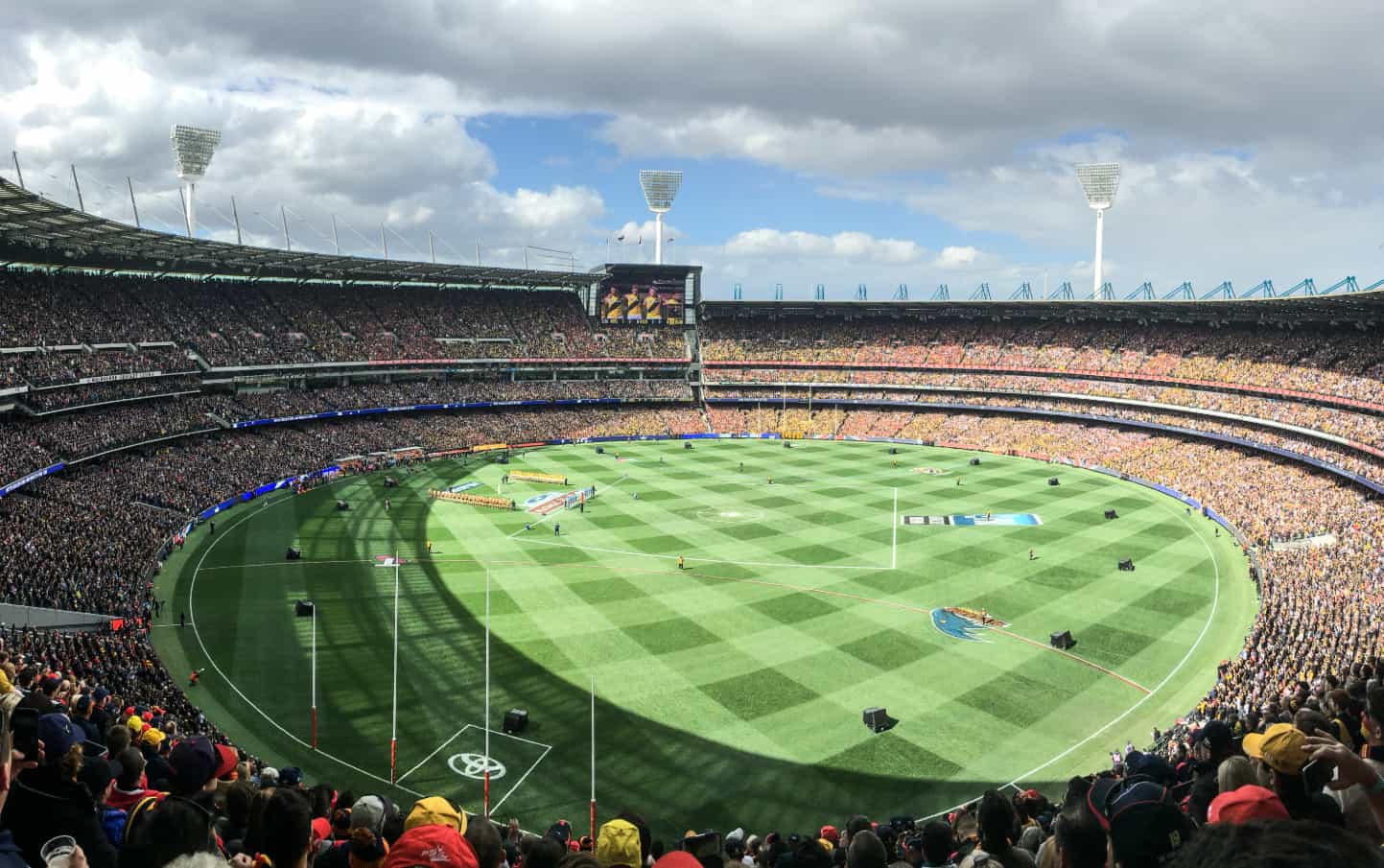
This deep dive explores the biggest boundary cricket ground in world – Complete with measurements, historical context, famous performances, and why these massive venues define cricket’s ultimate challenge.
From Australia’s giants to India’s historic grounds, from New Zealand’s scenic beauties to England’s traditional fortress, we’re covering everything.
Whether you’re hunting stats on the top 10 largest cricket stadium in the world by boundary or love cricket trivia, buckle up. This journey spans continents, decades, and some seriously massive playing fields.
Let’s explore where cricket’s biggest battles truly take place.
Also Check: India National Cricket Team Coaches
What Actually Makes a Boundary “Big”? The Science Explained
Before ranking stadiums, let’s understand what we’re measuring.
The Official Measurements
International Cricket Council sets clear standards:
- Minimum boundary: 65 yards (59.43 meters)
- Maximum boundary: 90 yards (82.29 meters)
These measurements run from the pitch center to the boundary rope.
Why Two Numbers?
Cricket grounds aren’t circular—they’re oval-shaped, creating:
Straight Boundaries: Distance down the ground (past the bowler)
Square Boundaries: Distance through mid-wicket and covers (perpendicular to the pitch)
Most venues have longer square boundaries because of oval geometry. But exceptions exist—like Sydney Cricket Ground’s monster straight boundary.
What Influences Boundary Size?
Multiple factors determine dimensions:
- Stadium architecture (shape, seating design)
- Pitch placement (centered or offset affects distances)
- Historical construction (older venues often have unique shapes)
- Local regulations (some countries prefer specific dimensions)
- Renovation impacts (modernization can alter boundaries)
The biggest boundary cricket ground in the world by area considers the total playing space, not just one dimension. Melbourne Cricket Ground dominates here with playing dimensions of 172.9m x 147.8m—that’s massive!
Physics of Six-Hitting
Here’s something fascinating: hitting a six at a 65-meter boundary versus an 85-meter boundary requires dramatically different power. The energy needed increases exponentially, not linearly.
At sea level with average conditions, clearing:
- 65 meters needs approximately 95+ km/h ball speed off the bat
- 75 meters needs approximately 105+ km/h
- 85 meters needs approximately 115+ km/h
That 20-meter difference separates T20 specialists from legendary power hitters.
Now let’s rank the world’s most challenging venues.
Did You Know? Bengaluru to Build India’s Second-Largest Cricket Stadium with 80,000 Seats in Anekal
The Ultimate Rankings: World’s Most Expansive Cricket Grounds
Here’s the complete breakdown of cricket’s boundary giants:
| Rank | Stadium | Country | Straight (m) | Square (m) | Capacity | Notable Match |
|---|---|---|---|---|---|---|
| 1 | Melbourne Cricket Ground | Australia | 83.43 | 86.25 | 100,024 | 2015 World Cup Final |
| 2 | Sydney Cricket Ground | Australia | 93.7 | 72.8 | 48,000 | Ashes 2023 |
| 3 | SSC Cricket Ground | Sri Lanka | 86.09 | 77.0 | 10,000 | SL vs AUS 2022 |
| 4 | Hagley Oval | New Zealand | 83.5 | 77.45 | 20,000 | NZ vs ENG 2023 |
| 5 | Basin Reserve | New Zealand | 81.7 | 72.48 | 11,600 | NZ vs SA 2022 |
| 6 | Lord’s Cricket Ground | England | 88.8 | 65.2 | 31,100 | Ashes 2019 |
| 7 | Wanderers Stadium | South Africa | 86.75 | 64.1 | 34,000 | SA vs IND 2018 |
| 8 | Kensington Oval | West Indies | 76.6 | 69.03 | 30,500 | WI vs ENG 2019 |
| 9 | Eden Gardens | India | 76-78 | 66-68 | 66,000 | IPL Finals 2024 |
| 10 | Narendra Modi Stadium | India | 75 | 75 | 132,000 | IND vs ENG 2021 |
Notice something wild? The world’s largest stadium by capacity (Narendra Modi) ranks tenth by boundaries. Size doesn’t equal challenge!
This top 10 biggest boundary cricket ground in world list spans four continents, with Australia absolutely dominating.
No surprise—Aussie cricket culture loves pace, bounce, and rewarding proper shots over mishits.
Also Read: Most Dangerous Batsman in IPL History
Top 10 Biggest Boundary Cricket Grounds in the World 2026
🏆 1. Melbourne Cricket Ground (Australia): The Undisputed King
Location: Melbourne, Victoria
Born: 1853
Straight Boundary: 83.43 meters
Square Boundary: 86.25 meters
Capacity: 100,024
Playing Area: 172.9m x 147.8m
The Melbourne cricket ground boundary length isn’t just big—it’s legendary. MCG stands as the largest cricket stadium in the world by boundary, and players feel it from ball one.
Why MCG Terrorizes Batsmen?
Those square boundaries of 86.25 meters? Brutal. A pull shot that sails for six at most venues becomes an easy catch at MCG. The straight boundaries at 83.43 meters aren’t much easier.
I’ve watched elite power hitters like Chris Gayle, AB de Villiers, and Andre Russell struggle here. Shots they’d normally clear with meters to spare fall short. That’s the MCG effect.
Historic Moments on Massive Boundaries
- March 1877: World’s first Test match (Australia vs England)
March 2015: World Cup Final—Australia defended 186 against New Zealand, with large boundaries crucial to victory
Countless Ashes battles where boundary dimensions decided tight finishes
The 2015 World Cup Final deserves special mention. New Zealand needed quick runs, but MCG’s dimensions made every boundary an achievement. Australia won by 7 wickets, with those vast outfields playing starring roles.
- Player Testimonials
Ricky Ponting once said, “The MCG demands genuine power. You can’t rely on bat speed alone—you need proper technique and massive strength.”
Current Australian captain Pat Cummins loves bowling here: “As a bowler, you feel confident pitching up. Mistimed drives won’t disappear for six.”
- Beyond Cricket
MCG hosts Australian Football League grand finals, rugby matches, and Olympic events. But cricket remains its soul, and those boundaries remain its signature challenge.
It’s easily among the top 5 biggest cricket stadium in world by boundary, and arguably the toughest venue for hitting sixes anywhere on Earth.
🥈 2. Sydney Cricket Ground (Australia): The Straight Boundary Monster
Location: Sydney, New South Wales
Born: 1851
Straight Boundary: 93.7 meters
Square Boundary: 72.8 meters
Capacity: 48,000+
Hold on—93.7 METERS straight? That’s insane!
SCG claims the 2nd largest cricket stadium in the world by boundary dimensions, but it’s first in one crucial category: longest straight boundary in international cricket.
- The Geometry Puzzle
Here’s what makes SCG fascinating: That monster straight boundary contrasts sharply with relatively shorter square boundaries (72.8m). This creates unique strategic dynamics.
Batsmen quickly learn: Don’t hit straight. Target the leg-side or off-side where boundaries are 20+ meters shorter. It’s cricket chess at its finest.
- Famous SCG Moments
January 2022 Ashes: England’s batsmen repeatedly found fielders on the straight boundary, frustrated by the dimensions
Countless pink-ball Tests where those boundaries turned potential victories into defeats
Steve Smith’s masterclass innings, where he worked the shorter square boundaries brilliantly
- The Batsman’s Nightmare
Imagine being a batsman. You’ve practiced straight sixes your all career. You come to SCG and suddenly that shot—your bread and butter—becomes your enemy. That’s psychological warfare.
Australian legend Michael Hussey once joked, “Hitting a straight six at SCG should earn bonus runs. Maybe eight instead of six!”
- Multi-Purpose Marvel
Built in 1851, SCG predates even MCG. The New South Wales Government maintains this multi-sport venue that hosts cricket, rugby, and Australian rules football.
But cricket defines it, and that 93.7-meter straight boundary defines cricket here.
🥉 3. Sinhalese Sports Club Cricket Ground (Sri Lanka): Asia’s Giant
Location: Colombo, Sri Lanka
Born: 1952
Straight Boundary: 86.09 meters
Square Boundary: 77.0 meters
Capacity: 10,000
Don’t judge by capacity – SSC Cricket Ground features some of Asia’s most challenging dimensions.
- Subcontinent Surprise
Most Asian venues favor batsmen with smaller boundaries and high-scoring matches. Not SSC. With straight boundaries exceeding 86 meters and squares at 77 meters, it’s a bowler’s paradise disguised as a subcontinental venue.
The Sinhalese Sports Club owns and maintains this gem, which has hosted 100+ international matches.
- Spinning on Massive Boundaries
Here’s where SSC gets interesting: Traditional Sri Lankan pitches assist spinners. Combined with large boundaries, this creates unique challenges.
Batsmen can’t simply charge spinners and swing wildly. Mistimed hits become catching practice. It demands technique—working the ball into gaps, running hard between wickets, choosing spots carefully.
- Memorable Performances
Kumar Sangakkara’s multiple Test centuries here showcased how to dominate large boundaries: Perfect placement, intelligent running, and occasional big hits when perfectly timed.
Muttiah Muralitharan loved bowling here—spin with safety. Batsmen couldn’t just slog over mid-wicket when it’s 77 meters away.
4️⃣ Hagley Oval (New Zealand): Christchurch’s Post-Earthquake Pride
Location: Christchurch, New Zealand
Born: 1851 (cricket from 1867)
Straight Boundary: 83.5 meters
Square Boundary: 77.45 meters
Capacity: 20,000
Playing Dimensions: 149m x 149m
Hagley Oval represents resilience. After devastating earthquakes destroyed Christchurch’s traditional cricket infrastructure, Hagley Oval emerged as the South Island’s premier Test venue.
- Mountains and Massive Boundaries
That 149m x 149m playing area? It’s enormous. Combined with boundary dimensions exceeding 77 meters in all directions, Hagley Oval challenges every batsman who visits.
The 2015 renovation increased capacity to 20,000 while maintaining those crucial dimensions that make it special.
- Why Bowlers Dream of Hagley
New Zealand’s pace trio—Trent Boult, Tim Southee, and Neil Wagner—consistently deliver match-winning performances here. Those boundaries give them confidence to pitch up, knowing mistimed drives won’t clear the ropes.
England’s Joe Root once commented after batting here: “You really need to time it perfectly. There’s no room for error with these boundaries.”
- Scenic Cricket
Beyond measurements, Hagley Oval offers stunning views of the Port Hills and the Southern Alps. It’s regularly voted among cricket’s most beautiful venues.
But don’t let beauty distract you—those boundaries will humble any batsman.
5️⃣ Basin Reserve (New Zealand): Wellington’s Windy Wonder
Location: Wellington, New Zealand
Born: 1868
Straight Boundary: 81.7 meters
Square Boundary: 72.48 meters
Capacity: 11,600
Basin Reserve combines historic significance with seriously challenging dimensions.
- Mountain-Ringed Cricket
Surrounded by Wellington’s mountains, Basin Reserve offers one of cricket’s most picturesque settings. But those views come with consequences—swirling winds that make batting even harder on already large boundaries.
At over 81 meters straight and 72 meters square, Basin Reserve tests every aspect of batting: power, placement, timing, and fitness.
- Wellington’s Famous Winds
Here’s what makes Basin Reserve unique: Notorious winds swirl unpredictably. A shot headed for the boundary can die mid-flight. A mistimed hit can carry further than expected.
Combined with large boundaries, Wellington’s conditions create cricket chaos—the entertaining kind.
- Test Cricket Paradise
Built in 1868, Basin Reserve is New Zealand’s oldest Test venue. Over 150 years of cricket history have unfolded on those vast outfields.
From Richard Hadlee’s bowling masterclasses to Brendon McCullum’s aggressive batting, Basin Reserve has witnessed legendary performances—all made more impressive by those dimensions.
6️⃣ Lord’s Cricket Ground (England): The Home of Cricket
Location: London, England
Born: 1787
Straight Boundary: 88.8 meters
Square Boundary: 65.2 meters
Capacity: 31,100
Lord’s needs no introduction. Cricket’s spiritual home combines history with deceptively challenging dimensions.
- The Famous Slope
What makes Lord’s special isn’t just size—it’s the slope running across the ground. That nearly 89-meter straight boundary, combined with natural gradient, creates conditions found nowhere else globally.
The square boundaries at 65.2 meters are notably shorter, creating strategic opportunities for clever batsmen who can exploit the off-side and leg-side.
- Marylebone Cricket Club Legacy
Since 1787, the MCC has operated Lord’s, hosting countless historic matches. From Ashes battles to World Cup finals, those boundaries have witnessed cricket’s greatest moments.
The 2019 World Cup Final saw England beat New Zealand in a super over—those large straight boundaries meant both teams had to work incredibly hard for every run.
- Challenging Straight Hits
That 88.8-meter straight boundary deserves emphasis. When discussing the biggest boundary cricket ground in the world in meters, Lord’s straight dimension ranks among the most intimidating.
Batsmen quickly learn: Don’t drive straight unless perfectly timed. Work the ball square instead.
7️⃣ Wanderers Stadium (South Africa): The Bullring’s Bite
Location: Johannesburg, South Africa
Born: 1956
Straight Boundary: 86.75 meters
Square Boundary: 64.1 meters
Capacity: 34,000
“The Bullring” earned its nickname from its intimidating atmosphere. But those boundaries add another intimidation layer.
- Johannesburg’s Cricket Cathedral
That 86.75-meter straight boundary makes Wanderers a fascinating venue. Located in South Africa’s largest city, it’s hosted legendary matches since 1956.
The shorter square boundaries (64.1m) create strategic diversity. Batsmen favor the leg-side and off-side while respecting that massive straight boundary.
- High-Altitude Factor
Here’s something interesting: Johannesburg sits at a significant altitude, meaning balls travel farther in thin air. Yet those large boundaries still challenge even altitude-assisted shots!
That’s how big the Wanderers really are.
- Multi-Sport Heritage
Like many Commonwealth grounds, Wanderers hosts rugby alongside cricket. But cricket remains its primary identity, with those expansive boundaries defining its character.
South African legends like AB de Villiers and Jacques Kallis built careers partly on mastering Wanderers’ dimensions—knowing when to attack square and when to respect the straight boundary.
8️⃣ Kensington Oval (West Indies): Caribbean Class
Location: Bridgetown, Barbados
Born: 1871
Straight Boundary: 76.6 meters
Square Boundary: 69.03 meters
Capacity: 30,500
Kensington Oval stands as one of cricket’s oldest international venues and the Caribbean’s most challenging by dimensions.
- 2007 World Cup Transformation
Before the 2007 ODI World Cup, Kensington Oval underwent a USD 45 million renovation. Modernization improved facilities while preserving those traditional large boundaries that define Caribbean cricket.
- Historic West Indies Performances
From Brian Lara’s elegance to Chris Gayle’s power, Kensington Oval has witnessed legendary West Indian performances. Those 76-meter-plus boundaries made every achievement more impressive.
Imagine Gayle smashing sixes here—if he clears these boundaries, you know it’s absolutely middled.
- Current Status
With 30,500 capacity, Kensington Oval regularly hosts international cricket and CPL matches. The Barbados Cricket Association operates it, ensuring those boundary dimensions remain preserved.
9️⃣ Eden Gardens (India): The Longest Boundary Cricket Ground in India
Location: Kolkata, West Bengal
Born: 1864
Straight Boundary: 76-78 meters
Square Boundary: 66-68 meters
Capacity: 66,000
Eden Gardens proudly claims the longest boundary cricket ground in India title—unique among subcontinental venues.
- Historic Significance
Before Narendra Modi Stadium’s construction, Eden Gardens was India’s largest cricket venue. The 1996 World Cup semi-final (India vs Sri Lanka) hosted a world-record 110,564 spectators.
That crowd size record stands today—a testament to Eden Gardens’ historic importance.
- Post-Renovation Dimensions
The 2010-11 renovation reduced capacity from 100,000+ to 66,000 but maintained boundary dimensions: 76-78 meters straight, 66-68 meters square.
These measurements make Eden Gardens unusual for Indian cricket, where most venues feature smaller boundaries encouraging high-scoring entertainment.
- Strategic Impact
Those large boundaries fundamentally change matches. T20 games at Eden Gardens produce lower scores than at venues like Chinnaswamy (known for short boundaries).
The 2024 IPL season at Eden Gardens averaged approximately 165 runs per innings—significantly lower than other Indian venues’ 180+ averages.
- Cricket Association of Bengal
CAB operates Eden Gardens, maintaining its status as one of world cricket’s most atmospheric cricket venues. That passionate Kolkata crowd, combined with challenging boundaries, creates unforgettable cricket.
🔟 Narendra Modi Stadium (India): Capacity Giant with Balanced Boundaries
Location: Ahmedabad, Gujarat
Born: Reconstructed 2021
Straight Boundary: 75 meters
Square Boundary: 75 meters
Capacity: 132,000
Narendra Modi Stadium holds the title: world’s largest cricket venue by seating capacity. Yet its boundary dimensions rank tenth globally—proving size doesn’t equal challenging boundaries.
- The Reconstruction Marvel
Previously Motera Stadium, it underwent complete reconstruction in 2021, costing approximately USD 95 million (₹800 crore). The Gujarat Cricket Association created this modern marvel.
- Perfect Symmetry
What makes Narendra Modi Stadium unique? Perfectly balanced 75-meter boundaries in every direction. Most grounds have varying dimensions; this offers complete symmetry.
Batsmen can’t target shorter boundaries—none exist. Bowlers can’t relax knowing one side is easier—everything’s equidistant. It’s fascinating strategically.
- Hosting Major Events
Despite ranking tenth by boundaries, Narendra Modi Stadium hosts India’s biggest matches due to its massive capacity. The 2021 India vs England Test and multiple IPL matches showcased how 75-meter boundaries balance batting and bowling beautifully.
Indian Grounds vs. Global Giants: The Comparison
Indian cricket grounds typically feature smaller boundaries than Australian, English, or New Zealand venues. But Eden Gardens and Narendra Modi Stadium challenge this stereotype.
Why Indian Boundaries Traditionally Run Smaller?
Several factors explain India’s historically compact boundaries:
- Colonial-era construction in cramped city centers
- Cultural preference for high-scoring entertainment
- Stadium designs prioritizing maximum seating over the playing area
- Hot weather reduces stamina for extensive fielding
Eden Gardens: The Glorious Exception
At 76-78 meters, Eden Gardens matches international standards. This makes it the longest boundary cricket ground in India and fundamentally changes how matches unfold there.
Batsmen can’t rely on mishits clearing boundaries. Bowlers attack confidently. It’s proper cricket, rewarding skill over luck.
Narendra Modi Stadium’s Philosophy
With consistent 75-meter boundaries, Narendra Modi Stadium sits just below Eden Gardens but well above venues like:
- Wankhede Stadium, Mumbai (smaller dimensions)
- M. Chinnaswamy Stadium, Bangalore (notoriously short boundaries)
- Feroz Shah Kotla, Delhi (compact playing area)
Statistical Impact
Numbers don’t lie. Compare average T20 scores:
- Eden Gardens: ~165 runs per innings
- Narendra Modi Stadium: ~168 runs per innings
- Chinnaswamy Stadium: ~185 runs per innings
- Wankhede Stadium: ~175 runs per innings
Those 10-20 runs difference? Directly linked to boundary sizes.
The Science: How Boundary Size Transforms Cricket
Boundary dimensions aren’t trivia—they’re fundamental game-changers.
For Batsmen: Risk vs. Reward
Small Boundaries:
- Encourage aggressive shot-making from ball one
- Allow mistimed hits to clear ropes
- Favor T20 specialists over traditional technicians
- Reduce the importance of running between wickets
- Create psychological confidence
Large Boundaries:
- Demand proper technique and perfect timing
- Punish mistimed shots with catches
- Require exceptional fitness for converting ones to twos
- Test genuine power, not just bat speed
- Create psychological pressure
For Bowlers: Confidence Levels
Small Boundaries:
- Force ultra-defensive fields immediately
- Make yorkers and slower balls absolutely crucial
- Increase pressure and error rates dramatically
- Favor death-over specialists exclusively
Large Boundaries:
- Allow aggressive, attacking fields
- Reward traditional good-length bowling
- Reduce pressure on individual deliveries
- Favor complete bowlers with varied skills
Tactical Revolution
Teams analyze boundary dimensions extensively before matches. At MCG or SCG, captains set attacking fields knowing batsmen need genuine power. At smaller venues, fielders spread to boundaries from over one.
The largest cricket stadium in the world by boundary, therefore, influences team selection, bowling strategies, batting orders, field placements, and every tactical decision throughout matches.
Quick Recap: Top 5 Giants by Boundary
For readers who skim, here’s the top 5 biggest cricket stadium in world by boundary:
- Melbourne Cricket Ground – 83.43m straight, 86.25m square
The undisputed king of challenging boundaries - Sydney Cricket Ground – 93.7m straight, 72.8m square
Longest straight boundary in world cricket - SSC Cricket Ground – 86.09m straight, 77m square
Asia’s most challenging dimensions - Hagley Oval – 83.5m straight, 77.45m square
New Zealand’s post-earthquake pride - Basin Reserve – 81.7m straight, 72.48m square
Wellington’s windy wonder
These five venues represent cricket’s ultimate batting challenges. Clear these boundaries, and you’ve truly earned your runs.
Fun Stats: Boundary Edition
- Longest Single Boundary: Sydney Cricket Ground’s 93.7m straight boundary—unmatched globally
- Most Symmetrical Ground: Narendra Modi Stadium’s perfect 75m x 75m dimensions
- Bowler’s Favorite: MCG consistently ranks as a pace bowler’s preferred venue
- Hardest Six: Cricket analysts estimate hitting a six at MCG requires approximately 15% more power than average international grounds
- Boundary Impact on T20 Scoring: Matches at large-boundary grounds average 20-30 runs fewer than small-boundary venues
- Fastest Fifties: Only 3 of the 25 fastest T20I fifties occurred at grounds with 75+ meter boundaries
Final Word: Where Cricket Finds Its Soul
The biggest boundary cricket ground in world represents more than measurements on paper.
They symbolize cricket’s essential character—where skill matters more than luck, where technique trumps brute force, where genuine achievement gets properly rewarded.
Melbourne Cricket Ground, Sydney Cricket Ground, and others on this list preserve cricket’s traditional values.
They remind us that sixes should inspire awe, not become routine. That boundaries deserve respect, not assumption.
In an era of shortened formats and entertainment-focused cricket, these massive grounds serve crucial purposes.
They host Test matches where patience wins. They produce T20 games where 160 feels competitive.
They give bowlers legitimate chances in batting-dominated modern cricket.
India’s Eden Gardens and Narendra Modi Stadium prove the subcontinent can embrace larger boundaries too.
As cricket evolves, perhaps more venues will follow—creating balanced contests between bat and ball rather than batting-only exhibitions.
Next time you watch a match at MCG and see a perfectly struck shot fall short of the boundary, don’t curse the batsman’s luck.
Appreciate the challenge. That’s proper cricket. That’s what these massive grounds provide.
The top 10 biggest boundary cricket ground in world aren’t just venues—they’re guardians of cricket’s competitive integrity.
Long may they challenge, frustrate, and ultimately reward the world’s best cricketers.
Because at these grounds, you don’t just score runs—you earn them.
Also Check:
- Cricket Ground Dimensions
- Most Beautiful Cricket Stadium In The World
- How Many International Cricket Stadiums in India
- Smallest Cricket Stadium In India
About the Author
