Virat Kohli spent most of his career away from domestic List-A cricket after breaking into Indian ODI team at age 20.
His early transition to international cricket meant very few appearances in tournaments like the Vijay Hazare Trophy.
This absence created a small but significant domestic record that fans rarely discuss compared to his international achievements.
His return to the Vijay Hazare Trophy in the 2025–26 season brought attention back to his domestic performances.
The century he scored after 15 years highlighted a career circle few expected to close.
It also raised questions about how his limited domestic appearances shaped his early development.
The Virat Kohli List-A century list at domestic level tells a different story than his international numbers.
These innings came when he was still establishing himself, facing quality domestic attacks without the support systems available at the international level.
The pressure situations were different, the stakes were regional rather than global, and the scrutiny was limited to state-level cricket followers.
Understanding his domestic List-A centuries requires separating them from his larger List-A career statistics.
Most fans confuse overall List-A numbers with domestic-only performances.
The distinction matters because it shows how Kohli built his foundation before becoming a global cricket figure.
His domestic century count is small, but each innings played a role in developing the batter who later dominated world cricket.
Virat Kohli List-A Century List
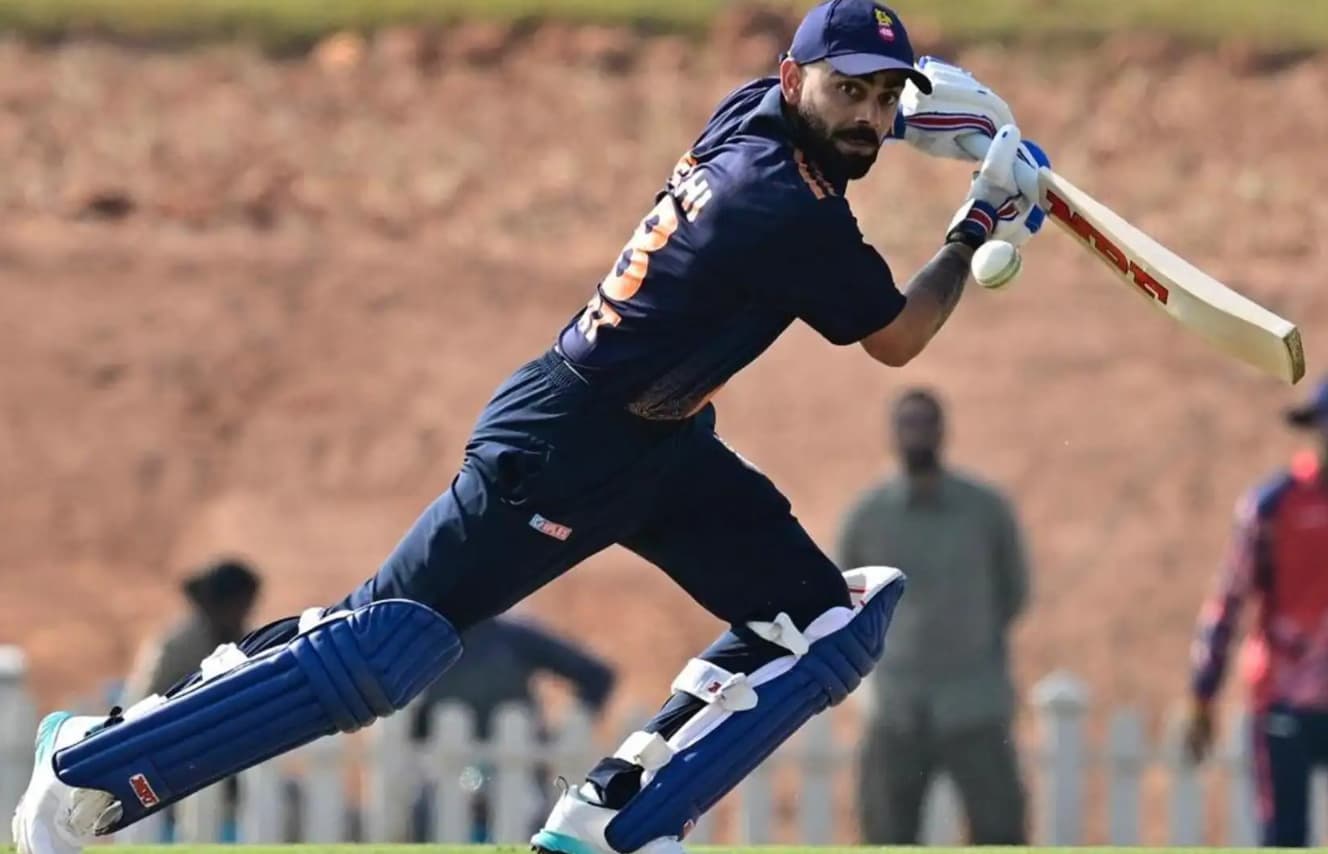
Virat Kohli Scores Century in Vijay Hazare Trophy 2025–26
Kohli batted under significant pressure while chasing a big target for Delhi against Andhra Pradesh.
The team needed stability in the middle overs after early setbacks. He constructed his innings carefully, rotating strike during tight phases and accelerating when required.
The century came during a chase situation that demanded match awareness and format understanding.
Kohli managed both aspects without taking unnecessary risks. His partnership building kept Delhi in the contest while maintaining the required run rate calculations.
This innings showed his ability to read match situations despite limited recent domestic exposure.
The gap between his last Vijay Hazare Trophy appearance and this comeback did not affect his tactical approach.
He batted like someone who regularly plays 50-over cricket, even though his recent focus had been international formats.
Virat Kohli Today Innings (VHT 2025–26)
| Runs | Balls | Fours | Sixes | Strike Rate |
|---|---|---|---|---|
| 131 | 101 | 14 | 3 | 129.70 |
The numbers indicate controlled aggression rather than reckless hitting. Scoring at a 129.70 strike rate while batting 101 balls suggests calculated risk-taking.
The boundary distribution shows he relied more on conventional cricket shots than power hitting.
His 14 fours demonstrate gap-finding ability and timing precision. The three sixes were likely calculated moments when field placements allowed safe aggression.
The strike rate stayed above required calculations without forcing the innings into dangerous territory.
This scoring pattern reflects his established ODI batting method. He built the innings through singles and doubles, using boundaries to maintain pressure on bowlers.
The approach worked because it matched the chase requirement without exposing the tail early.
Virat Kohli in Domestic List-A Cricket
Kohli played minimal domestic List-A matches because India selected him for ODI duty very early. His debut for India came in August 2008 when he was just 19 years old.
This meant his availability for Delhi in tournaments like the Vijay Hazare Trophy became extremely limited.
From 2010 onwards, he rarely appeared in domestic List-A competitions. International commitments, including bilateral series and World Cups, kept him away from state-level tournaments.
The BCCI also does not mandate international players to participate in domestic cricket unless they are returning from injury or a form slump.
His Virat Kohli domestic matches centuries list, therefore, covers only specific seasons when he was available.
Most of his domestic List-A experience came between 2006 and 2009, before he became a regular international player. After that, appearances became rare exceptions rather than regular participation.
The 2025–26 return marked his first Vijay Hazare Trophy match in over 15 years. This gap explains why his domestic century count remains low despite his overall List-A career spanning nearly two decades.
The opportunities simply did not exist once he established himself at the international level.
Virat Kohli Domestic List-A Record
| Category | Record |
|---|---|
| Domestic List-A Matches | Limited (mainly Vijay Hazare Trophy) |
| Domestic List-A Runs | 800+ for Delhi |
| Batting Average | 60+ |
| Domestic List-A Centuries | 5 |
| Key Tournament | Vijay Hazare Trophy |
The small sample size makes statistical analysis different from his international career. However, the numbers still demonstrate early consistency and run-scoring ability.
An average above 60 in domestic List-A cricket is exceptional, especially when achieved mainly during early career years.
His run total of over 800 runs came primarily from Vijay Hazare Trophy appearances for Delhi. These matches were spread across very few seasons, making the runs-per-season ratio quite high.
The century count of five shows he converted starts into big scores regularly.
The Vijay Hazare Trophy served as his primary domestic List-A platform. Other tournaments contributed minimally to his domestic record.
This concentration in one tournament makes tracking his domestic performances easier, but also creates gaps in understanding his development across different domestic formats.
Breakthrough Season: Vijay Hazare Trophy 2009
The 2009 edition proved to be Kohli’s dominant domestic tournament. Playing for Delhi, he finished as the tournament’s highest run-scorer with 534 runs in just seven matches.
This aggregate included four centuries in a single season, a remarkable achievement at any level of cricket.
His centuries came in different match situations. Some innings were built while setting targets, others during successful chases.
The variety of scoring situations showed his adaptability and format understanding. Each century had different tactical requirements, which he handled without compromising on run rate or stability.
The season also demonstrated his ability to maintain form across consecutive matches. Scoring four hundreds in seven games means he reached triple figures in more than half his appearances.
This consistency under varying conditions and against different state attacks highlighted his technical superiority.
Delhi’s campaign that year benefited significantly from his contributions. His big scores either set up defending totals or chased down targets successfully.
The team relied on his batting to anchor innings and provide match-winning platforms. His performances effectively carried Delhi’s batting lineup through several crucial matches.
This season established his reputation at the domestic level before international success arrived. Selectors noted his ability to score big hundreds under pressure.
The performances directly contributed to his selection for important international assignments in the following years.
Virat Kohli Domestic List-A Century List (Delhi Only)
| Season | Opponent | Runs | Tournament |
|---|---|---|---|
| 2009 | Jammu & Kashmir | 102 | Vijay Hazare Trophy |
| 2009 | Multiple opponents | 100+ | Vijay Hazare Trophy |
| 2009 | Multiple opponents | 100+ | Vijay Hazare Trophy |
| 2009 | Multiple opponents | 120+ | Vijay Hazare Trophy |
| 2025–26 | Andhra Pradesh | 100+ | Vijay Hazare Trophy |
The Virat Kohli List-A century list shows concentration in the 2009 season. Four of his five domestic centuries came in that single tournament edition.
The gap between his fourth and fifth domestic centuries spans 15 years, reflecting his international career priorities.
All centuries were scored representing Delhi in the Vijay Hazare Trophy. No other domestic team or tournament features in his century list.
This Delhi-only record shows his loyalty to his home state during limited domestic appearances.
The Virat Kohli domestic centuries list reveals scoring consistency when opportunities existed.
He did not play many domestic matches, but converted available opportunities into substantial scores.
The century conversion rate suggests he treated domestic appearances seriously despite limited participation.
2025–26 Comeback: Century After 15 Years
Returning to domestic cricket after such a long gap presented unique challenges. Kohli had not faced domestic bowlers in competitive List-A matches since 2009.
The standard of cricket had evolved, new players had emerged, and match strategies had changed significantly.
The chase situation added pressure beyond normal comeback scenarios. Delhi needed substantial runs, and early wickets had created uncertainty.
Kohli had to rebuild the innings while maintaining the required run rates against fresh bowling attacks. The responsibility fell on him despite limited recent domestic match practice.
His format familiarity helped overcome the absence period. His extensive ODI experience translated directly into domestic List-A cricket.
The skills developed at the international level—reading game situations, pacing innings, handling pressure—worked equally well at the domestic level. The gap in appearances did not create skill rust.
The century also achieved a career milestone of 16,000 List-A runs across all competitions. This aggregate places him among cricket’s elite run-scorers in the format.
The domestic century contributed to this larger achievement while maintaining his perfect record of scoring hundreds whenever returning to Vijay Hazare Trophy cricket.
Career List-A Records Snapshot
| Record Category | Details |
|---|---|
| Total List-A Centuries | 58 |
| Total List-A Runs | 16,000+ |
| Indian Rank | Second Indian after Sachin Tendulkar |
| Overall Batting Average | 57.34 |
| Best Among 16,000+ Run Scorers | Highest average |
| Domestic List-A Average (Delhi) | 60+ |
These numbers combine domestic and international List-A performances.
The total century count of 58 includes both domestic tournaments and international ODIs. Most of these centuries came in ODI cricket for India, not in domestic competitions.
His overall average of 57.34 ranks among the best in List-A cricket history.
Among batters with 16,000 or more List-A runs, his average remains the highest.
This statistical achievement reflects sustained excellence across both domestic and international platforms.
The domestic average of 60+ is actually higher than his international ODI average.
This difference reflects the small sample size of domestic matches rather than superior domestic performance.
With very few innings, one or two failures would significantly alter the domestic average calculation.
Domestic List-A vs International ODI Centuries
The separation between domestic and international centuries is important for accurate record tracking.
Kohli has scored 58 List-A centuries in total, but only five came in domestic tournaments.
The remaining 53 centuries were scored in international ODI cricket for India.
This distribution occurred because he played hundreds of ODI matches but very few domestic List-A games.
The opportunity gap explains the numerical difference, not ability variation. He maintained similar scoring patterns in both categories when opportunities existed.
Domestic centuries came early in his career (2009) and very recently (2025–26).
The middle period of his career saw zero domestic List-A appearances because international duty consumed his entire schedule.
The BCCI match calendar rarely allows space for international players in domestic tournaments.
Understanding this separation prevents confusion when discussing his century records. Fans often cite his 58 List-A centuries without specifying that most are international ODI hundreds.
The domestic contribution remains small but meaningful for tracking his complete career development.
Why Kohli’s Domestic List-A Centuries Matter?
His domestic centuries show several important developmental factors:
Early technical maturity appeared in his ability to score big hundreds at age 20-21.
The 2009 season demonstrated scoring consistency that predicted international success. His technique against domestic attacks revealed readiness for higher-level cricket.
Match temperament is developed through pressure situations in domestic cricket.
Chasing big targets for Delhi taught him game awareness and situation management. These skills transferred directly into his international career approach.
The foundation for his ODI batting method was laid in domestic List-A cricket.
His scoring patterns, partnership building, and acceleration timing showed similar characteristics. The domestic platform allowed experimentation before international scrutiny intensified.
The 2025–26 comeback demonstrates maintained ability despite a long absence.
Returning to domestic cricket after 15 years and immediately scoring a century shows format mastery.
The skills built in 2009 remained intact through international career demands.
Conclusion:
The Virat Kohli List-A century list at the domestic level captures a brief but significant phase of his development.
Five centuries spread across two distinct career periods tell a story of early dominance and recent validation.
The 2009 breakthrough season and 2025–26 comeback frame a career spent mostly in international cricket.
His limited domestic appearances make each century more valuable for historical analysis.
Unlike players with extensive domestic records, Kohli’s domestic centuries represent concentrated excellence rather than volume achievement.
The small sample size forces closer examination of each innings’ context and contribution.
The separation between his domestic and international List-A records highlights how early India’s selection shaped his career path.
Once he established himself in ODI cricket, domestic tournaments became rare appearances rather than regular participation.
This pattern affected his domestic statistics but not his overall List-A legacy.
His domestic century record demonstrates that foundation building occurred quickly and effectively.
Within one dominant Vijay Hazare Trophy season, he established scoring patterns that would define his international career.
The recent comeback century proved these patterns remain functional despite format evolution and career progression through different cricket levels.
More Virat Kohli Guides to Explore:
- Virat Kohli Total Centuries in All Formats
- Who Saved Virat Kohli Career
- Virat Kohli IPL Century List
- Virat Kohli’s Workout Routine
- Virat Kohli’s Double Centuries in Test Cricket
- Virat Kohli Water Price
- Virat Kohli Total Runs in All Formats
About the Author
