Some tournaments are just competitions. Others are traditions. And then there’s the Ranji Trophy—a tournament that’s woven into the very fabric of Indian cricket.
Since 1934, the Ranji Trophy has been where dreams begin and legends are born.
It’s where a young Sachin Tendulkar first announced his genius, where Sunil Gavaskar crafted his technique, where Anil Kumble learned to mesmerize batters, and where Virat Kohli discovered his hunger for runs.
Named after Kumar Shri Ranjitsinhji—the legendary Indian prince who dazzled English cricket in the late 1800s – this tournament started with just a handful of teams playing on uneven grounds for regional pride.
Today, 38 teams battle across multiple groups in a format that mirrors Test cricket’s intensity and demands.
The Ranji Trophy isn’t just about silverware. It’s about representing your state, your people, and your city’s pride. It’s about proving you belong at the highest level.
Every Indian cricketer who’s worn the national cap earned it first by succeeding here, on dusty maidans and packed stadiums, in marathon matches that test character as much as skill.
Ranji Trophy Winners & Runners-Up List (1934–2025)
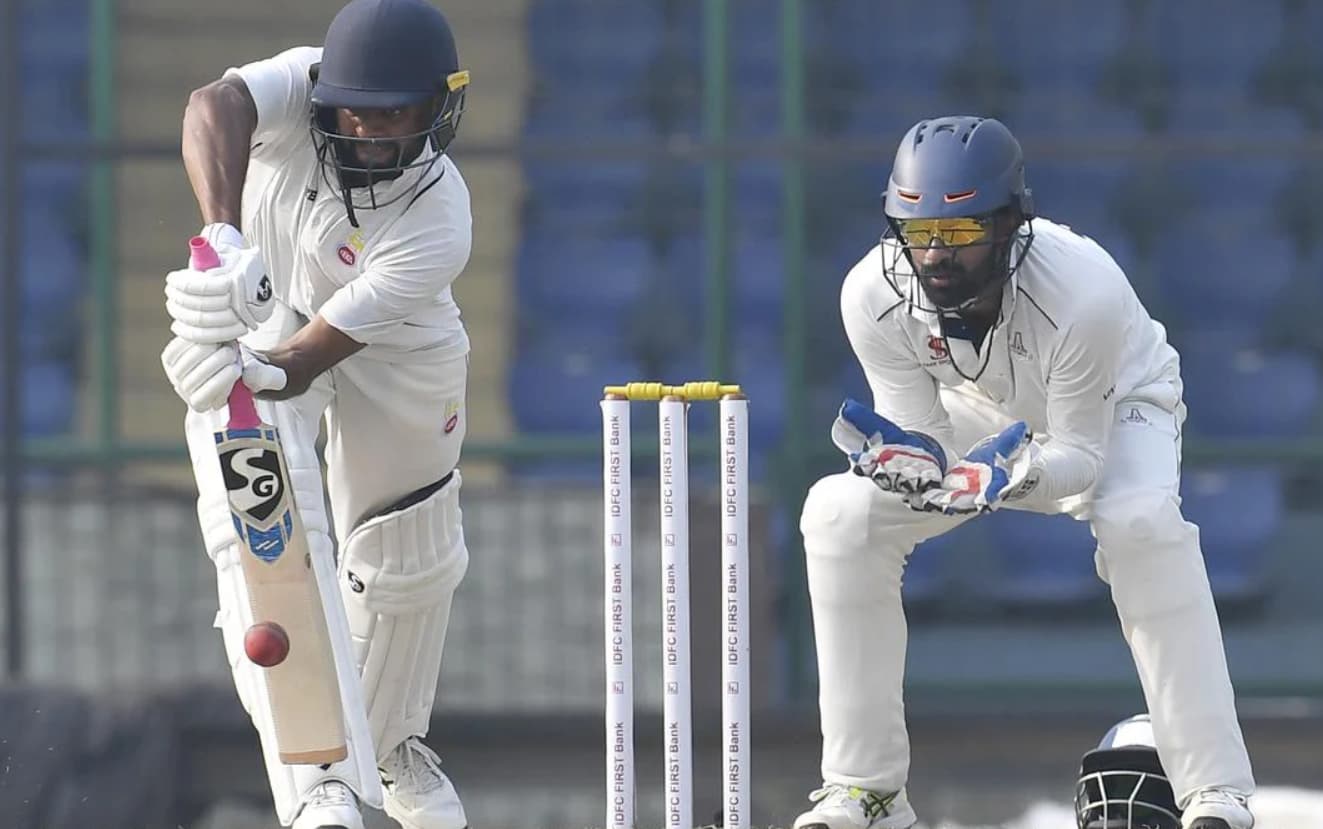
This article presents the complete Ranji Trophy winners & runners-up list from 1934 to 2025, celebrating 90+ years of domestic cricket excellence, regional rivalries, shocking upsets, and the stories that shaped Indian cricket into the global powerhouse it is today.
Let’s walk through nine decades of history, heartbreak, and heroics.
Every New Ranji Trophy Player Should Learn: How to Protect a Cricket Bat from Weather Extremes
The Journey Through Decades: How Power Shifted Across India
1930s–1950s: The Bombay Era Begins
When the Ranji Trophy kicked off in 1934-35, Bombay (now Mumbai) defeated Northern India to become the first champions. That victory wasn’t luck—it was the start of something unprecedented.
Through the 1930s and 40s, teams like Nawanagar, Hyderabad, Bengal, Maharashtra, and Holkar took turns winning. Cricket was still finding its feet in India. Matches were played on unpredictable pitches. Players juggled day jobs with cricket. But passion ran deep.
The late 1940s saw Holkar (representing Indore) and Baroda trade titles. Those finals between Holkar and Baroda became legendary—packed grounds, intense rivalries, cricket played with fierce regional pride.
By the 1950s, Bombay’s dominance started becoming clear. They won regularly, developed better infrastructure, and created a cricket culture that valued excellence above everything else.
1960s–1970s: Bombay’s Unstoppable Streak
From 1958-59 to 1972-73, Bombay won 15 consecutive Ranji Trophy titles. Fifteen straight years. Let that sink in.
No other team in cricket history—domestic or international—has achieved anything close to this sustained dominance. During this period, Bombay wasn’t just winning—they were crushing opponents, setting records, and producing stars who’d represent India with distinction.
Players like Sunil Gavaskar, Ajit Wadekar, and Dilip Vengsarkar emerged during this golden era. The Wankhede Stadium became a fortress. Bombay cricket became synonymous with excellence.
Poor Rajasthan appeared in nine finals during the 1960s and 70s but lost them all—a heartbreaking record that haunted them until they finally broke through in 2010-11.
1980s–1990s: New Powers Emerge
The 1980s saw Delhi rise as Bombay’s primary challenger. Delhi won 7 titles overall, with most concentrated in this period. Their battles with Bombay were epic—two cricketing cultures clashing, producing unforgettable matches.
Karnataka also emerged as a force, winning its first title in 1973-74 and adding several more through the 1990s. The state produced legends like Anil Kumble, Javagal Srinath, Rahul Dravid, and Venkatesh Prasad—cricketers who’d form the backbone of India’s national team.
Bengal finally won their maiden title in 1989-90, defeating Delhi. Tamil Nadu claimed their only championship in 1987-88. These victories proved that cricket excellence wasn’t limited to Mumbai and Bangalore—talent existed everywhere, waiting for opportunity.
2000s–2010s: Competitive Balance
The new millennium brought parity. Mumbai continued winning but faced tougher competition. Karnataka dominated the mid-2010s. Rajasthan broke their finals curse with back-to-back titles in 2010-11 and 2011-12. Gujarat won their first championship in 2016-17.
Railways—representing Indian Railways employees—emerged as consistent contenders, winning titles in 2001-02 and 2004-05. Uttar Pradesh claimed their maiden trophy in 2005-06.
The tournament was evolving. Better funding, improved infrastructure, professional coaching—these changes leveled the playing field significantly.
2017–2025: The Vidarbha Revolution
Then came Vidarbha. Based in Nagpur, they’d never won anything major. But under coach Chandrakant Pandit’s guidance, they captured back-to-back titles in 2017-18 and 2018-19.
Their success wasn’t about individual brilliance—it was team cricket at its finest. Disciplined bowling, solid batting, smart captaincy. They proved that with proper planning and execution, any team could challenge the giants.
Saurashtra won twice (2019-20, 2022-23), led by stars like Cheteshwar Pujara and Ravindra Jadeja. Madhya Pradesh claimed their maiden title in 2021-22, defeating Mumbai—a symbolic passing of the torch moment.
In 2024-25, Vidarbha returned to glory, defeating Kerala (appearing in their first-ever final) to secure their third championship. The Ranji Trophy runner up 2025 was Kerala, whose journey itself inspired cricket fans across India.
The tournament had truly become competitive—no longer dominated by one or two teams, but open to anyone willing to work hard and play smart.
Did You Know? How Many Innings in Cricket
The Complete Ranji Trophy Winners & Runners-Up List (1934–2025)
Here’s the comprehensive table—the complete Ranji trophy winners & runners up list, all from 1934 to present. This data tells the story of Indian domestic cricket across nine decades:
| Year | Winner | Runner-Up |
|---|---|---|
| 1934-35 | Bombay | Northern India |
| 1935-36 | Bombay | Madras |
| 1936-37 | Nawanagar | Bengal |
| 1937-38 | Hyderabad | Nawanagar |
| 1938-39 | Bengal | Southern Punjab |
| 1939-40 | Maharashtra | United Provinces |
| 1940-41 | Maharashtra | Madras |
| 1941-42 | Bombay | Mysore |
| 1942-43 | Baroda | Hyderabad |
| 1943-44 | Western India | Bengal |
| 1944-45 | Bombay | Holkar |
| 1945-46 | Holkar | Baroda |
| 1946-47 | Baroda | Holkar |
| 1947-48 | Holkar | Bombay |
| 1948-49 | Bombay | Baroda |
| 1949-50 | Baroda | Holkar |
| 1950-51 | Holkar | Gujarat |
| 1951-52 | Bombay | Holkar |
| 1952-53 | Holkar | Bengal |
| 1953-54 | Bombay | Holkar |
| 1954-55 | Madras | Holkar |
| 1955-56 | Bombay | Bengal |
| 1956-57 | Bombay | Services |
| 1957-58 | Baroda | Services |
| 1958-59 | Bombay | Bengal |
| 1959-60 | Bombay | Mysore |
| 1960-61 | Bombay | Rajasthan |
| 1961-62 | Bombay | Rajasthan |
| 1962-63 | Bombay | Rajasthan |
| 1963-64 | Bombay | Rajasthan |
| 1964-65 | Bombay | Hyderabad |
| 1965-66 | Bombay | Rajasthan |
| 1966-67 | Bombay | Rajasthan |
| 1967-68 | Bombay | Madras |
| 1968-69 | Bombay | Bengal |
| 1969-70 | Bombay | Rajasthan |
| 1970-71 | Bombay | Maharashtra |
| 1971-72 | Bombay | Bengal |
| 1972-73 | Bombay | Tamil Nadu |
| 1973-74 | Karnataka | Rajasthan |
| 1974-75 | Bombay | Karnataka |
| 1975-76 | Bombay | Bihar |
| 1976-77 | Bombay | Delhi |
| 1977-78 | Karnataka | Uttar Pradesh |
| 1978-79 | Delhi | Karnataka |
| 1979-80 | Delhi | Bombay |
| 1980-81 | Bombay | Delhi |
| 1981-82 | Delhi | Karnataka |
| 1982-83 | Karnataka | Bombay |
| 1983-84 | Bombay | Delhi |
| 1984-85 | Bombay | Delhi |
| 1985-86 | Delhi | Haryana |
| 1986-87 | Hyderabad | Delhi |
| 1987-88 | Tamil Nadu | Railways |
| 1988-89 | Delhi | Bengal |
| 1989-90 | Bengal | Delhi |
| 1990-91 | Haryana | Bombay |
| 1991-92 | Delhi | Tamil Nadu |
| 1992-93 | Punjab | Maharashtra |
| 1993-94 | Bombay | Bengal |
| 1994-95 | Bombay | Punjab |
| 1995-96 | Karnataka | Tamil Nadu |
| 1996-97 | Mumbai | Delhi |
| 1997-98 | Karnataka | Uttar Pradesh |
| 1998-99 | Karnataka | Madhya Pradesh |
| 1999-00 | Mumbai | Hyderabad |
| 2000-01 | Baroda | Railways |
| 2001-02 | Railways | Baroda |
| 2002-03 | Mumbai | Tamil Nadu |
| 2003-04 | Mumbai | Tamil Nadu |
| 2004-05 | Railways | Punjab |
| 2005-06 | Uttar Pradesh | Bengal |
| 2006-07 | Mumbai | Bengal |
| 2007-08 | Delhi | Uttar Pradesh |
| 2008-09 | Mumbai | Uttar Pradesh |
| 2009-10 | Mumbai | Karnataka |
| 2010-11 | Rajasthan | Baroda |
| 2011-12 | Rajasthan | Tamil Nadu |
| 2012-13 | Mumbai | Saurashtra |
| 2013-14 | Karnataka | Maharashtra |
| 2014-15 | Karnataka | Tamil Nadu |
| 2015-16 | Mumbai | Saurashtra |
| 2016-17 | Gujarat | Mumbai |
| 2017-18 | Vidarbha | Delhi |
| 2018-19 | Vidarbha | Saurashtra |
| 2019-20 | Saurashtra | Bengal |
| 2020-21 | Not held | COVID-19 |
| 2021-22 | Madhya Pradesh | Mumbai |
| 2022-23 | Saurashtra | Bengal |
| 2023-24 | Mumbai | Vidarbha |
| 2024-25 | Vidarbha | Kerala |
This Ranji Trophy winners list reflects India’s cricket journey—from colonial-era teams to modern professional units, from regional dominance to competitive balance, from passion projects to career pathways.
Mumbai: Where the Trophy Lived for Decades
When you look at the Ranji Trophy most winners list, one name towers above all: Mumbai, with 42 titles.
To understand this dominance, you need to understand Mumbai cricket culture. In this city, cricket isn’t just a sport—it’s survival of the fittest.
Every neighborhood has grounds where kids play from dawn to dusk. Competition for school team spots is brutal. Club cricket is intense. Only the toughest, most skilled players survive.
Mumbai’s infrastructure has always been superior. The Wankhede Stadium, Brabourne Stadium, and countless club grounds—these facilities provided world-class training environments when other states struggled with basic amenities.
But infrastructure alone doesn’t explain 42 titles. Mumbai cricket teaches mental toughness. Players learn to handle pressure, perform in crunch situations, and never surrender. That mentality translates directly to Ranji Trophy success.
The Golden Streak: 1958-1973
Mumbai’s 15 consecutive championships from 1958-59 to 1972-73 remains cricket’s most absurd dominance record. Fifteen straight years. No team has come close to matching this feat in any major domestic cricket competition worldwide.
During this period, Mumbai produced:
- Sunil Gavaskar: The original batting maestro
- Ajit Wadekar: Captain who led India to historic overseas wins
- Dilip Vengsarkar: Elegant middle-order stalwart
- Eknath Solkar: All-rounder and brilliant fielder
These weren’t just talented cricketers—they were match-winners who delivered championships repeatedly.
The Modern Era
Mumbai’s last title before 2023-24 came in 2015-16. That eight-year gap was their longest drought in decades.
When they finally won again in 2023-24, defeating Vidarbha in the final, the emotion was palpable. Mumbai cricket was back.
Players like Rohit Sharma, Ajinkya Rahane, Shreyas Iyer, Prithvi Shaw, and Shardul Thakur have carried forward Mumbai’s legacy.
The city continues producing cricketers who represent India with distinction—proof that the Mumbai cricket system remains cricket’s most productive talent factory.
The New Champions: When Underdogs Became Kings?
The beauty of the Ranji trophy winners & runners up list 2022 onwards is diversity. No single team dominates anymore. Different champions emerge, each with unique stories.
Vidarbha: The Fairy Tale
Vidarbha’s story is pure inspiration. Nagpur wasn’t considered a cricketing powerhouse. They had decent players but lacked Mumbai’s infrastructure or Karnataka’s legacy. Then Chandrakant Pandit became the coach.
Pandit brought discipline, structure, and belief. Under his guidance, Vidarbha won in 2017-18 and 2018-19—back-to-back titles that shocked Indian cricket. These weren’t lucky wins. They dominated the finals, showing that proper coaching and team unity could overcome historical disadvantages.
After missing the title for a few years, Vidarbha roared back in 2024-25. Their victory over Kerala in the final secured their third championship, cementing their status as modern-era giants.
What makes Vidarbha special is its team-first approach. No superstars, just collective excellence. Solid bowling, disciplined batting, smart fielding—classic Test cricket fundamentals executed perfectly.
Saurashtra: Consistency Rewarded
Saurashtra, based in Gujarat’s Saurashtra region, has become one of the Ranji Trophy’s most consistent performers. Their titles in 2019-20 and 2022-23 weren’t flukes—they were built on years of steady improvement.
Having players like Cheteshwar Pujara and Ravindra Jadeja (when available) obviously helps. But Saurashtra’s success runs deeper—strong domestic structure, good coaching, players hungry to prove themselves.
Their 2019-20 title came against Bengal in a tense final. That victory proved they could handle pressure, delivering when championships were on the line.
Madhya Pradesh: The Breakthrough
Madhya Pradesh’s maiden title in 2021-22 was emotional. They defeated 41-time champions Mumbai in the final—a David vs. Goliath story that captured cricket fans’ hearts nationwide.
Led by Aditya Shrivastava, MP, showed that proper planning and execution could overcome historical disadvantages. Their bowling was disciplined, their batting determined, and their fielding sharp. They played complete cricket when it mattered most.
Gujarat and Rajasthan: Breaking Curses
Gujarat’s 2016-17 title was their first, achieved by defeating Mumbai, a symbolic victory showing the student had surpassed the master.
Rajasthan’s back-to-back titles in 2010-11 and 2011-12 were particularly emotional. After losing 9 finals in the 1960s and 70s, they’d become cricket’s nearly-men.
Those victories finally ended decades of heartbreak, validating years of development work.
Key Statistics: The Numbers That Tell Stories
For those searching for the Ranji Trophy winner and runner up list, here are essential facts:
Most Successful Teams:
- Mumbai: 42 titles (unmatched dominance)
- Karnataka: 8 titles (consistent challengers)
- Delhi: 7 titles (1980s powerhouse)
- Baroda: 5 titles (1940s-2000s success)
- Holkar: 4 titles (early era champions)
- Vidarbha: 3 titles (modern era upstarts)
Recent Champions (2015-2025):
- 2024-25: Vidarbha
- 2023-24: Mumbai
- 2022-23: Saurashtra
- 2021-22: Madhya Pradesh
- 2019-20: Saurashtra
- 2018-19: Vidarbha
- 2017-18: Vidarbha
- 2016-17: Gujarat
- 2015-16: Mumbai
Longest Winning Streak:
- Mumbai: 15 consecutive (1958-59 to 1972-73)
Most Finals Appearances:
- Mumbai: 47 (42 wins, 5 losses)
First Champion:
- Bombay (1934-35)
Most Heartbreaking Record:
- Rajasthan: 9 consecutive finals losses (1960s-70s) before finally winning in 2010-11
Accessing the Data: Ranji Trophy Winners & Runners Up List PDF
Cricket fans, students, analysts, and journalists frequently search for the Ranji Trophy winners list PDF or Ranji Trophy winners & runners up list PDF for research and reference.
The complete data is available through:
- BCCI official website: Comprehensive records with match details
- ESPNcricinfo: Historical statistics and commentary
- Cricket archives: Detailed year-by-year breakdowns
- Sports reference sites: Downloadable formats for academic use
This data serves multiple purposes:
- Academic research: Understanding cricket’s evolution in India
- Statistical analysis: Identifying patterns in domestic cricket
- Talent scouting: Tracking emerging players and teams
- Historical documentation: Preserving cricket heritage
The Ranji Trophy’s detailed record-keeping has created a treasure trove of cricket knowledge spanning nine decades—invaluable for anyone studying Indian sports history.
The Ranji Trophy’s Role: Feeding the National Team
The Ranji Trophy isn’t just about state pride—it’s Team India’s talent pipeline.
Every Indian cricketer who’s represented the country internationally started here. Rohit Sharma dominated for Mumbai before becoming India’s captain.
Ravindra Jadeja honed his skills with Saurashtra. Ravichandran Ashwin perfected his craft for Tamil Nadu. Jasprit Bumrah emerged from Gujarat’s domestic system.
The tournament teaches skills T20 leagues can’t replicate:
- Patience: Four and five-day matches require mental endurance. You grind through bad patches, adapt to conditions, and outlast opponents.
- Technique: Red-ball cricket exposes technical flaws mercilessly. Weak defense? You’ll get found out. Inconsistent line? Batters will punish you.
- Pressure Management: Representing your state carries enormous pride. Every match matters for career progression. That pressure prepares players for international cricket’s mental demands.
- Team Building: Unlike franchise cricket’s mercenary model, Ranji teams build chemistry over seasons. That unity creates special atmospheres and memorable victories.
National selectors use Ranji performances as primary selection criteria. Consistent Ranji performers get opportunities.
One-dimensional T20 specialists struggle if they can’t succeed in longer formats.
The tournament has also democratized Indian cricket. Players from Nagpur, Rajkot, Indore, and other smaller cities now compete equally with Mumbai and Bangalore stars.
That expansion has enriched India’s talent pool immensely, contributing to recent international successes.
Conclusion: The Heartbeat of Indian Cricket
The Ranji Trophy winners & runners-up list from 1934 to 2025 tells a remarkable story of evolution, excellence, and equality.
From Bombay’s unprecedented dominance – 42 titles, including that absurd 15-year streak to Vidarbha’s modern-era triumphs, from Karnataka’s consistent excellence to Madhya Pradesh’s breakthrough glory, this tournament has given Indian cricket its greatest gifts: legends who conquered the world and memories that last forever.
Mumbai may have won most, but every name on this list—winners and runners-up alike—contributed to Indian cricket’s growth.
They provided the foundation for international success. They nurtured talent when nobody was watching. They played for pride when money wasn’t guaranteed.
As the Ranji Trophy enters its 10th decade, the tournament faces new challenges—T20 cricket’s popularity, franchise leagues’ financial pull, and changing audience preferences.
But as long as India values Test cricket and producing complete cricketers, the Ranji Trophy will remain relevant, essential, and cherished.
Here’s to 90+ years of excellence. Here’s to Mumbai’s unmatched legacy. Here’s to the underdogs who refused to accept their status.
And here’s to the champions – past, present, and future—who make the Ranji Trophy the heartbeat of Indian cricket.
About the Author
