Scoring a century in the T20 World Cup is among the rarest individual achievements in cricket.
With only 20 overs per side, batters face extreme time pressure, hostile bowling, and field restrictions that make three figures an exceptional milestone.
The players with hundreds in the T20 World Cup represent the most destructive batting performances the tournament has ever witnessed.
Players With Hundreds in the T20 World Cup
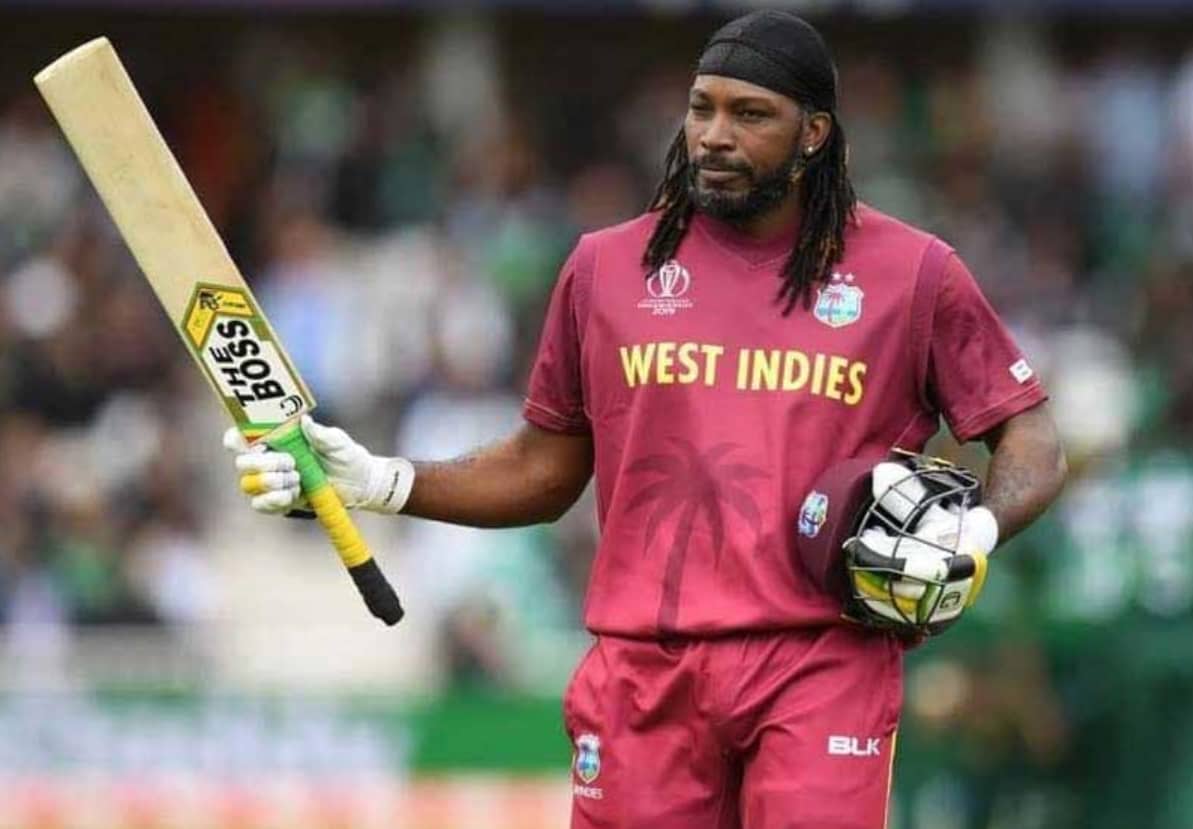
From explosive Caribbean power to clinical European precision, each century carries its own statistical story worth examining closely.
Top 14 Players With Hundreds in the T20 World Cup [2026 Stats]
Fourteen centuries have been scored across all editions of the ICC Men’s T20 World Cup. Thirteen unique innings feature below, with Chris Gayle appearing twice as the only double-centurion in tournament history.
| Player | Team | Score | Balls | 4s | 6s | Strike Rate | Opponent | Venue | Date |
|---|---|---|---|---|---|---|---|---|---|
| Chris Gayle | West Indies | 117 | 57 | 7 | 10 | 205.26 | South Africa | Johannesburg | 11 Sep 2007 |
| Suresh Raina | India | 101 | 60 | 9 | 5 | 168.33 | South Africa | Gros Islet | 2 May 2010 |
| Mahela Jayawardene | Sri Lanka | 100 | 64 | 10 | 4 | 156.25 | Zimbabwe | Providence | 3 May 2010 |
| Brendon McCullum | New Zealand | 123 | 58 | 11 | 7 | 212.06 | Bangladesh | Pallekele | 21 Sep 2012 |
| Alex Hales | England | 116* | 64 | 11 | 6 | 181.25 | Sri Lanka | Chattogram | 27 Mar 2014 |
| Ahmed Shehzad | Pakistan | 111* | 62 | 10 | 5 | 179.03 | Bangladesh | Mirpur | 30 Mar 2014 |
| Tamim Iqbal | Bangladesh | 103* | 63 | 10 | 5 | 163.49 | Oman | Dharamsala | 13 Mar 2016 |
| Chris Gayle | West Indies | 100* | 48 | 5 | 11 | 208.33 | England | Wankhede | 16 Mar 2016 |
| Jos Buttler | England | 101* | 67 | 6 | 6 | 150.74 | Sri Lanka | Sharjah | 1 Nov 2021 |
| Rilee Rossouw | South Africa | 109 | 56 | 7 | 8 | 194.64 | Bangladesh | Sydney | 27 Oct 2022 |
| Glenn Phillips | New Zealand | 104 | 64 | 10 | 4 | 162.50 | Sri Lanka | Sydney | 29 Oct 2022 |
| Pathum Nissanka | Sri Lanka | 100* | 52 | 10 | 5 | 192.30 | Australia | Pallekele | 16 Feb 2026 |
| Yuvraj Samra | Canada | 110 | 65 | 11 | 6 | 169.23 | New Zealand | Chennai | 17 Feb 2026 |
| Sahibzada Farhan | Pakistan | 100* | 58 | 11 | 4 | 172.41 | Namibia | Colombo (SSC) | 18 Feb 2026 |
Fifteen centuries have been scored across all editions of the ICC Men’s T20 World Cup. Chris Gayle accounts for two of those innings, while the 2026 edition has already produced three new centurions.
| Player | Team | Score | Balls | 4s | 6s | Strike Rate | Opponent | Venue | Date |
|---|---|---|---|---|---|---|---|---|---|
| Chris Gayle | West Indies | 117 | 57 | 7 | 10 | 205.26 | South Africa | Johannesburg | 11 Sep 2007 |
| Suresh Raina | India | 101 | 60 | 9 | 5 | 168.33 | South Africa | Gros Islet | 2 May 2010 |
| Mahela Jayawardene | Sri Lanka | 100 | 64 | 10 | 4 | 156.25 | Zimbabwe | Providence | 3 May 2010 |
| Brendon McCullum | New Zealand | 123 | 58 | 11 | 7 | 212.06 | Bangladesh | Pallekele | 21 Sep 2012 |
| Alex Hales | England | 116* | 64 | 11 | 6 | 181.25 | Sri Lanka | Chattogram | 27 Mar 2014 |
| Ahmed Shehzad | Pakistan | 111* | 62 | 10 | 5 | 179.03 | Bangladesh | Mirpur | 30 Mar 2014 |
| Tamim Iqbal | Bangladesh | 103* | 63 | 10 | 5 | 163.49 | Oman | Dharamsala | 13 Mar 2016 |
| Chris Gayle | West Indies | 100* | 48 | 5 | 11 | 208.33 | England | Wankhede | 16 Mar 2016 |
| Jos Buttler | England | 101* | 67 | 6 | 6 | 150.74 | Sri Lanka | Sharjah | 1 Nov 2021 |
| Rilee Rossouw | South Africa | 109 | 56 | 7 | 8 | 194.64 | Bangladesh | Sydney | 27 Oct 2022 |
| Glenn Phillips | New Zealand | 104 | 64 | 10 | 4 | 162.50 | Sri Lanka | Sydney | 29 Oct 2022 |
| Pathum Nissanka | Sri Lanka | 100* | 52 | 10 | 5 | 192.30 | Australia | Pallekele | 16 Feb 2026 |
| Yuvraj Samra | Canada | 110 | 65 | 11 | 6 | 169.23 | New Zealand | Chennai | 17 Feb 2026 |
| Sahibzada Farhan | Pakistan | 100* | 58 | 11 | 4 | 172.41 | Namibia | Colombo (SSC) | 18 Feb 2026 |
All 14 Players With Most Hundreds In T20 WC History
1. Chris Gayle (West Indies) – 2 Centuries
- Match Context: Gayle scored 117 off 57 balls against South Africa at Johannesburg on 11 September 2007. His second century came against England at Wankhede on 16 March 2016, finishing unbeaten on 100 off 48 balls. Both innings came in group stage matches carrying significant qualification weight.
- Strike Rate Impact: His strike rates of 205.26 and 208.33 are the two highest ever recorded in T20 World Cup century innings. Sustaining a rate above 200 across two separate tournament editions confirms consistent elite-level ball-striking output.
- Boundary Pattern: The 2007 innings featured 7 fours and 10 sixes — a power-heavy mix. The 2016 century shifted further toward aerial hitting with 11 sixes and only 5 fours, reflecting his evolved reliance on maximum-impact shots over placement.
2. Suresh Raina (India) – 1 Century
- Match Context: Raina scored 101 off 60 balls against South Africa at Gros Islet on 2 May 2010. He became the first Indian batter to score a T20 World Cup century, achieving the milestone in a group stage fixture.
- Strike Rate Impact: A strike rate of 168.33 sits in the mid-range among all T20 World Cup centurions. Raina maintained steady scoring momentum without major acceleration phases, prioritising wicket preservation alongside consistent boundary flow.
- Boundary Pattern: Nine fours and five sixes indicate a placement-dominant approach. Regular use of ground strokes through gaps ensured India’s scoring rate remained high without relying on high-risk aerial hitting.
3. Mahela Jayawardene (Sri Lanka) – 1 Century
- Match Context: Jayawardene scored exactly 100 off 64 balls against Zimbabwe at Providence on 3 May 2010. The innings came one day after Raina’s century in the same tournament, giving the 2010 edition back-to-back century performances.
- Strike Rate Impact: His strike rate of 156.25 is the lowest recorded among all T20 World Cup centurions. Jayawardene prioritised controlled accumulation over explosive acceleration, maintaining a steady tempo rather than shifting through distinct scoring gears.
- Boundary Pattern: Ten fours and four sixes confirm a strongly placement-based innings. The low six count relative to his ball count reflects a technical approach built on precision timing and gap exploitation over power hitting.
4. Brendon McCullum (New Zealand) – 1 Century
- Match Context: McCullum scored 123 off 58 balls against Bangladesh at Pallekele on 21 September 2012. This remains the highest individual score ever recorded in a T20 World Cup century innings, achieved in a Super 8 group match.
- Strike Rate Impact: A strike rate of 212.06 is the highest ever recorded in a T20 World Cup century innings. Scoring 123 from 58 balls reflects total command over the Bangladesh bowling attack from the opening over.
- Boundary Pattern: Eleven fours and seven sixes show a powerful balance across both scoring modes. The high combined boundary count of 18 indicates McCullum consistently found the rope across all phases of the innings.
5. Alex Hales (England) – 1 Century
- Match Context: Hales scored 116 off 64 balls, unbeaten against Sri Lanka at Chattogram on 27 March 2014. The innings came in a Super 10 group match and formed a key part of England’s strong batting total.
- Strike Rate Impact: A strike rate of 181.25 reflects sustained aggression across the full duration of the knock. Remaining unbeaten confirms Hales controlled the tempo efficiently without being dismissed during a period of accelerated scoring.
- Boundary Pattern: Eleven fours and six sixes show a balanced approach weighted toward ground-based scoring. His high four count indicates strong use of placement through the off-side, supported by calculated aerial hitting rather than indiscriminate power.
6. Ahmed Shehzad (Pakistan) – 1 Century
- Match Context: Shehzad scored 111 off 62 balls, unbeaten against Bangladesh at Mirpur on 30 March 2014. The knock came in the Super 10 stage three days after Hales’ century, making 2014 the most productive edition for centuries to that point.
- Strike Rate Impact: A strike rate of 179.03 reflects consistent attacking intent throughout the innings. Staying unbeaten ensured Pakistan maximised their total, combining steady accumulation with sharp acceleration in the final overs.
- Boundary Pattern: Ten fours and five sixes show a structured boundary distribution with a clear preference for placement over power. Regular four flow across the innings limited pressure without requiring risky aerial shots at every acceleration point.
7. Tamim Iqbal (Bangladesh) – 1 Century
- Match Context: Tamim scored 103 off 63 balls unbeaten against Oman at Dharamsala on 13 March 2016. The innings was Bangladesh’s first ever T20 World Cup century, delivered in the qualifying round against a lower-ranked opponent.
- Strike Rate Impact: A strike rate of 163.49 reflects measured aggression across the full innings duration. Tamim built steadily before shifting gears, maintaining consistent scoring pressure without risking his wicket to reckless shot selection.
- Boundary Pattern: Ten fours and five sixes confirm a ground-heavy boundary strategy. Placement through both off and on-side corridors formed the core of his scoring, with sixes deployed selectively to accelerate at the right moments.
8. Chris Gayle (West Indies) – Century No. 2
- Match Context: Gayle’s second T20 World Cup century came against England at Wankhede on 16 March 2016. He reached 100 off just 47 balls and finished unbeaten on 100 from 48 deliveries in a group stage match with knockout implications.
- Strike Rate Impact: A strike rate of 208.33 makes this the joint-second fastest century in T20 World Cup history alongside his 2007 knock. Reaching three figures in 47 balls against England’s full-strength attack confirms big-match execution at the highest level.
- Boundary Pattern: Only five fours compared to eleven sixes reflects a dramatically aerial-focused approach. More than half his total runs came from sixes, a rare scoring distribution that highlights his evolved power-hitting philosophy in 2016.
9. Jos Buttler (England) – 1 Century
- Match Context: Buttler scored 101 off 67 balls unbeaten against Sri Lanka at Sharjah on 1 November 2021. The innings came during England’s Super 12 campaign and played a central role in managing a successful run chase.
- Strike Rate Impact: A strike rate of 150.74 is the second lowest among all T20 World Cup centurions after Jayawardene. The controlled tempo reflects a chase-management approach, with Buttler building through the powerplay before accelerating in the final phase.
- Boundary Pattern: Six fours and six sixes represent the most evenly balanced boundary distribution across all T20 World Cup centuries. Equal reliance on timing and power reflects Buttler’s technical flexibility across different match situations and conditions.
10. Rilee Rossouw (South Africa) – 1 Century
- Match Context: Rossouw scored 109 off 56 balls against Bangladesh at Sydney on 27 October 2022. South Africa posted a dominant total in this Super 12 group match in Australia, with Rossouw’s innings forming the centrepiece of their batting performance.
- Strike Rate Impact: A strike rate of 194.64 places Rossouw among the most destructive centurions in tournament history. Scoring 109 from 56 balls reflects relentless boundary-hitting with minimal dot ball accumulation across all phases.
- Boundary Pattern: Eight sixes and seven fours represent a six-heavy distribution where aerial hitting marginally exceeded ground-based scoring. This pattern is rare among T20 World Cup centurions and confirms Rossouw’s power-dominant batting style.
11. Glenn Phillips (New Zealand) – 1 Century
- Match Context: Phillips scored 104 off 64 balls against Sri Lanka at Sydney on 29 October 2022. The innings came two days after Rossouw’s century, making 2022 the joint-most productive edition for centuries alongside 2014.
- Strike Rate Impact: A strike rate of 162.50 reflects steady accumulation with targeted acceleration rather than explosive bursts throughout. Phillips built methodically, ensuring New Zealand’s scoring rate remained competitive without taking unnecessary risks early.
- Boundary Pattern: Ten fours and four sixes confirm a strongly placement-based approach. The high four count relative to sixes indicates consistent use of the ground game through gaps, with aerial hitting reserved for the final acceleration phase.
12. Pathum Nissanka (Sri Lanka) – 1 Century
- Match Context: Pathum Nissanka scored 100 off 52 balls unbeaten against Australia at Pallekele on 16 February 2026. He became the first centurion of the T20 World Cup 2026, helping Sri Lanka become the first team from Group B to secure a Super 8 berth with this match-winning knock.
- Strike Rate Impact: A strike rate of 192.30 ranks among the four highest ever recorded in a T20 World Cup century innings. Scoring 100 from 52 balls against Australia’s pace-heavy attack reflects exceptional composure and timing under genuine tournament pressure.
- Boundary Pattern: Ten fours and five sixes show a balanced and structured boundary distribution. Nissanka maintained consistent boundary frequency throughout rather than concentrating his scoring in isolated phases, confirming all-round technical efficiency.
13. Yuvraj Samra (Canada) – 1 Century
- Match Context: Yuvraj Samra scored 110 off 65 balls against New Zealand at MA Chidambaram Stadium, Chennai on 17 February 2026. He became the youngest player to score a century in T20 World Cup history, achieving the feat in a losing cause for Canada against a top-ranked opponent.
- Strike Rate Impact: A strike rate of 169.23 reflects controlled aggression maintained throughout a high-pressure innings. Samra demonstrated the ability to manage scoring tempo against quality international bowling, building steadily before accelerating in the middle overs.
- Boundary Pattern: Eleven fours and six sixes indicate a placement-dominant approach with regular aerial support. His high four count confirms a strong ground game, with sixes deployed strategically rather than as the primary scoring mechanism.
14. Sahibzada Farhan (Pakistan) – 1 Century
- Match Context: Sahibzada Farhan scored 100 off 58 balls unbeaten against Namibia at Sinhalese Sports Club, Colombo on 18 February 2026. The innings came in Pakistan’s final group stage game, anchoring their 199/3 total and securing Super 8 qualification for Salman Agha’s side.
- Strike Rate Impact: A strike rate of 172.41 reflects measured aggression across a structured innings. Farhan accelerated sharply after a cautious start, taking on the Namibia bowling attack in the middle overs and sustaining his momentum through to the final delivery despite visible cramps.
- Boundary Pattern: Eleven fours and four sixes show a strongly placement-based approach with limited aerial hitting. His high four count reflects consistent gap exploitation through the off-side and straight areas, with sixes reserved for specific overpitched deliveries.
FAQs:
- Who has the most hundreds in T20 World Cup history?
Chris Gayle holds the record with two centuries across the 2007 and 2016 editions. No other player has scored more than one hundred in the tournament’s entire history.
- How many total centuries have been scored in the T20 World Cup?
Fifteen centuries have been scored in the ICC Men’s T20 World Cup across all editions from 2007 to 2026. Fourteen different innings are listed, with Gayle appearing twice as the only double-centurion.
Which players with hundreds in the T20 World Cup scored in the 2026 edition?
Players with hundreds in the T20 World Cup from the 2026 edition include Pathum Nissanka of Sri Lanka, Yuvraj Samra of Canada, and Sahibzada Farhan of Pakistan — all three scoring their centuries during the group stage.
- Who recorded the highest strike rate in a T20 World Cup century innings?
Brendon McCullum holds the record with a strike rate of 212.06 during his 123-run knock against Bangladesh at Pallekele in 2012, the highest ever recorded in a T20 World Cup century innings.
Conclusion:
The players with hundreds in the T20 World Cup now number 14 individuals across 15 innings, with the 2026 edition already contributing three new names to this exclusive list.
From Gayle’s twin centuries to Farhan’s Super 8-sealing knock, each performance carries distinct statistical and historical significance.
What unifies all these innings is the ability to sustain elite scoring rates under genuine tournament pressure.
As the 2026 edition progresses, players with hundreds in the T20 World Cup continue to redefine the benchmark for batting excellence in the shortest format.
- Total Centuries: Fifteen centuries scored across all T20 World Cup editions from 2007 to 2026.
- Only Multi-Centurion: Chris Gayle is the only player to score two T20 World Cup hundreds across the 2007 and 2016 editions.
- Fastest Strike Rate: Brendon McCullum recorded the highest strike rate of 212.06 in his 123-run innings against Bangladesh in 2012.
- Latest Entrants (2026): Pathum Nissanka, Yuvraj Samra, and Sahibzada Farhan all joined the list during the ICC Men’s T20 World Cup 2026 group stage.
Also Check:
- Fastest 100 in IPL
- Most Centuries In ODI
- Players with Most Test Centuries Against One Country
- Most Centuries in Vijay Hazare Trophy
About the Author
