When Chennai Super Kings were banned for two years, it felt like the IPL had lost its heartbeat.
Fans were shocked, confused, and angry. How could one of the most successful franchises in IPL history suddenly disappear? What went wrong behind those yellow jerseys and roaring crowds?
The answer wasn’t about match-fixing or poor performance. It was about something that happened in the shadows — illegal betting, powerful connections, and a failure to act when things went wrong.
Why CSK Was Banned for 2 Years?
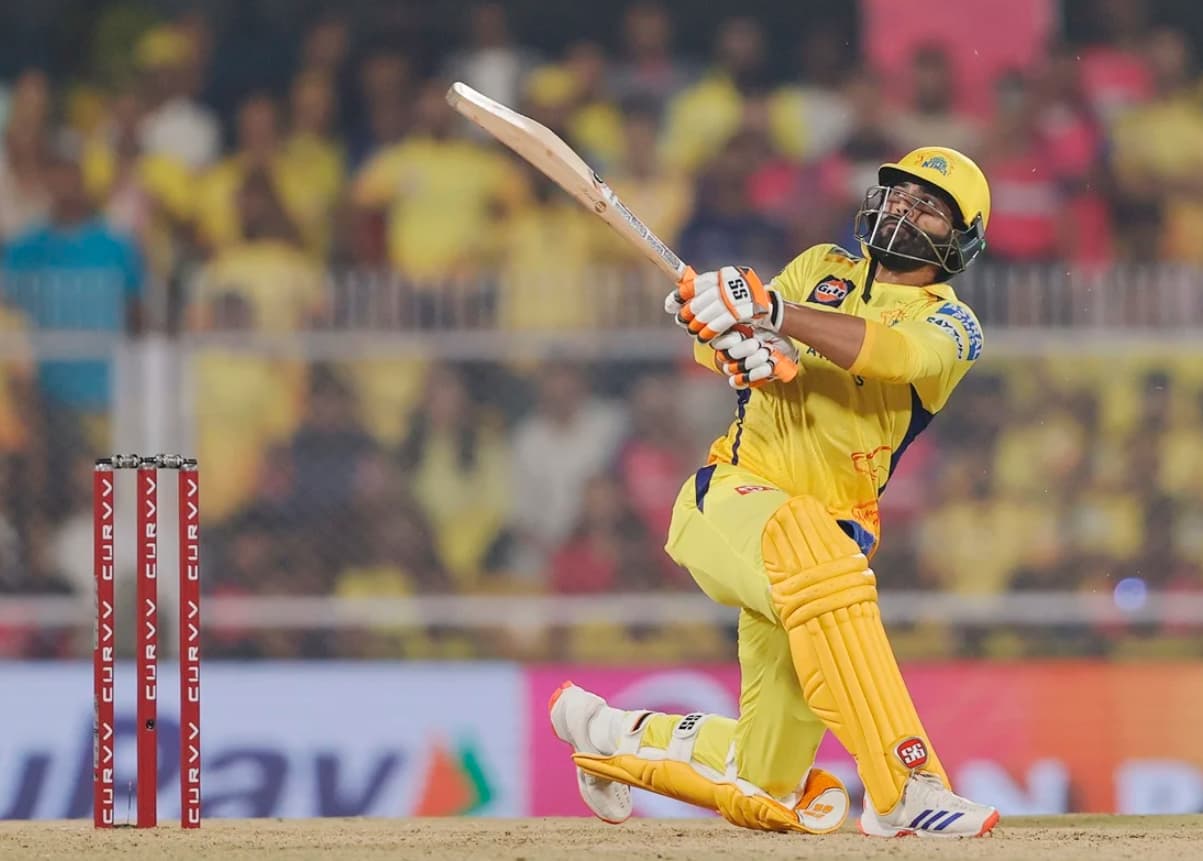
If you’ve ever searched “why CSK banned for 2 years” on Google or scrolled through Reddit threads trying to understand what happened, this article will give you the complete picture.
This is the full story — simple, clear, and honest.
Did You Know? CSK Retentions 2026
The Shock That Ripped Through Cricket
July 2015. That’s when the verdict came.
Chennai Super Kings and Rajasthan Royals — two of IPL’s biggest and most beloved teams — were banned from the tournament for two full seasons.
For CSK fans, it felt like someone had ripped out their hearts. No more Whistle Podu. No more yellow jerseys flooding Chepauk. No more watching MS Dhoni lead the team they loved.
The ban wasn’t about cricket. It was about trust, money, and people who thought they were above the rules.
Let’s go back to where it all started.
Did You Know Who is CSK Team Owner?
2013: When Everything Began to Unravel
The 2013 IPL season looked normal from the outside.
Exciting matches. Packed stadiums. Chris Gayle smashing sixes. Dhoni finishing games. Everything cricket fans loved.
But underneath, something dark was brewing.
In May 2013, Delhi Police arrested three Rajasthan Royals players — S. Sreesanth, Ankeet Chavan, and Ajit Chandila. The charge? Spot-fixing.
Spot-fixing means players deliberately perform badly at specific moments during a match.
They bowl no-balls on purpose, give away runs intentionally, or drop catches — all pre-arranged with bookies who bet on these exact moments.
The arrests sent shockwaves through Indian cricket. But the scandal didn’t stop with players.
Investigators dug deeper and found something even more disturbing: team officials were involved, too.
Did You Know? God Father of IPL
Meet Gurunath Meiyappan: The Man at the Center
Gurunath Meiyappan was the Team Principal of Chennai Super Kings.
He wasn’t just any team official. He was the son-in-law of N. Srinivasan, who was the BCCI President at that time and owned India Cements — the company that controlled CSK.
Being connected to such powerful people should have made Meiyappan extra careful about following rules. Instead, he did the opposite.
What investigators found:
- Meiyappan was placing bets on IPL matches
- He bet on games involving his own team — Chennai Super Kings
- He lost over ₹60 lakhs (around $75,000) in betting
- He was in regular contact with known bookies
- He had access to inside team information
This wasn’t casual gambling with friends. This was organized, repeated involvement in illegal betting activities.
Phone records showed constant communication with bookies. Financial transactions revealed money changing hands. The evidence was overwhelming.
Did You Know? Most Dangerous Batsman in IPL History
Raj Kundra and Rajasthan Royals
Chennai Super Kings wasn’t alone in this mess.
Raj Kundra, co-owner of Rajasthan Royals and husband of Bollywood actress Shilpa Shetty, was also caught in the investigation.
Kundra owned a company involved in online betting. He had financial stakes in matches involving his own team. He violated every conflict-of-interest rule in the book.
Both franchises — CSK and Rajasthan Royals — had officials engaging in activities that could compromise match integrity.
The BCCI initially tried handling this internally. But public anger was too strong. Trust in the IPL was collapsing. Something bigger had to happen.
Supreme Court Takes Control
When corruption reaches the highest levels of sports management, regular investigations aren’t enough.
The Supreme Court of India decided to intervene directly in 2014.
They appointed a special three-member committee to investigate the scandal thoroughly and recommend appropriate punishments. This committee was led by Justice Rajendra Mal Lodha, former Chief Justice of India.
The Lodha Committee’s mission:
- Investigate all allegations against Meiyappan and Kundra
- Examine whether the franchises took proper action
- Determine appropriate punishments for individuals and teams
- Recommend reforms to prevent future corruption
For months, the committee reviewed thousands of pages of evidence. Phone records, financial statements, witness testimonies, betting patterns — everything was examined.
What they discovered painted a damning picture of negligence and corruption.
The Verdict That Changed Everything
July 2015. The Lodha Committee announced its findings.
For individuals:
- Gurunath Meiyappan — banned for life from all cricket activities
- Raj Kundra — banned for life from all cricket activities
For franchises:
- Chennai Super Kings — suspended from IPL for the 2016 and 2017 seasons
- Rajasthan Royals — suspended from IPL for the 2016 and 2017 seasons
This answers the question: Why CSK banned for 2 years fixing? The team’s top official engaged in illegal betting, and the franchise management failed to stop him or take action.
CSK banned for how many years? Two complete seasons — 2016 and 2017.
The committee’s reasoning was crystal clear: When team officials engage in activities that bring disrepute to cricket, the entire franchise must face consequences.
CSK’s management knew about Meiyappan’s activities. They had opportunities to act. They didn’t. That failure meant everyone — the team, the players, the fans — had to pay the price.
Justice Lodha’s words were powerful:
“The game’s image was damaged, and accountability had to be fixed. Any agony suffered by him because of media coverage is too small in comparison to the injury caused to the image of the game.”
Timeline: How the Scandal Unfolded
Let’s map out exactly what happened and when:
| Year | Event |
|---|---|
| May 2013 | IPL betting and spot-fixing scandal exposed; players arrested |
| 2013 | Gurunath Meiyappan and Raj Kundra named in investigations |
| 2014 | Supreme Court appoints Lodha Committee to investigate |
| July 2015 | Lodha Committee delivers verdict; CSK and RR banned |
| 2016 | CSK’s first year of suspension from IPL |
| 2017 | CSK’s second year of suspension from IPL |
| 2018 | CSK returns to the IPL and wins the championship |
This explains the full story behind why CSK banned for 2 years IPL and how it changed the league forever.
If you’ve seen discussions about why CSK was banned for 2 years on Reddit or searched why CSK banned for 2 years wikipedia, this timeline gives you the official sequence of events.
MS Dhoni: The Silent Warrior
Throughout this entire scandal, one name remained completely clean: MS Dhoni.
Captain Cool was never investigated. Never accused. Never implicated. He had absolutely nothing to do with the betting activities.
But the ban affected him deeply.
When CSK was suspended, Dhoni had to find a new team. He joined Rising Pune Supergiant for the 2016 and 2017 seasons. He even captained them in 2016 before stepping down from the role in 2017.
Dhoni didn’t give angry interviews. He didn’t blame anyone publicly. He didn’t create drama.
He didn’t talk much, but his comeback said everything.
When CSK returned in 2018, Dhoni came back immediately. And he did what legends do — he led them straight to the championship.
Fans loved him even more for how he handled the crisis. With dignity. With loyalty. With quiet strength that spoke louder than any words could.
How the Ban Devastated CSK Fans?
For two years, CSK fans lived in cricket darkness.
Imagine being a passionate supporter who’s followed your team through every season. Who knows every player’s name? Who wears yellow jerseys proudly. Who plans your entire week around CSK matches?
Then suddenly, your team disappears.
What CSK fans lost:
- No team to support during IPL seasons
- Their favorite players are scattered across different franchises
- The electric atmosphere at Chepauk stadium — gone
- The Whistle Podu anthem — silenced
- Two years of memories and celebrations — stolen
Players were redistributed to new teams to fill the gap:
| CSK Player | New Team (2016-2017) |
|---|---|
| MS Dhoni | Rising Pune Supergiant |
| Suresh Raina | Gujarat Lions |
| Ravindra Jadeja | Gujarat Lions |
| Brendon McCullum | Gujarat Lions |
| Dwayne Bravo | Gujarat Lions |
| Faf du Plessis | Rising Pune Supergiant |
Watching Dhoni in a different jersey felt wrong. Seeing Raina lead the Gujarat Lions instead of CSK hurt. Everything felt incomplete.
But true CSK fans never abandoned their team. They waited. They believed. They kept the yellow spirit alive even when the team couldn’t play.
The IPL Without CSK and RR
The absence of two major franchises created a massive void.
To fill the gap, the IPL introduced two new teams for the 2016 and 2017 seasons:
- Gujarat Lions — Based in Rajkot and Ahmedabad
- Rising Pune Supergiant — Based in Pune
These teams were temporary replacements, meant to exist only during the suspension period.
Gujarat Lions became home to many CSK players like Raina, Jadeja, Bravo, and McCullum. It was almost like CSK-in-disguise, but it wasn’t the same.
Television ratings dropped. Stadium attendance decreased. The IPL’s charm wasn’t quite the same without its two most passionate fanbases.
Cricket proved something important: you can’t just replace legendary teams. History, loyalty, and emotional connections can’t be manufactured overnight.
2018: The Comeback Nobody Will Forget
When 2018 arrived, CSK fans had waited 730 days for this moment.
Would the magic return? Could a team suspended for betting scandals reclaim its glory? Would fans forgive and come back?
The answers came quickly.
CSK’s incredible 2018 season:
- Most core players returned, including Dhoni, Raina, Jadeja, and Bravo
- MS Dhoni resumed captaincy
- They won 9 out of 14 league matches
- They reached the IPL final
- They defeated Sunrisers Hyderabad to win the championship
It wasn’t just a cricket victory. It was redemption. It was vindication. It was proof that true champions can rise from any depth.
Chepauk Stadium turned into a sea of yellow again. The Whistle Podu anthem echoed louder than ever. Fans cried tears of joy.
It wasn’t just about cricket — it was about trust, loyalty, and belief.
That 2018 triumph remains one of sport’s greatest comeback stories. CSK didn’t just return — they returned as champions.
What Changed After the Scandal?
The CSK-RR ban forced the BCCI and IPL to make serious reforms.
New policies implemented:
- Stricter anti-corruption rules — All team officials must undergo background checks
- Mandatory ethics training — Players and staff attend regular educational sessions
- Transparent ownership disclosure — Franchise owners must reveal all financial interests
- Independent monitoring — Third-party committees now audit franchises regularly
- Stronger penalties — Violations now carry harsher punishments to deter corruption
- Anonymous reporting systems — Anyone can report suspicious activities confidentially
The IPL learned a painful but necessary lesson: No one is bigger than the game.
Even the most successful franchise with the most powerful connections must face consequences if it violates cricket’s integrity.
Looking at Both Sides: Was the Ban Fair?
Let’s be objective about this controversial decision:
| Arguments For the Ban | Arguments Against the Ban |
|---|---|
| Exposed serious corruption in IPL | Punished innocent players who did nothing wrong |
| Forced necessary governance reforms | Fans suffered for management’s mistakes |
| Proved no team is above the law | Damaged CSK’s reputation unfairly |
| Deterred future corruption attempts | Reduced IPL’s popularity and viewership |
| Protected cricket’s integrity | Created financial losses for honest stakeholders |
Both perspectives have merit. But ultimately, protecting cricket’s credibility had to come first.
If powerful teams could escape serious consequences, it would have sent a terrible message: money and connections can override justice.
Frequently Asked Questions
- Why CSK banned for 2 years?
CSK was banned because their Team Principal, Gurunath Meiyappan, was found guilty of illegal betting on IPL matches, including CSK games. The franchise management failed to take action against him, resulting in a two-year suspension covering the 2016 and 2017 IPL seasons.
- Was MS Dhoni involved in the betting scandal?
No. MS Dhoni had absolutely no involvement in the betting activities. He was never investigated, accused, or implicated in any way. He remained completely clean throughout the entire scandal.
- Why CSK banned for 2 years in 2025 searches?
People still search for this in 2025 because the scandal remains one of IPL’s most significant controversies. New cricket fans discovering IPL history often search for information about what happened to understand the full story.
- What years exactly was CSK banned?
CSK was banned from participating in IPL for two complete seasons — 2016 and 2017. They returned in 2018 and won the championship in their comeback season.
- Did CSK win the IPL after returning from the ban?
Yes! CSK made a stunning comeback in 2018 and won the IPL title in their very first season back, defeating Sunrisers Hyderabad in the final under MS Dhoni’s captaincy.
- Why was the Rajasthan Royals also banned?
Rajasthan Royals received an identical two-year ban because their co-owner Raj Kundra was also found guilty of involvement in betting activities. Both franchises faced the same punishment for similar violations.
- Where can I read more details?
For those searching why CSK banned for 2 years wikipedia, the official Wikipedia page contains detailed information about the 2013 scandal and the 2015 Supreme Court verdict. Reddit also has extensive fan discussions about the controversy.
The Human Cost of the Scandal
Beyond rules and punishments, this scandal had real human consequences.
Thousands of CSK employees lost income for two years. Stadium vendors, merchandise sellers, and event staff all suffered financially.
Young cricketers who dreamed of playing for CSK had those dreams delayed. Fans who saved money to watch matches had nothing to attend.
Families who bonded over CSK matches lost those precious moments together.
The scandal reminded everyone that corruption doesn’t just hurt abstract concepts like “cricket’s image.” It hurts real people living real lives.
Lessons That Last Forever
The CSK ban taught cricket several unforgettable lessons:
- For team owners: Your actions affect thousands of people. Responsibility comes with power.
- For officials: Personal misconduct destroys collective trust. One person’s mistakes impact entire organizations.
- For governing bodies: Transparent investigation and fair punishment rebuild public confidence.
- For players: Stay away from anyone involved in betting or corruption, no matter how powerful they seem.
- For fans: True loyalty means standing by your team in bad times, not just good times.
Conclusion: When Champions Fall and Rise Again
The CSK ban was one of the darkest clouds ever to hang over Indian cricket.
It exposed corruption at the highest levels. It broke millions of hearts. It scattered one of cricket’s most successful teams across different franchises.
But darkness doesn’t last forever.
When CSK returned in 2018 wearing those iconic yellow jerseys, when Dhoni walked out to lead them at Chepauk, when they lifted the trophy again — it proved something beautiful.
Mistakes don’t have to define you. Suspensions don’t have to destroy you. Champions can fall hard and still rise again.
The CSK ban was a dark cloud over IPL, but when they came back, they showed what real champions do — they rise again. Mistakes can hurt, but spirit wins in the end.
And that spirit? That yellow spirit that fills stadiums and makes millions chant “Whistle Podu”?
It never died. It just waited for its moment to roar again.
About the Author
