Imagine getting a job at a company. Before you start, you sign a paper that says what work you’ll do and how much you’ll get paid. That’s called a contract!
Cricket Contracts work the same way. They are legal agreements between a cricket player and a team or cricket board.
When a cricketer signs a contract, it means both sides agree on:
- How much money will the player get
- What duties must the player perform
- What happens if someone breaks the rules
Just like a job agreement, Cricket Contracts and Legal Clauses protect both the player and the team. They make sure everyone is treated fairly.
Every professional cricketer needs one. Without a contract, players could be treated unfairly or not paid properly.
Cricket Contracts and Legal Clauses Guide
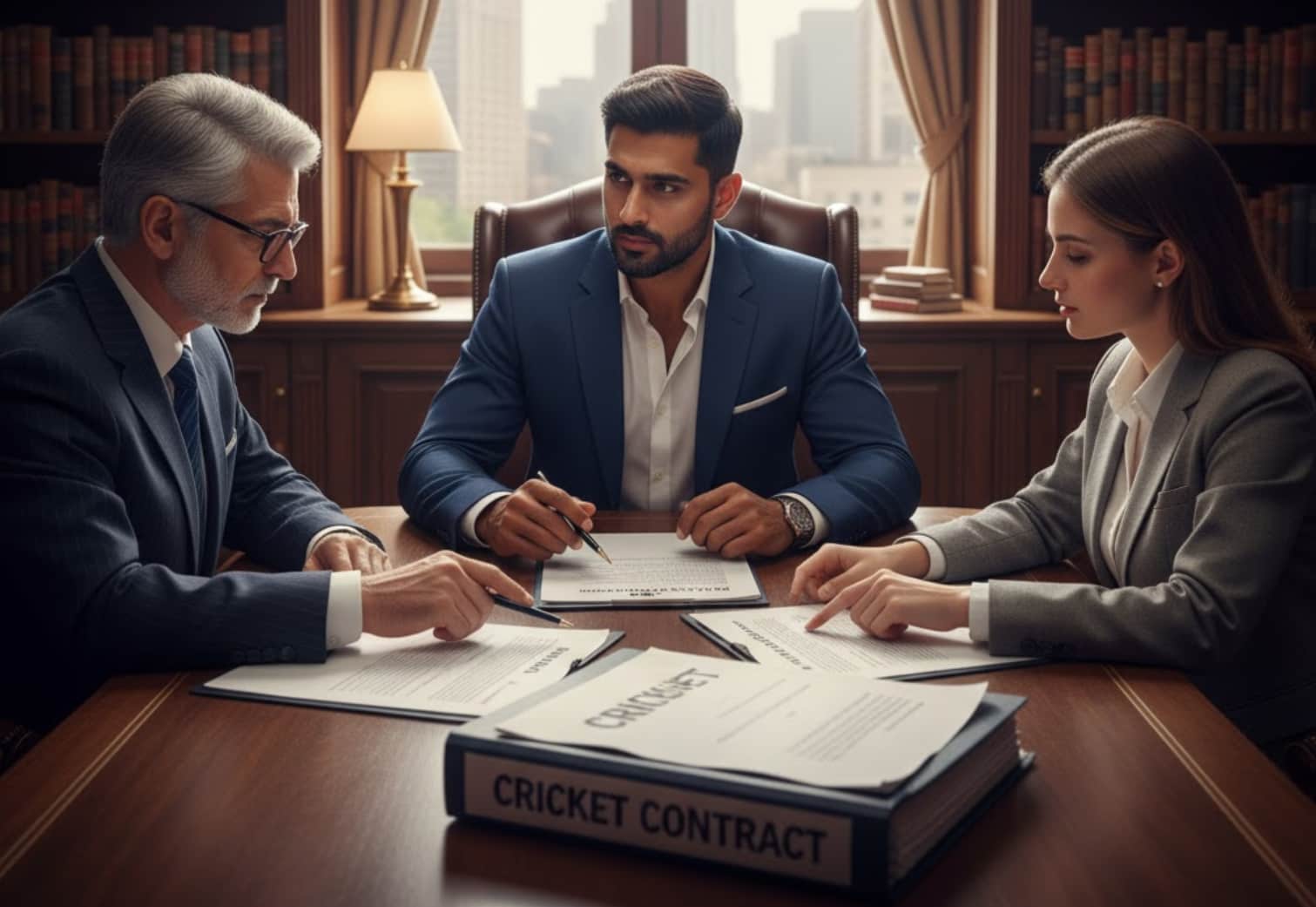
In this guide, we’ll explain everything about cricket contracts in very simple English.
Whether you’re a young cricketer or just a curious fan, you’ll understand how these legal papers work!
Why Cricket Contracts Are Important?
Why do cricketers need contracts? Can’t they just play and get paid?
Well, contracts are super important for many reasons!
Here’s why Cricket Contracts matter:
- ✅ Ensures Fair Payment: The contract clearly states how much the player earns. No confusion, no tricks!
- ✅ Defines Player’s Duties: It explains what the player must do – practice times, match commitments, media duties, etc.
- ✅ Offers Injury Protection: If a player gets injured, the contract says whether they still get paid or get medical support.
- ✅ Keeps Both Sides Accountable: Both the player and team must follow the contract rules. If someone breaks them, there are consequences.
- ✅ Protects Career Rights: Players know exactly when their contract ends and when they can join other teams.
- ✅ Prevents Unfair Bans: Without a contract, teams could ban players without reason. The contract protects against this.
Example: Imagine a player scores a century but doesn’t get paid. Without a contract, they have no proof! But with a signed contract, they can demand their money legally.
That’s why understanding Cricket Contracts is so important for every player!
Key Clauses in Cricket Contracts
Every cricket contract has special sections called “clauses.” These are specific rules written in the contract.
Let’s understand the most important clauses in simple terms:
| Clause | Meaning | Why It Matters |
|---|---|---|
| Payment Clause | States exactly how much money the player gets paid and when | Ensures the player receives a fair salary on time |
| Injury Clause | Explains what happens if a player gets injured during a match | Protects the player financially during the recovery period |
| Image Rights | Decides who controls the player’s photos, videos, and advertisements | Let players earn from their own brand and fame |
| Termination Clause | Describes when and how the contract can be ended by either side | Prevents unfair removal or sudden job loss |
| Code of Conduct | List the behavior rules the player must follow on and off the field | Keeps professionalism and protects team reputation |
| Bonus Clause | Offers extra rewards for good performance (centuries, wickets, wins) | Motivates players to perform better |
| Match Fee Clause | Payment for each match played, separate from base salary | Rewards active participation in games |
| Travel & Accommodation | Who pays for flights, hotels, and food during tours | Ensures player comfort during away matches |
Let’s Break Down Important Ones:
Payment Clause Example:
“The player will receive $50,000 per year, paid monthly at $4,166.”
This makes everything crystal clear!
Injury Clause Example:
“If injured while playing, the player gets full salary for 6 months and free medical treatment.”
This protects the player’s income even when they can’t play.
Image Rights Example:
“The player can do 3 personal advertisements per year. Team gets rights for team merchandise.”
This means the player can earn extra money from their own brand deals!
Termination Clause Example:
“Either side can end the contract with 30 days written notice.”
This prevents sudden surprises for both player and team.
Understanding these clauses is crucial because they form the backbone of Cricket Contracts!
Difference Between Franchise and National Cricket Contracts
Cricket has two main types of contracts. Let’s understand both!
| Type | Example | Who Signs It | Payment Type | Duration |
|---|---|---|---|---|
| Franchise Contract | IPL, BBL, CPL, PSL | Team owner and player | Seasonal or per match | 1-3 months per season |
| National Board Contract | BCCI, ECB, CA, PCB | National cricket board and player | Annual salary + match fees | 1 year (renewable) |
Franchise Contracts (League Cricket):
These are short-term contracts for T20 leagues like IPL.
- Usually lasts 1-3 months
- Pay very high amounts for a short time
- Focus on entertainment and performance
- Example: A player signs with the Mumbai Indians for the IPL 2025 season
National Board Contracts:
These are long-term contracts with your country’s cricket board.
- Last for one full year
- Include base salary plus match fees
- Require year-round availability
- Example: Virat Kohli has an annual contract with the BCCI
Why Players Want Both:
Smart cricketers try to get both types of contracts!
- National contract = stable income all year
- Franchise contracts = extra big money during leagues
- Together = financial security plus bonus earnings
Important Note: Sometimes, national boards don’t allow players to play in certain leagues. This is mentioned in the contract!
Common Legal Issues in Cricket Contracts
Even with contracts, problems can happen. Here are common issues:
- 💰 Late or Unpaid Salaries: Sometimes teams don’t pay players on time. This breaks the payment clause.
Example: Many Caribbean Premier League teams have been accused of delayed payments to players.
- 📸 Disputes Over Image Rights: Teams and players fight over who can use the player’s photos in advertisements.
Example: Some IPL teams wanted full control of player images, but players disagreed.
- ⚖️ Breach of Contract: When either the player or team breaks contract rules.
Player breach example: Skipping matches without permission
Team breach example: Not providing promised facilities
- 🏏 Conflicts During Franchise Tournaments: National boards sometimes don’t release players for leagues, causing legal battles.
- 🤐 Non-Disclosure Agreements (NDAs): Players must keep team strategies and salary details secret. Breaking this can lead to fines.
- 🚫 Unfair Termination: Sometimes teams fire players unfairly without following termination clause rules.
- 💊 Failed Doping Tests: If a player fails a drug test, contracts usually allow immediate termination.
- 📝 Verbal Agreements Gone Wrong: Some players agree to terms verbally but don’t get written proof. This causes huge problems later!
Solution: Always get everything in writing. Never trust just verbal promises!
Famous Cricket Contract Disputes
Let’s look at real-life contract problems involving famous cricketers:
- 1. Chris Gayle vs West Indies Cricket Board
Chris Gayle had major problems with the West Indies board.
What happened: Gayle wanted to play in IPL, but the board didn’t give him a No Objection Certificate (NOC). He sued them!
Lesson: Players need board permission for some leagues. This must be clear in contracts.
- 2. Kevin Pietersen vs England Cricket Board (ECB)
Kevin Pietersen was a star English batsman who got into a huge fight with the ECB.
What happened: ECB terminated his central contract over text messages and behavior issues. KP said it was unfair.
Lesson: Code of conduct clauses are serious. Breaking them can end careers.
- 3. Andre Russell’s Franchise Clash
Andre Russell faced issues when different T20 leagues wanted him at the same time.
What happened: His contract dates overlapped. He couldn’t play in both leagues.
Lesson: Check all contract dates carefully. Make sure they don’t clash!
- 4. Early IPL Contract Controversies
When IPL started in 2008, many contracts were confusing.
What happened: Some players didn’t understand image rights. Teams used their faces on products without permission.
Lesson: IPL improved contracts over time. Now everything is clearer.
- 5. Bangladesh Players’ Strike (2019)
Bangladesh national team players went on strike!
What happened: They demanded better contracts, higher match fees, and more support.
Result: The cricket board agreed to improve contracts.
Lesson: United players can negotiate for better terms.
These stories show why understanding Cricket Contracts is so important!
Tips for Young Cricketers Before Signing a Contract
If you’re a young cricketer dreaming of playing professionally, listen carefully!
Here’s what you MUST do before signing any Cricket Contracts:
- 📖 Always Read the Full Contract: Never sign without reading every single page. Even if it’s boring, read it!
- 👨⚖️ Have a Sports Lawyer Check It: Get an expert to review the contract. They’ll find problems you might miss.
- ✍️ Never Agree Verbally — Get Written Proof: If someone promises you something, ask them to write it in the contract.
- 💰 Understand Bonuses and Payment Schedule: Know exactly when and how you’ll get paid. Ask about bonuses for good performance.
- 🏥 Check Injury Policies Carefully: What happens if you get hurt? Will you still get paid? Read this part very carefully!
- 📸 Protect Your Image Rights: Your face is your brand! Make sure you control your own image rights.
- 🚪 Know Your Right to Terminate: Can you leave if things go wrong? What’s the notice period? Understand this clearly.
- 📂 Keep Copies of Everything: Save digital and physical copies of all signed contracts. You might need them later!
- ❓ Ask Questions: If you don’t understand something, ASK! Don’t feel shy. It’s your career.
- 🤝 Negotiate: Don’t just accept the first offer. Try to negotiate better terms politely.
- ⏰ Check Contract Duration: How long does the contract last? When can you renegotiate?
Remember: A contract is like marriage to a team. Make sure you’re making the right decision!
Role of Sports Lawyers in Cricket
Who is a sports lawyer? And why do cricketers need them?
A sports lawyer is a legal expert who specializes in sports contracts and player rights.
What Sports Lawyers Do:
- 🔍 Review Contracts: They read every detail and explain it in simple language to players.
- ⚠️ Spot Dangerous Clauses: They find unfair terms that could harm the player’s career or earnings.
- 💬 Negotiate Better Terms: They help players ask for more money, better bonuses, or fairer conditions.
- ⚖️ Handle Disputes: If there’s a problem, they represent the player in legal battles.
- 📝 Draft Contracts: They write fair contracts that protect player interests.
When to Hire a Sports Lawyer:
- Before signing your first professional contract
- When joining a big league like the IPL
- If you’re having problems with a team
- When negotiating image rights deals
- If a team is not paying you
Example: “A sports lawyer helps cricketers make sure their contracts are safe and fair. They’re like bodyguards for your career!”
Cost: Sports lawyers charge fees, but good ones pay for themselves by getting better contracts!
Finding One: Ask your cricket academy, senior players, or national board for recommendations.
How are Cricket Boards Improving Contract Transparency?
Good news! Cricket boards are making contracts fairer and clearer.
You Must Read: Richest Cricket Boards in the World
BCCI (Board of Control for Cricket in India):
BCCI now publishes central contract grades publicly!
- Grade A+: ₹7 crore per year (top players like Rohit, Bumrah)
- Grade A: ₹5 crore per year
- Grade B: ₹3 crore per year
- Grade C: ₹1 crore per year
This transparency helps everyone know what players earn.
ECB (England and Wales Cricket Board):
ECB offers different contract types:
- Test contracts
- White-ball contracts
- Pace bowling contracts (special protection for fast bowlers)
Cricket Australia:
CA improved contracts after player strikes. They now share more revenue with players.
ICC (International Cricket Council):
ICC supports fair player rights globally. They create guidelines that all cricket boards should follow.
Modern Improvements:
✅ Published salary ranges
✅ Better injury protection
✅ Mental health support included
✅ Clear image rights policies
✅ Players can have agents/lawyers
✅ Dispute resolution systems
Why This Matters:
When contracts are transparent, players feel safer. They know their rights and can make better career decisions.
Young cricketers today have much better protection than players from 20 years ago!
Conclusion – Why Understanding Cricket Contracts Matters?
We’ve covered a lot about Cricket Contracts in this guide!
Let’s recap the most important points:
- ✅ Cricket contracts are legal agreements that protect both players and teams
- ✅ Key clauses include payment, injury protection, image rights, and termination
- ✅ Franchise contracts (IPL) are different from national board contracts
- ✅ Common problems include unpaid salaries and image rights disputes
- ✅ Famous players like Gayle and Pietersen faced contract issues
- ✅ Young cricketers must read contracts carefully and hire sports lawyers
- ✅ Modern cricket boards are making contracts more transparent
Final Message:
Cricket is not just about runs and wickets — it’s also about knowing your rights!
Whether you’re a young player signing your first contract or a fan curious about how cricket works, understanding Cricket Contracts gives you power.
The more you know about contracts, the stronger your game becomes off the field.
Never sign anything without reading it. Ask questions. Get expert help. Protect your career!
Remember: A good contract can make your cricket dreams come true. A bad contract can end your career before it starts.
So learn, ask, and always know your rights! 🏏
Quick Checklist for Players:
- Read the entire contract
- Hire a sports lawyer
- Understand all clauses
- Check payment schedule
- Verify injury protection
- Protect image rights
- Keep signed copies
- Know termination rules
Play smart, both on and off the field!
About the Author
