November 14, 1992, stands as one of cricket’s most significant dates—not because of a century scored or a match won, but because technology officially entered the game’s decision-making process for the first time.
On that day in Durban, South Africa, cricket witnessed its first-ever third umpire decision, marking the beginning of an era where television replays would help settle close calls and controversial moments. The sport would never be quite the same again.
At the center of this historic moment was a young Indian batting sensation named Sachin Tendulkar, just 19 years old at the time.
He became the answer to a question that would be asked for decades to come: Who Was The First Player To Be Given Out By The Third Umpire?
Who Was The First Player To Be Given Out By The Third Umpire?
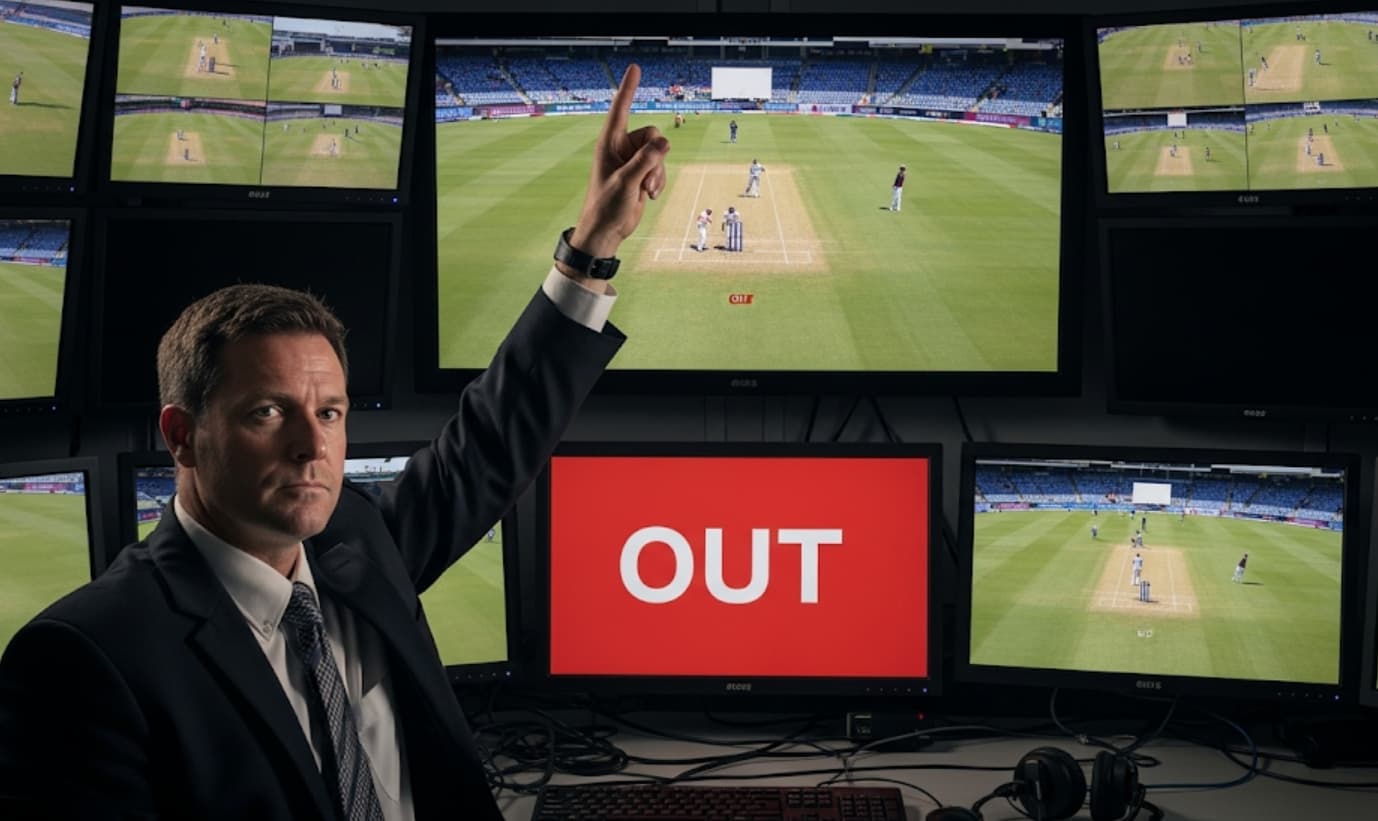
While Tendulkar would go on to achieve countless records and milestones in his legendary career, this particular moment, a run-out dismissal during a Test match, changed cricket in ways that extended far beyond his personal statistics.
Sachin’s Historic Dismissal: Key Facts
| Detail | Information |
|---|---|
| Date | November 14, 1992 |
| Venue | Kingsmead Stadium, Durban, South Africa |
| Match | India vs South Africa, 1st Test |
| Player Dismissed | Sachin Tendulkar (India) |
| Age at Time | 19 years old |
| Fielder | Jonty Rhodes (South Africa) |
| Third Umpire | Karl Liebenberg |
| On-field Umpire | Not specified in records |
| Mode of Dismissal | Run out |
| Technology Used | Television replay with multiple camera angles |
| Decision Method | Slow-motion review to check bat position when the bails came off |
| Historic Significance | First-ever third umpire decision in international cricket |
The Full Story of the Run-Out That Made History
The scene was set at Kingsmead Stadium during India’s first innings. South Africa had posted 254 runs, and India was building their response with young Sachin Tendulkar at the crease.
He was already showing flashes of the batting brilliance that would define his career, looking comfortable as he rotated the strike.
Tendulkar pushed a delivery into the leg side and immediately called for what appeared to be a straightforward single. His focus was on completing the run quickly and keeping the scoreboard moving.
However, Sachin hadn’t fully accounted for one crucial factor—Jonty Rhodes was in the field.
Rhodes, who would go on to become one of cricket’s most celebrated fielders, was positioned at mid-wicket and already demonstrating the explosive athleticism that would make him legendary.
He charged toward the ball with remarkable speed, gathered it cleanly in one smooth motion, and unleashed a direct throw at the stumps.
The ball crashed into the wickets while Tendulkar was still scrambling to make his ground, his bat desperately reaching for the safety of the crease line.
The moment was incredibly close—too close for the on-field umpire to judge with absolute certainty using just his eyes.
In what would become a groundbreaking decision, the field umpire made an unprecedented call: he signaled to refer the matter to the third umpire, Karl Liebenberg, who was stationed off the field with access to television monitors showing multiple camera angles.
This was the moment cricket officials had been preparing for, the first real test of whether technology could successfully assist with close calls.
Liebenberg watched the replays carefully, examining the footage frame by frame from different angles.
The slow-motion replays revealed the crucial details—exactly where Tendulkar’s bat was at the precise moment the bails came off the stumps.
The evidence was clear: Sachin’s bat was fractionally short of the crease line when the stumps were broken.
After reviewing the footage, Liebenberg communicated his decision to the on-field umpire, who raised his finger to signal “out.”
The red light flashed on the stadium’s big screen, confirming the dismissal. Tendulkar walked back to the pavilion, unknowingly having just made cricket history as the first player ever dismissed through technological assistance.
History of Third Umpire Technology in Cricket
The third umpire system was officially introduced in 1992 as cricket administrators recognized that technology could help settle decisions that were simply too difficult for human eyes to judge accurately in real-time.
Before this innovation, all decisions were made exclusively by two on-field umpires whose judgments were final, regardless of whether they were correct.
When was 3rd umpire was introduced in cricket is answered simply: 1992, the same year that Sachin Tendulkar’s dismissal proved the concept could work successfully in live match situations.
Initially, the third umpire’s role was strictly limited to run-outs and stumpings – decisions where determining whether a batsman had reached the crease before the stumps were broken required examining split-second timing that human eyes often couldn’t capture accurately.
South Africa’s re-entry into international cricket after the end of apartheid provided an ideal testing ground for this innovation, as the country had a modern broadcasting infrastructure and enthusiasm for trying new approaches.
The success of that first decision involving Tendulkar demonstrated that technology and cricket could work together harmoniously, paving the way for the system’s expansion into other areas of officiating.
Then vs Now: How the Third Umpire Changed Cricket?
| Era | Decisions Allowed | Technology Used | Accuracy Level |
|---|---|---|---|
| Pre-1992 | None (all decisions by on-field umpires only) | No technology used | Dependent entirely on the umpire’s eyesight and judgment |
| 1992-2000s | Run-outs and stumpings only | Basic TV replays, multiple camera angles | Significantly improved for referred decisions |
| 2000s-2008 | Added boundaries, catches near ground, no-balls | Enhanced camera systems, slow-motion technology | High accuracy for referred decisions |
| 2008-Present (DRS Era) | All decision types, including LBW and edges | Hawk-Eye, UltraEdge, ball-tracking, thermal imaging | Near-perfect accuracy with comprehensive technology |
The Lasting Importance of This Historic Incident
The answer to Who Was The First Player To Be Given Out By The Third Umpire is Sachin Tendulkar, but the real significance extends far beyond one player’s dismissal.
This moment demonstrated that cricket was willing to embrace technological progress when it served fairness and accuracy.
For a sport that prided itself on centuries-old traditions where umpires’ decisions were sacred and unchallengeable, allowing television replays to influence outcomes represented a massive philosophical shift that fundamentally changed the game’s approach to officiating.
This historic decision laid the foundation for every technological advancement that followed in cricket.
Without taking that first step in 1992, we wouldn’t have the sophisticated Decision Review System (DRS) that now allows teams to challenge umpiring decisions, or advanced tools like Hawk-Eye for tracking ball trajectory, UltraEdge for detecting faint edges, and comprehensive ball-tracking for LBW appeals.
The Tendulkar run-out proved that technology could make cricket fairer without diminishing its competitive spirit or essential character, opening doors to innovations that have made the modern game more accurate and just than ever before.
5 Duties of Third Umpire in Cricket Today
The role of the third umpire has grown tremendously since Karl Liebenberg made that first decision in 1992.
Here are the 5 duties of the third umpire in cricket as they function in today’s game:
- Run-outs and Stumpings: Review television replays to determine whether batsmen completed their runs before stumps were broken or wicketkeepers completed dismissals before removing bails
- Boundary Decisions: Confirm whether fielders touched boundary ropes while in contact with the ball, determining whether hits should be scored as fours or sixes
- Catch Verification: Check whether catches were taken cleanly with the ball secured, or if the ball touched the ground before being completely held
- No-Ball Monitoring: Verify whether bowlers overstepped the front crease or delivered other illegal deliveries, particularly when wickets fall
- DRS Coordination: Serve as the decision review official when teams challenge on-field calls, managing multiple technologies to assess appeals accurately
Bonus Cricket Technology Trivia
The third umpire concept has become so embedded in cricket culture that it’s even inspired popular entertainment.
The Third Umpire Movie explored how technological changes in officiating affected players, umpires, and fans emotionally, dramatizing the human side of cricket’s evolution.
The phrase has also entered everyday language—references like Third Umpire Jai Club appear in social contexts where people discuss needing unbiased outside opinions to settle disputes, showing how cricket terminology influences broader culture beyond the sport itself.
Cricket’s technological journey continued beyond Tendulkar’s historic dismissal. The first player out by DRS marked another milestone when the comprehensive Decision Review System launched in 2008, combining multiple technologies to create a complete review process.
Each advancement—from basic replays to sophisticated ball-tracking and thermal imaging—traces its origins back to that pioneering moment in Durban when cricket first acknowledged that technology could help achieve fairer outcomes without compromising the game’s spirit.
Conclusion: A Legacy That Transformed Cricket Forever
When cricket fans ask Who Was The First Player To Be Given Out By The Third Umpire, the answer will always be Sachin Tendulkar on November 14, 1992, at Kingsmead in Durban.
But this simple fact represents far more than cricket trivia—it marks the exact moment when the sport acknowledged that tradition and technological progress could work together to create better outcomes.
That run-out wasn’t just about one dismissal; it symbolized cricket’s willingness to evolve and improve while maintaining the competitive integrity and sporting values that define the game.
Today, when we watch cricket matches with instant replays, comprehensive review systems, ball-tracking graphics, and sophisticated technology helping umpires make accurate decisions, we’re witnessing the direct legacy of that pioneering moment.
The question Who Was The First Player To Be Given Out By The Third Umpire points to Sachin Tendulkar and Jonty Rhodes’ brilliant throw, but the real story is about how cricket chose accuracy over guesswork and fairness over rigid tradition.
That single decision by Karl Liebenberg changed cricket forever, proving that even sports with centuries of history can successfully embrace innovation when it serves the fundamental goal of getting decisions right and ensuring fair play for everyone.
Sachin’s dismissal opened the door to cricket’s technological era, and the sport has been better for it ever since.
About the Author
