Knocking in a cricket bat remains a critical process for protecting willow and ensuring optimal performance.
The method involves compressing wood fibers using controlled force, preparing the bat to withstand ball impact during match play.
Without proper preparation, even premium-grade willow can crack or split during early use.
The process takes time but extends bat life significantly.
Modern techniques have evolved, offering players multiple options depending on available equipment and time constraints.
Some prefer traditional mallet methods, while others use automated solutions or alternative approaches.
How to Knock in a Cricket Bat?

This guide covers the complete preparation sequence, including oiling, compression, protection, and testing phases required before match use.
Disclosure: This post contains affiliate links, which means as an Amazon Associate, I may earn a small commission if you purchase through my links. There’s no additional cost to you, and I only recommend products I genuinely believe in.
Top 6 Steps to Knocking in Your Cricket Bat
| Step Number | Action | Time Required | Key Focus Area | Common Mistakes to Avoid |
|---|---|---|---|---|
| 1 | Apply Raw Linseed Oil | 15-20 minutes | Face, edges, and back only | Over-oiling, applying to splice/handle |
| 2 | Dry the Bat | 24 hours | Horizontal position, face up | Vertical drying, insufficient time |
| 3 | Repeat Oiling (If Needed) | 24-48 hours total | Natural finish bats only | Oiling before anti-scuff application |
| 4 | Knock In the Bat | 4-6 hours | Edges, toe, face compression | Direct edge strikes, excessive force |
| 5 | Apply Protection | 30 minutes | Fibre tape on edges | Skipping edge protection |
| 6 | Test the Bat | 1-2 net sessions | Check for seam marks | Using new balls for testing |
Best 6 Step Guide to Knocking in Your Cricket Bat
Step 1: Apply Raw Linseed Oil the Right Way

Raw linseed oil prepares willow by increasing flexibility and moisture content. Apply 2-3 teaspoons evenly across the face, edges, and back of the bat using a soft cloth.
Avoid the splice area completely. Oil here can seep into the handle joint, causing structural weakness. Labels and stickers should also remain oil-free.
Use moderate amounts only. Excessive oil deadens wood fibers, reducing responsiveness and performance quality. The willow should appear darker but not saturated.
Rub oil into the surface rather than letting it pool. Even distribution ensures consistent fiber conditioning across all impact zones.
Step 2: Let the Bat Dry Properly

Position the bat horizontally with the face pointing upward. This allows oil to penetrate evenly without pooling at the toe or handle.
Leave undisturbed for 24 hours minimum. Rushing this stage prevents proper absorption and leaves surface moisture that affects the knocking process.
Room temperature matters. Avoid direct sunlight or heaters, which cause uneven drying and potential warping. Standard indoor conditions work best.
The bat should feel dry to the touch before proceeding. Any surface tackiness indicates insufficient drying time.
Step 3: Repeat the Oiling (Only If Needed)
Natural finish bats require two additional oiling cycles. Complete steps 1 and 2 twice more for thorough fiber conditioning.
Bats with anti-scuff sheet protection need only one oiling round. The protective layer reduces moisture requirements since the willow face remains covered.
Players using extra-tech face protection should skip oiling entirely. Adhesive backing requires untreated wood for proper bonding.
Check manufacturer guidelines if uncertain. Some pre-oiled bats arrive partially prepared and need reduced treatment.
Step 4: Knock In the Bat for Match Readiness
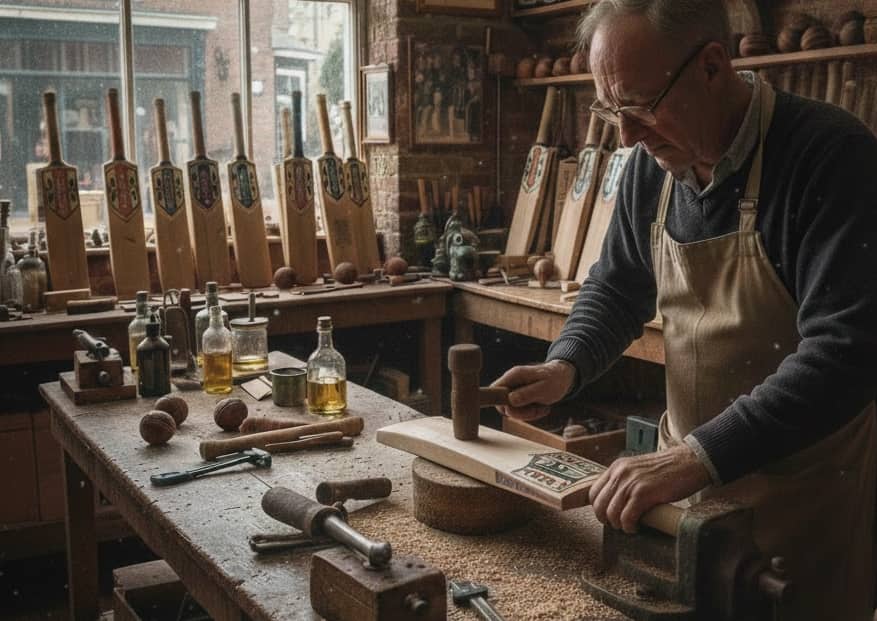
The compression phase shapes how the bat responds to ball impact. Multiple methods exist depending on available equipment and time.
| Method | Control Level | Damage Risk | Time Required | Best For |
|---|---|---|---|---|
| Mallet | High | Low (if done correctly) | 4-6 hours | First-time users, precise control |
| Ball in Sock | Medium | Medium | 6-8 hours | No equipment available |
| Old Ball Throw-downs | Medium | Medium-High | Multiple sessions | Combining practice with prep |
| Machine Service | Very High | Very Low | 2-3 hours | Professional results, time-saving |
Avoid direct strikes on edges, toe, or back. These areas require glancing blows only to prevent splitting.
Step 5: Protect the Bat with Fibre Tape & Anti-Scuff Sheet
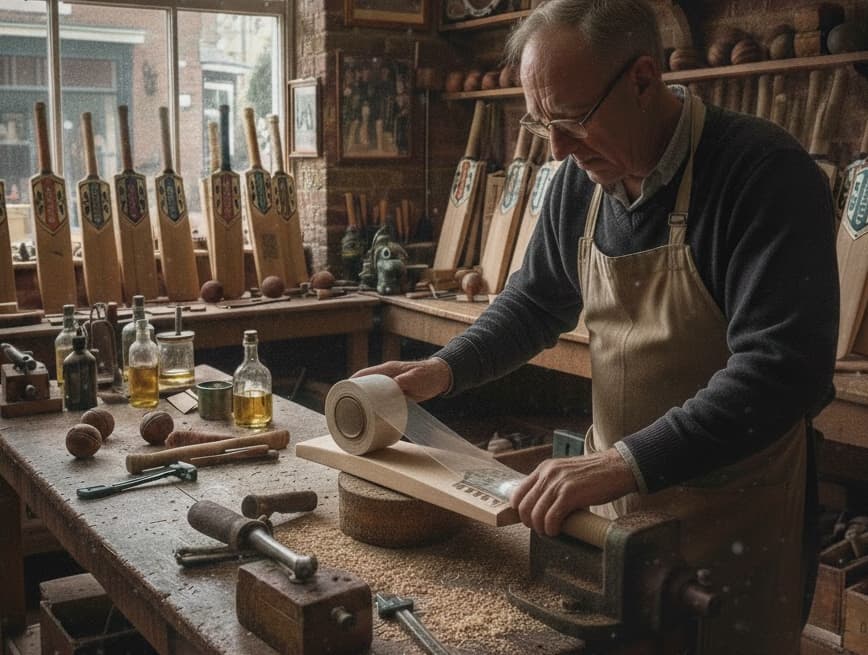
Apply the best quality fibre tape along both edges after compression is complete. This prevents edge splitting from mishit deliveries and extends usable life.
Anti-scuff sheets cover the face, providing impact protection without deadening response. Fit carefully to avoid air bubbles or wrinkles.
Skip face protection if you prefer a natural willow feel. Some players prioritize feedback over protection, accepting shorter bat life.
Extra-tech sheets offer thicker protection for hard cricket balls or aggressive playing styles. Choose based on playing conditions and ball quality.
Step 6: Final Bat Testing Before Use
Use quality old balls for initial testing. New balls are too hard and can damage incompletely prepared bats.
Conduct light net sessions or controlled throw-downs. Monitor the face for seam marks or indentations after 20-30 ball contacts.
Deep marks indicate insufficient preparation. Return to the knocking process for another 1-2 hours before retesting.
Properly prepared bats show minimal marking. The surface should rebound ball impact without visible fiber damage.
The Advantages of a Well Knocked In Cricket Bat
- Enhanced Structural Integrity
Compressed fibers resist cracking and splitting during match play. The bat withstands fast bowling and hard ball impacts without developing structural damage.
- Improved Energy Transfer
A compacted wood surface generates a better rebound force. Shots travel further with identical swing mechanics compared to unprepared bats.
- Expanded Sweet Spot
Consistent compression across the face increases the effective hitting area. Off-center strikes still produce acceptable shot results.
- Better Vibration Control
Prepared fibers absorb impact shock more effectively. Reduced vibration transmission means less hand and wrist discomfort during extended batting.
- Extended Usable Life
Protected surfaces resist wear from repeated ball contact. Well-maintained bats last multiple seasons rather than requiring early replacement.
- Cost Efficiency
Initial time investment prevents premature bat failure. Proper preparation eliminates repair costs and extends purchase cycles.
5 Disadvantages of NOT Knocking In Your Cricket Bat
- Immediate Cracking Risk
An unprepared willow cannot handle ball impact forces. Surface cracks appear within the first few deliveries, particularly on edges and toe areas.
- Shortened Bat Life
Uncompressed fibers degrade rapidly under match conditions. Replacement becomes necessary after just a few innings instead of full seasons.
- Poor Shot Performance
Softwood absorbs rather than transfers energy. Reduced ball speed and distance occur even with proper batting technique.
- Increased Impact Shock
Every ball contact sends excessive vibration through the hands and wrists. Extended play causes discomfort and potential injury risk.
- Wasted Investment
Premium-grade willow performs no better than lower grades without proper preparation. The purchase cost provides no performance benefit.
FAQs
- Is it necessary to knock in a cricket bat?
All English willow bats require knocking in before match use. Kashmir willow is more durable but still benefits from basic preparation.
- Which oil is used for bat knocking?
Raw linseed oil is standard. Avoid boiled linseed oil or other wood treatments that contain additives or drying agents.
- How long should I knock my bat in for?
Minimum 4 hours with a mallet. Machine services complete preparation in 2-3 hours. Natural methods using balls take 6-8 hours.
- How does knocking in a bat work?
Controlled force compresses wood fibers, increasing density and resistance. The process hardens the surface while maintaining flexibility.
- Can we knock a bat without oiling?
Oiling first is strongly recommended. Dry wood is brittle and more prone to damage during the compression process.
- How to properly knock a bat?
Start with light force, gradually increasing pressure. Work systematically across the face, paying special attention to edges with glancing blows.
- How to tell if a bat is knocked in?
Test with old balls. Minimal seam marks and good rebound indicate readiness. Deep indentations mean more preparation is needed.
- Does knocking in improve ping?
Prepared bats produce better sound and response. The “ping” indicates proper compression and energy transfer capability.
Conclusion:
The knocking in cricket bats remains essential for performance and durability.
Skipping preparation stages leads to premature failure and poor shot results.
Players can choose methods based on available equipment and time.
Traditional mallet approaches offer maximum control, while modern services provide professional results.
Quick Timeline Summary:
- Oiling: 15-20 minutes per application
- Drying: 24 hours between coats
- Knocking: 4-6 hours minimum
- Testing: 1-2 net sessions with old balls
Start preparation well before match dates. Rushing the process reduces effectiveness and increases damage risk during initial use.
About the Author
