161.3 kilometers per hour. That number changed cricket forever.
It’s just a measurement—three digits, one decimal point. But those numbers represent something extraordinary.
They capture the absolute peak of human athletic performance. They mark the moment when speed became cricket’s most celebrated achievement.
Before technology measured bowling speeds precisely, debates raged endlessly. Old players claimed their generation bowled faster.
Young players insisted modern training produced superior athletes. Nobody could prove anything definitively. Arguments relied on subjective feelings and unreliable memories.
Then came scientific measurement. Suddenly, debates had answers. Speed guns provided objective truth. Radar systems eliminated guesswork. Cricket finally knew exactly how fast bowlers delivered the ball.
This precision created new obsessions. Commentators announced speeds after every delivery. Scoreboards displayed velocity rankings.
Fans compared bowlers across eras using concrete data. Speed records became as important as batting averages and bowling figures.
But numbers tell incomplete stories. A speed measurement captures one instant—the ball leaving a bowler’s hand. It doesn’t show the years of training required.
It doesn’t reveal the injuries sustained. It can’t measure the fear in a batsman’s eyes or the roar from the crowd when stumps go flying.
Still, those numbers matter. They provide standardized ways to compare athletes separated by decades. They identify excellence objectively. They settle arguments that once had no resolution.
Fastest Bowlers in The World
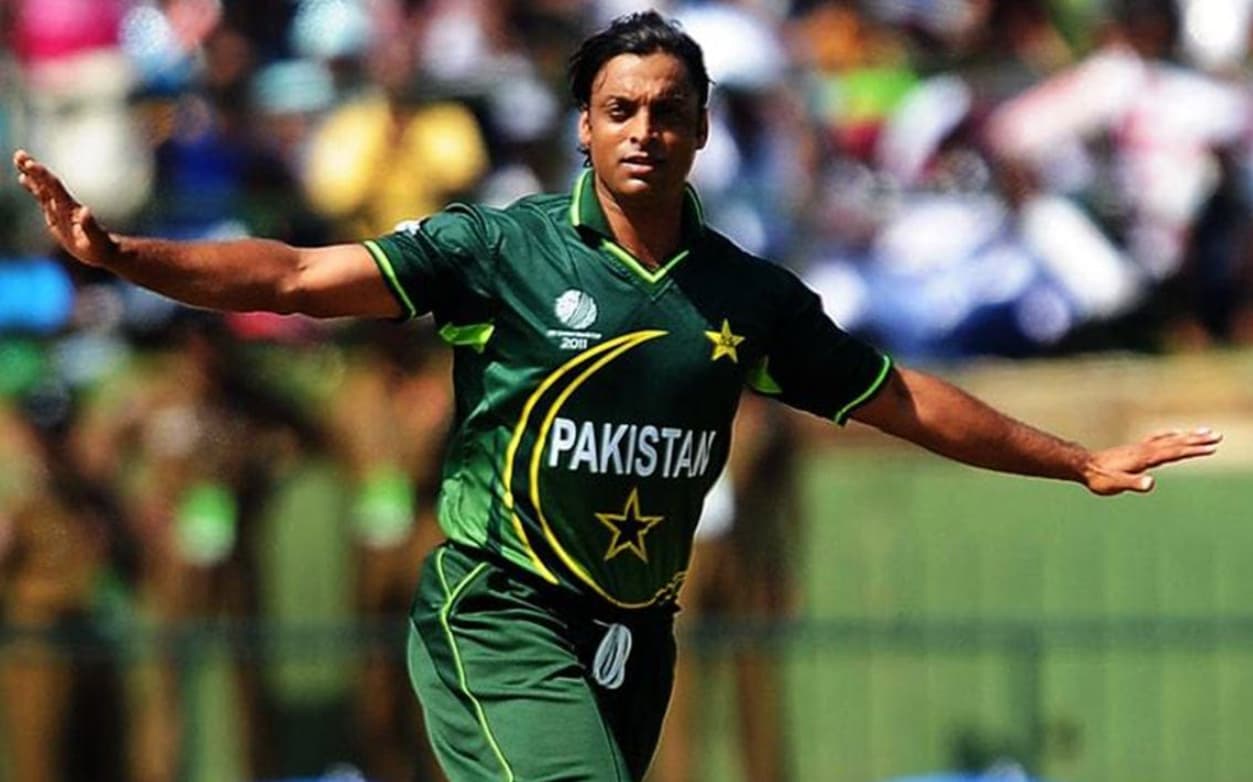
This exploration examines both the numbers and the stories behind them.
The fastest bowlers in the world earned their status through measurable achievements and unforgettable performances that statistics alone can’t fully capture.
Speed Snapshot: The Complete Rankings
Here’s every officially recorded speed demon who touched 152+ km/h:
| Rank | Bowler | Speed | Country | Year | Opponent |
|---|---|---|---|---|---|
| 1 | Shoaib Akhtar | 161.3 km/h | Pakistan | 2003 | England |
| 2 | Brett Lee | 161.1 km/h | Australia | 2005 | New Zealand |
| 3 | Shaun Tait | 161.1 km/h | Australia | 2010 | England |
| 4 | Jeff Thomson | 160.6 km/h | Australia | 1975 | West Indies |
| 5 | Mitchell Starc | 160.4 km/h | Australia | 2015 | New Zealand |
| 6 | Andy Roberts | 159.5 km/h | West Indies | 1975 | Australia |
| 7 | Fidel Edwards | 157.7 km/h | West Indies | 2003 | South Africa |
| 8 | Mitchell Johnson | 156.8 km/h | Australia | 2013 | England |
| 9 | Mohammad Sami | 156.4 km/h | Pakistan | 2003 | Zimbabwe |
| 10 | Shane Bond | 156.4 km/h | New Zealand | 2003 | India |
| 11 | Nantie Hayward | 154.4 km/h | South Africa | 2001 | India |
| 12 | Jason Gillespie | 153.9 km/h | Australia | 2002 | South Africa |
| 13 | Waqar Younis | 153.0 km/h | Pakistan | 1993 | South Africa |
| 14 | Jasprit Bumrah | 153.26 km/h | India | 2018 | Australia |
| 15 | Allan Donald | 152.9 km/h | South Africa | 1998 | England |
These 15 names represent the top 10 fastest bowlers of all time and beyond. Their speeds redefined what humans could achieve with a cricket ball.
Top 15 World Fastest Bowlers of All Time
1. Shoaib Akhtar (Pakistan)
The Rawalpindi Express – Cricket’s Undisputed Speed King
- Peak Speed: 161.3 km/h
- Country: Pakistan
- Year: 2003 World Cup
- Opponent: England (Cape Town)
- Bowling Style: Right-arm express with controversial action
Shoaib Akhtar didn’t just bowl fast—he bowled angry. Every delivery carried aggression, pride, and fire. Born in Rawalpindi in 1975, Akhtar grew up wanting to be cricket’s fastest. He achieved that dream spectacularly.
That 161.3 km/h delivery against England remains cricket’s holy grail. For 22 years, nobody’s come close. Akhtar regularly touched 158-160 km/h, making him consistently express rather than a one-delivery wonder.
His action generated endless controversy. ICC questioned his bent elbow multiple times. But the speed? Undeniable. Akhtar proved you could bowl 160+ km/h and still swing the ball both ways.
Why Fans Rate Him: First bowler to officially break 100 mph; holds the all-time speed record that defines top 20 fastest bowler in the world discussions; his pace inspired an entire generation of Pakistani fast bowlers.
2. Brett Lee (Australia)
The Golden-Haired Speed Machine
- Peak Speed: 161.1 km/h
- Country: Australia
- Year: 2005
- Opponent: New Zealand (Auckland)
- Bowling Style: Right-arm express with perfect technique
Brett Lee changed what consistency meant in fast bowling. Other bowlers touched 160 km/h once or twice. Lee bowled entire spells above 150 km/h for 13 years straight.
Born in 1976 in Wollongong, Lee combined Hollywood looks with devastating pace. His smile made him cricket’s most popular bowler. His speed made him cricket’s most feared. That combination was unstoppable.
Lee’s 161.1 km/h against New Zealand showcased textbook fast bowling—full run-up, high arm action, perfect follow-through. He took 310 Test wickets while maintaining express pace. Nobody else achieved that.
Beyond cricket, Lee helped opponents who got injured. He represented sportsmanship perfectly while bowling bouncers at heads. That paradox made him special.
Why Fans Rate Him: Most consistent express pacer ever; maintained 150+ km/h for 14 years; two World Cup wins; gentleman off-field, warrior on-field; remains active in cricket commentary and music.
3. Shaun Tait (Australia)
The Wild Thing Who Bowled Fire
- Peak Speed: 161.1 km/h
- Country: Australia
- Year: 2010 World Twenty20
- Opponent: England (Bridgetown)
- Bowling Style: Right-arm slinging action
Shaun Tait’s nickname said everything—”Wild Thing.” He was unpredictable, unorthodox, and unplayable when fit.
Tait’s slinging action looked wrong. Coaches would’ve corrected it in youth cricket. But somehow, that weird action generated a freakish pace. His 161.1 km/h against England remains the fastest World Cup delivery ever bowled.
Injuries destroyed Tait’s career. He played only 35 internationals across all formats because his body couldn’t handle the stress. But in those brief appearances, he terrified batsmen. His short bursts of 155+ km/h won matches Australia had no right to win.
Tait represents cricket’s biggest “what if” story. Imagine if he’d stayed healthy. Could he have broken Akhtar’s record? We’ll never know.
Why Fans Rate Him: Fastest World Cup delivery ever; unique action that generated unnatural pace; brief but brilliant international career; T20 leagues loved hiring him for pure intimidation factor.
4. Jeff Thomson (Australia)
The Original Speed Demon
- Peak Speed: 160.6 km/h
- Country: Australia
- Year: 1975 (measured in the 1976 study)
- Opponent: West Indies
- Bowling Style: Right-arm catapult/sling action
Before modern technology, there was Thommo.
Jeff Thomson terrorized batsmen in the 1970s with a catapult action nobody could replicate. He didn’t run smoothly—he charged awkwardly. His arm didn’t come over cleanly—it whipped around violently. But the results? Terrifying.
The 1976 scientific study measured Thomson at 160.6 km/h using high-speed cameras. This wasn’t modern radar, but it proved he was genuinely expressive. Batsmen didn’t need technology to confirm it—they felt it in their hands, ribs, and helmets.
Thomson’s partnership with Dennis Lillee defined Australian cricket’s aggressive identity. Together, they won the Ashes series and made grown men fear cricket balls.
Why Fans Rate Him: Original speed merchant before modern technology; pioneered the catapult action; formed legendary pace duo with Lillee; batsmen from the 1970s still speak his name with genuine fear.
5. Mitchell Starc (Australia)
Today’s Left-Arm Lightning Bolt
- Peak Speed: 160.4 km/h
- Country: Australia
- Year: 2015 World Cup
- Opponent: New Zealand (Auckland)
- Bowling Style: Left-arm fast with swing
Mitchell Starc represents modern fast bowling perfection.
Born in 1990, Starc combines pace with skills that earlier speedsters lacked. His yorker is cricket’s deadliest weapon—accurate, fast, and impossible to counter. He’s mastered death-over bowling while maintaining 150+ km/h.
That 160.4 km/h delivery against New Zealand came during Starc’s greatest tournament. He destroyed the 2015 World Cup, taking 22 wickets and winning Player of the Tournament. His pace with swing made him unplayable.
Starc remains active among the fastest bowlers in the world 2025, consistently bowling 145-152 km/h across all formats. His longevity proves you can bowl fast and stay healthy with proper management.
Why Fans Rate Him: Most successful fast bowler in World Cup history; lethal yorker combined with express pace; left-arm angle creates different problems; all-format excellence spanning 15 years.
6. Andy Roberts (West Indies)
The Caribbean Pace Pioneer
- Peak Speed: 159.5 km/h
- Country: West Indies
- Year: 1975
- Opponent: Australia
- Bowling Style: Right-arm fast
Andy Roberts started the legendary West Indies pace factory.
Born in Antigua in 1951, Roberts proved Caribbean cricketers could bowl genuinely fast. Before him, the West Indies relied on spin and batting. Roberts changed everything. His bouncer became cricket’s most feared weapon in the 1970s.
That 159.5 km/h delivery against Australia established Caribbean dominance in fast bowling. Roberts taught future legends like Malcolm Marshall, Joel Garner, and Curtly Ambrose. His legacy lives in every West Indian fast bowler since.
Roberts wasn’t just fast—he was smart. He varied his pace brilliantly, using slower balls and cutters alongside express deliveries. This combination made him almost unplayable.
Why Fans Rate Him: Founded West Indies pace tradition; first Caribbean bowler consistently touching 90+ mph; his students became legends; tactical genius combined with raw pace.
7. Fidel Edwards (West Indies)
Proof That Size Doesn’t Limit Speed
- Peak Speed: 157.7 km/h
- Country: West Indies
- Year: 2003
- Opponent: South Africa
- Bowling Style: Right-arm sling action
At 5’8″ and barely 70kg, Fidel Edwards proved physics wrong.
His slinging action generated surprising pace from a tiny frame. That 157.7 km/h delivery against South Africa shocked everyone watching. How could someone so small bowl so fast?
Edwards’ action was unique—low arm, whippy release, short run-up. Coaches would’ve “corrected” it, ruining his pace. Fortunately, nobody did. He kept his natural action and troubled the world’s best batsmen.
Injuries plagued Edwards’ career, limiting him to 55 Tests. But every appearance brought genuine pace and entertainment. He bowled with a heart that exceeded his physical size.
Why Fans Rate Him: Shortest bowler to break 155 km/h; proved technique beats size; unique action that coaches studied; inspiration for smaller cricketers dreaming of bowling fast.
8. Mitchell Johnson (Australia)
The 2013-14 Ashes Nightmare
- Peak Speed: 156.8 km/h
- Country: Australia
- Year: 2013 Ashes
- Opponent: England
- Bowling Style: Left-arm fast with bounce
Mitchell Johnson’s 2013-14 Ashes performance entered cricket folklore.
His 156.8 km/h deliveries, combined with awkward left-arm angles from around the wicket, destroyed England’s batting completely. He took 37 wickets that series. Batsmen literally feared for their safety facing him.
Johnson’s mustache became famous during that summer. But it was his pace and aggression that won matches. He bowled bouncers that batsmen couldn’t handle. His yorkers crashed into stumps. Everything worked perfectly.
Before that series, critics questioned Johnson. After it, he was an all-time great. That’s the power of one devastating summer of express pace bowling.
Why Fans Rate Him: Most intimidating fast bowler of the 2010s; destroyed England single-handedly; 313 Test wickets; pace combined with awkward angles created impossible challenges.
9. Mohammad Sami (Pakistan)
The Talented Speedster Who Never Fulfilled Potential
- Peak Speed: 156.4 km/h
- Country: Pakistan
- Year: 2003
- Opponent: Zimbabwe
- Bowling Style: Right-arm fast
Mohammad Sami had everything—pace, swing, aggression. But inconsistency ruined his career.
Born in Karachi in 1981, Sami could bowl 155+ km/h on his day. That 156.4 km/h delivery against Zimbabwe showcased Pakistan’s fast bowling genes. But too often, he couldn’t maintain that pace or accuracy.
Sami’s career became frustrating. He’d bowl unplayable spells one match, then disappear the next. Selectors gave him 36 Tests and 87 ODIs, always hoping consistency would arrive. It rarely did.
Despite limitations, Sami proved that Pakistan produces naturally quick bowlers. His peak speed matched anyone’s. His skills existed. Only the mental consistency was missing.
Why Fans Rate Him: Joint-second fastest Pakistani ever; peak speed matched the fastest bowl in the world contenders; represented unfulfilled potential; showed raw pace isn’t enough without consistency.
10. Shane Bond (New Zealand)
Cricket’s Saddest Speed Story
- Peak Speed: 156.4 km/h
- Country: New Zealand
- Year: 2003
- Opponent: India
- Bowling Style: Right-arm fast
Shane Bond’s career breaks cricket fans’ hearts.
His 156.4 km/h delivery against India showed world-class pace and pinpoint accuracy. Bond had everything needed to become an all-time great. Then his body betrayed him.
Injuries destroyed Bond’s career. He played only 18 Tests before his back, knees, and abdomen gave up. Imagine if he’d stayed healthy—he could’ve taken 400+ wickets bowling 150+ km/h.
Bond’s strike rate (38.7) remains the best among all bowlers who regularly touched 150 km/h. That statistic shows what cricket lost when injuries ended his career prematurely.
Why Fans Rate Him: Best strike rate among express pacers; most accurate 150+ km/h bowler ever; New Zealand’s greatest fast bowling tragedy; what-if story that haunts Kiwi cricket.
11. Nantie Hayward (South Africa)
The Underrated Proteas Rocket
- Peak Speed: 154.4 km/h
- Country: South Africa
- Year: 2001
- Opponent: India
- Bowling Style: Right-arm fast
Competition kept Nantie Hayward from greatness.
His 154.4 km/h delivery against India proved genuine pace. But playing alongside Pollock, Donald, and Ntini limited his opportunities. South Africa’s pace attack was too strong—someone had to miss out.
Hayward played only 13 Tests despite regularly clocking 150+ km/h. When selected, he troubled the world-class batsmen. But depth kept him sidelined.
His career shows that talent alone doesn’t guarantee success. Timing and luck matter too. Hayward had pace but played in the wrong era for his country.
Why Fans Rate Him: Genuine 150+ km/h pace in cricket’s most competitive bowling lineup; overshadowed by legendary teammates; represents how team depth can hide individual talent.
12. Jason Gillespie (Australia)
The Thinking Fast Bowler
- Peak Speed: 153.9 km/h
- Country: Australia
- Year: 2002
- Opponent: South Africa
- Bowling Style: Right-arm fast-medium
“Dizzy” Gillespie combined brains with occasional express pace.
His 153.9 km/h delivery against South Africa showed he could accelerate when needed. But Gillespie’s strength was consistency, not pure speed. He bowled 135-145 km/h most days, cranking it up strategically.
Gillespie’s partnership with Glenn McGrath dominated world cricket for years. While McGrath bowled perfectly at 130-135 km/h, Gillespie provided pace and bounce. Together, they were unstoppable.
His 259 Test wickets came from accuracy, not intimidation. But knowing he could bowl 150+ km/h kept batsmen honest.
Why Fans Rate Him: Proved accuracy matters more than pure pace; integral to Australia’s dominance; partnership with McGrath was cricket’s most effective; occasional express pace surprised batsmen.
13. Waqar Younis (Pakistan)
The Yorker King
- Peak Speed: 153.0 km/h
- Country: Pakistan
- Year: 1993
- Opponent: South Africa
- Bowling Style: Right-arm fast with reverse swing
Waqar Younis revolutionized fast bowling.
His 153.0 km/h delivery wasn’t his deadliest weapon—his yorker was. Waqar mastered reverse swing and the toe-crushing yorker before anyone else. Combined with pace, these skills made him unstoppable.
Alongside Wasim Akram, Waqar formed cricket’s greatest pace partnership. They terrorized batsmen throughout the 1990s with pace, swing, and intelligent bowling. Their partnership defined Pakistani cricket’s golden era.
Waqar’s 416 Test wickets came from skills, not just speed. But that underlying pace made every other weapon more dangerous.
Why Fans Rate Him: Reverse swing pioneer; deadliest yorker in cricket history; 400+ Test wickets; partnership with Wasim Akram was legendary; proved skills plus pace creates perfection.
14. Jasprit Bumrah (India)
India’s Pace Revolution Leader
- Peak Speed: 153.26 km/h
- Country: India
- Year: 2018 Perth Test
- Opponent: Australia
- Bowling Style: Right-arm fast with unique action
Jasprit Bumrah changed Indian cricket forever.
His 153.26 km/h delivery against Australia made him the fastest among all fastest bowlers in India ever recorded. But speed isn’t Bumrah’s only weapon. His unique action generates a deceptive pace that batsmen can’t read.
Bumrah’s yorker is cricket’s current best. His death-over skills are unmatched. He consistently bowls 145+ km/h across all formats while maintaining pinpoint accuracy. That combination makes him special.
Before Bumrah, India relied on spin. Now, India’s pace attack rivals Australia’s. That transformation happened because Bumrah proved Indian bowlers could bowl genuinely fast.
Why Fans Rate Him: Fastest Indian ever officially recorded; led India’s pace revolution; best death-over bowler currently; unique action batsmen can’t read; all-format excellence.
15. Allan Donald (South Africa)
White Lightning
- Peak Speed: 152.9 km/h
- Country: South Africa
- Year: 1998
- Opponent: England
- Bowling Style: Right-arm fast
Allan Donald spearheaded South Africa’s cricket return.
His 152.9 km/h delivery against England combined speed with 15 years of sustained excellence.
“White Lightning” took 330 Test wickets, becoming South Africa’s greatest fast bowler despite playing in the modern era’s toughest competition.
Donald’s aggression matched his pace. He bowled with fire, competing fiercely in every match. His duels with batsmen became legendary—none more famous than his confrontation with Michael Atherton.
Donald represented South African cricket’s fighting spirit. His pace and heart inspired an entire nation.
Why Fans Rate Him: 330 Test wickets of consistent excellence; spearheaded South Africa’s cricket revival; pace combined with a 15-year career; most successful South African fast bowler; nickname perfectly captured his style.
Deep Dive: How Speed Records Were Made?
Understanding the fastest bowlers in cricket history requires knowing how speeds were measured.
The Technology Evolution:
- 1970s – High-Speed Cameras
Scientists used specialized cameras capturing 2,000 frames per second. This 1976 study measured Thomson, Roberts, Lillee, and Holding. It wasn’t official match technology, but it proved these legends bowled genuinely express pace.
The study tracked the ball from release to pitch, calculating speed based on distance and time. Results showed Thomson at 160.45 km/h—stunning for pre-modern technology.
- 1990s – Introduction of Speed Guns
Radar guns arrived in international cricket during the 1990s. These devices measured ball speed from the bowler’s hand, providing instant results. Early versions were less accurate than modern equipment.
Waqar Younis and Allan Donald were measured using these first-generation guns. Their speeds are reliable but slightly less precise than today’s measurements.
- 2000s – Modern Radar Systems
The 2003 World Cup used advanced radar providing highly accurate measurements. This tournament gave us Shoaib Akhtar’s 161.3 km/h record—cricket’s most famous speed measurement.
Modern radar tracks the ball’s entire flight path, accounting for air resistance and deceleration. Speeds are measured from the bowler’s release point, providing consistent data.
- 2010s-Present – Ultra-Precise Technology
Today’s Hawk-Eye systems and advanced radar provide accuracy within 0.1 km/h. They track every delivery in international cricket, giving comprehensive speed data.
This technology created the world’s fastest bowler ranking systems that fans follow today. Every delivery is measured, creating massive databases of bowling speeds.
Speed Milestones: The Elite Clubs
Only true speed merchants join these exclusive clubs:
The 150+ km/h Club (Genuinely Fast)
Approximately 30-40 bowlers have officially touched 150 km/h in international cricket. This includes everyone in our top 15 plus modern bowlers like Mark Wood, Anrich Nortje, Lockie Ferguson, and Umran Malik.
Reaching 150 km/h requires exceptional technique, fitness, and natural ability. Most fast bowlers never achieve it.
The 155+ km/h Club (Express Pace)
Only about 15 bowlers reached 155 km/h. This group includes Akhtar, Lee, Tait, Thomson, Starc, Roberts, Edwards, and Johnson. At this speed, batsmen have roughly 0.4 seconds to react.
These bowlers were genuinely expressive, with bowling speeds that intimidate and overwhelm.
The 160+ km/h Club (Elite of Elite)
Only five bowlers officially broke 160 km/h:
- Shoaib Akhtar (161.3 km/h)
- Brett Lee (161.1 km/h)
- Shaun Tait (161.1 km/h)
- Jeff Thomson (160.6 km/h)
- Mitchell Starc (160.4 km/h)
This speed represents cricket’s absolute peak. Breaking 160 km/h requires everything—technique, strength, timing, and luck—coming together perfectly.
The fastest ball in cricket 175 kph myth comes from confusion about this club. Fans heard “over 160” and exaggerated it to 175. No official measurement ever recorded anything close to 175 km/h.
Fastest Bowlers in India: Breaking The Spin Tradition
Indian cricket traditionally focused on spin bowling. Legendary spinners like Bishan Singh Bedi, Anil Kumble, and Harbhajan Singh defined Indian bowling for decades.
Fast bowling was an afterthought. Indian pacers rarely troubled world-class batsmen. Then everything changed.
The Pace Revolution:
- Javagal Srinath (1990s-2000s)
India’s first genuine fast bowler. Srinath regularly bowled 145-150 km/h, proving Indians could bowl fast. He took 236 Test wickets, paving the way for future generations.
- Zaheer Khan (2000s-2010s)
Mastered swing bowling at 135-145 km/h. Zaheer’s skills mattered more than pure speed, but he proved Indian pacers could succeed internationally. His 311 Test wickets inspired younger bowlers.
Current Generation:
- Jasprit Bumrah leads India’s current pace attack. His 153.26 km/h against Australia remains the fastest by any Indian bowler. But Bumrah’s consistency across formats matters more than peak speed.
- Mohammed Shami bowls 140-145 km/h with exceptional seam movement. His 200+ international wickets prove India’s pace depth.
- Mohammed Siraj emerged as an aggressive 140-145 km/h bowler capable of leading attacks.
- Umran Malik represents raw pace, regularly touching 152-155 km/h. He needs consistency but has genuine speed.
Rising Stars:
Mayank Yadav clocked 155+ km/h in IPL 2024, shocking everyone. If injuries don’t ruin him, he could become India’s fastest ever.
The IPL transformed Indian pace bowling. Young bowlers train year-round, improve fitness dramatically, and learn from international coaches. This created the pace revolution Indian cricket needed.
Why Raw Pace Is Becoming Rarer?
Despite improved fitness and training, genuine 155+ km/h bowling is becoming less common. Here’s why:
Workload Management
- Modern Problem: Bowlers play year-round across all formats
- Result: Bodies can’t sustain maximum pace constantly
- Solution: Strategic workload management reduces peak speeds
Akhtar played in an era with less cricket. He could bowl at absolute maximum speed occasionally because he had recovery time. Today’s bowlers play 50+ matches annually, making sustained 160 km/h impossible.
Injury Concerns
- High speeds stress joints, tendons, and muscles
- Career-ending injuries increase above 150 km/h
- Teams prioritize longevity over peak pace
- Modern sports science emphasizes injury prevention
Shane Bond’s career shows what happens when bodies can’t handle express pace. Modern teams protect bowlers, reducing injury risk but also peak speeds.
Bowling Actions Under Scrutiny
- ICC monitors bowling actions closely
- Controversial actions get reported and corrected
- “Corrections” often reduce the pace significantly
- Legal actions rarely generate 160+ km/h
Akhtar’s action was controversial but generated an extreme pace. Modern scrutiny would’ve forced changes, possibly reducing his speed. This regulatory environment makes 160+ km/h harder to achieve legally.
Pitch Conditions
- Modern pitches favor batsmen
- Less bounce and carry reduce fast bowling effectiveness
- Bowlers adjust pace to suit conditions
- T20 cricket emphasizes variations over pure speed
Fast bowling works best on bouncy, seaming pitches. Modern pitches offer less assistance, making pure pace less effective. Bowlers adapt by reducing speeds and adding skills.
Strategic Evolution
- Modern cricket values accuracy over pace
- Death-over skills matter more than intimidation
- Variations win matches, not pure speed
- Teams prefer a consistent 145 km/h over an occasional 160 km/h
Cricket’s tactical evolution reduced pure pace’s importance. A bowler maintaining 145 km/h accurately is more valuable than one occasionally hitting 160 km/h but spraying it everywhere.
Frequently Asked Questions
- Q: Who officially holds the record for cricket’s fastest delivery?
Shoaib Akhtar bowled 161.3 km/h against England during the 2003 World Cup in Cape Town, South Africa. This remains the official record measured by modern radar technology.
- Q: Did anyone really bowl 175 km/h as some people claim?
No. The fastest ball in cricket 175 kph is completely false. No official measurement has ever recorded anything above 161.3 km/h. The 175 km/h figure comes from exaggerated stories and misunderstandings about speed measurements.
- Q: Who are the fastest bowlers currently playing in 2025?
Mitchell Starc (Australia), Mark Wood (England), and Anrich Nortje (South Africa) regularly bowl 150+ km/h. Among younger bowlers, Umran Malik and Mayank Yadav from India show exceptional pace potential.
- Q: How fast does Jasprit Bumrah bowl compared to other Indian pacers?
Bumrah bowled 153.26 km/h against Australia in 2018, making him the fastest Indian bowler ever officially recorded. He typically bowls 145-148 km/h, which is significantly faster than most Indian pacers historically.
- Q: Why has nobody broken Shoaib Akhtar’s speed record since 2003?
Modern cricket’s workload is extremely demanding. Bowlers play year-round across all formats, making it physically impossible to sustain maximum speeds. Akhtar played in an era with less cricket, allowing him to bowl absolute peak pace occasionally. Additionally, modern bowling actions face stricter scrutiny, and injury management prioritizes career longevity over peak speeds.
Conclusion: Shoaib Akhtar’s Untouchable Throne
The Fastest Bowlers in the World created cricket’s most thrilling moments.
Shoaib Akhtar’s 161.3 km/h record stands alone after 22 years. No bowler has seriously challenged it.
Modern cricket’s workload, injury management, and tactical evolution make breaking it incredibly unlikely.
But Akhtar represents more than just one delivery. He embodies cricket’s eternal love affair with speed.
From Jeff Thomson’s catapult action to Mitchell Starc’s lethal yorkers, fast bowling defines cricket’s essence.
These 15 legends proved that pace changes everything. It intimidates batsmen, swings matches, and creates unforgettable moments.
Whether it’s Brett Lee’s consistent excellence, Mitchell Johnson’s Ashes destruction, or Jasprit Bumrah leading India’s pace revolution, speed always matters.
Cricket fans will forever debate who was truly the fastest. Some believe Thomson bowled quicker than measured.
Others think modern technology understates current bowlers’ speeds. But official records are clear, Akhtar sits atop cricket’s speed mountain, untouched and likely untouchable.
That’s why we celebrate these speed kings. They represent cricket’s most primal appeal—the battle between bat and ball at its most basic and thrilling level.
When a fast bowler charges in at full pace, everything else disappears. It’s just speed, courage, and cricket in its purest form.
More Related Cricket Guides:
- How Many International Cricket Stadiums in India
- Smallest Cricket Stadium In India
- India’s Second-Largest Cricket Stadium
- Who Was The First Player To Be Given Out By The Third Umpire
- Longest Sixes In Cricket History
Source:
- https://en.wikipedia.org/wiki/Fast_bowling
- https://www.reddit.com/r/Cricket/comments/1i5q692/whos_the_fastest_active_bowler_in_the_world_right/
- https://cricket.fandom.com/wiki/List_of_Currently_Active_Fast_Bowlers
About the Author
