Cricket club valuations in the Indiana Premier League have soared in recent years.
Many of them are now worth billions of dollars. This meteoric increase in IPL valuations has people asking: What exactly is fueling it?
The answer, as always, is manyfold. Climbing popularity is among the biggest factors. Cricket has become one of the most global sports in the world.
That organically far-flung reach is huge when it comes to organizational valuations. Especially when you factor in the simultaneous rise in cricket betting online.
Indeed, the wider-spread participation in general sports betting is a boon for virtually every professional sports league.
For so long, only football clubs and NFL franchises routinely received billion-dollar valuations.
Over the past seven years or so, though, we are now seeing more squads from the IPL, NBA, MLB, and NHL earn these billion-dollar designations.
What is fueling the Indian Premier League’s Billion-Dollar Franchise Valuations?
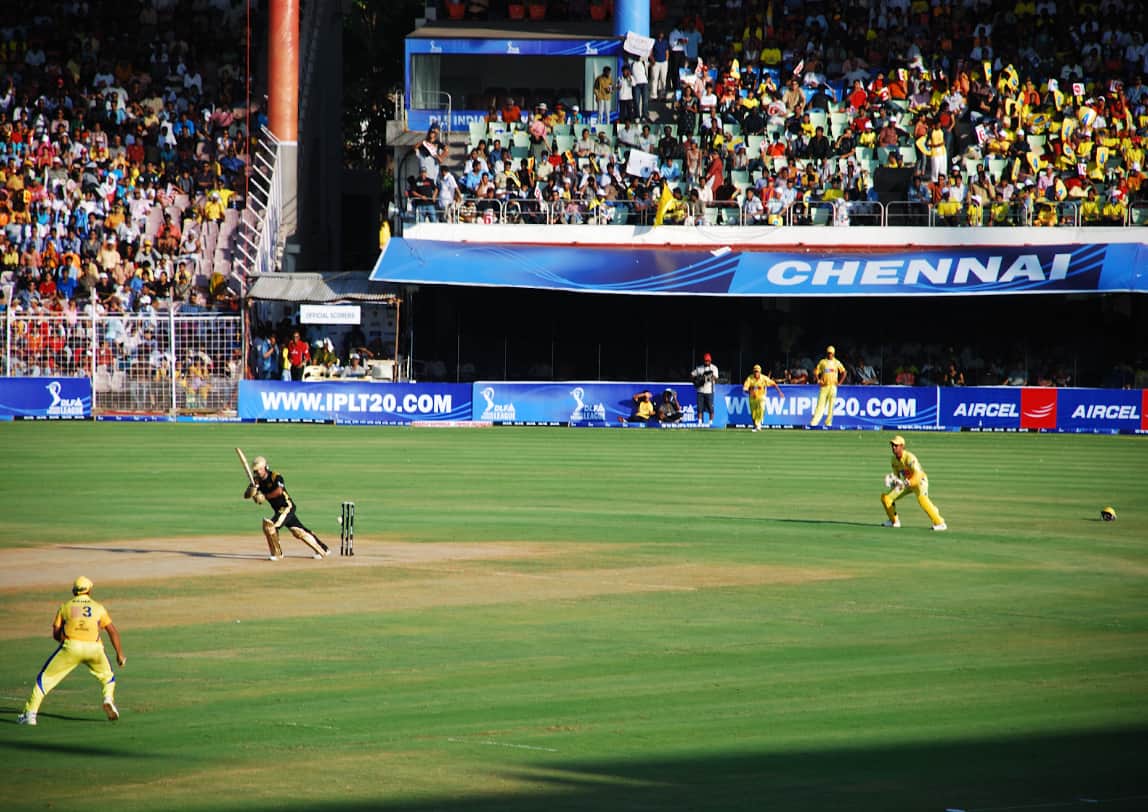
Not surprisingly, this trend coincides with the mass legalization of sports betting in the United States.
That is a huge market for mainstream gambling.
But the green lighting of sports betting in the USA also served as an invitation for other countries to loosen their own regulations.
The latter immensely benefits the IPL, which again is among the most consumed leagues on a global scale.
Yet, this isn’t the only element fueling the skyrocketing IPL valuations. Far from it. Heck, it’s not even the biggest catalyst for IPL growth.
Sports Betting has a Trickle-Down Effect on IPL Valuations
Two other factors should be considered when contemplating the valuations of IPL franchises. Let’s begin with the one that’s somewhat tied to sports betting.
Plenty of people have a tendency to cite partnerships between clubs and sportsbooks as a driving force of revenue and long-term growth. That isn’t necessarily incorrect.
Still, this is less about that infusion of revenue and more about how sports betting expands every club’s business model.
When people have a stake in the outcome of a match or big-picture event, they become more committed to following it.
That means more eyeballs on the IPL and its matches. And this, in turn, gives the IPL leverage to broker more lucrative deals with other prospective sponsors.
Most importantly, though, it paves the way for negotiating enormous broadcasting-rights deals.
This makes too much sense when you really think about it.
Advertisers are more obsessed than ever with reaching the largest, most engaged audiences possible. Never mind the niche crowds. They want the masses.
It is hard to guarantee that kind of engagement on a sustainable basis. Consumer behavior has changed so much over the past decade.
People aren’t as likely to sit down in front of the TV for any singular event. Shows and movies can be streamed at their own leisure.
Live sports are different. They remain appointment-viewing. Sure, people can watch IPL matches later on, but it’s not the same.
The outcome, at that point, has already been determined. There is a fear-of-missing-out element to live-sports consumption.
No other industry has weathered the decentralization of media consumption as well.
Ratings will be all over the place because of how many different mechanisms there are to watch matches. But they will always draw in consistent crowds.
The IPL is able to sell this dependable popularity. And rest assured, it is worth billions.
The IPL’s current broadcast rights deal runs through 2027 and is worth nearly $6.1 billion USD, with the Disney-owned Star India ($3.02 billion USD) and Viacom18 ($3.05 billion USD) splitting the bill.
This revenue impacts IPL valuations more so than money made from live attendance, the purchase of memorabilia, and even brand sponsorships.
Is There an IPL Valuation Bubble?
Believe it or not, billion-dollar broadcast rights aren’t even the biggest driver of IPL valuations. That honor belongs to the diversification of organizational business portfolios.
Put another way: IPL clubs are no longer just sports operations. They are involved in real estate. And venture capitalization. And tech. And media. And global trade. The list goes on.
As the money being funneled into IPL grows, so too does the reach of the people and groups who own.
Basically, revenue gets revenue. Add it all up, and you have the recipe for why IPL valuations are routinely rising into the billions.
Like all investment properties that enjoy a longstanding growth arc, people are wondering—if not waiting—for the franchise-valuation bubble to burst.
Answering this isn’t technically possible, but when you zoom out, it’s tough to imagine this being a bubble. And if it is, it certainly isn’t going to burst anytime soon.
Sure, annualized growth might slow. Infinitely large year-over-year bumps are not sustainable.
But even smaller annualized growth is a big deal, particularly when you’re already so valuable to begin with.
Plus, the IPL will forever benefit from a scarcity of products. Only 10 teams currently populate the IPL.
Investment entities looking to enter into cricket ownership do not have a ton of alternatives at their disposal.
If and when that changes, well, it’ll also be good for IPL valuations. Because it means global expansion.
Many believe that expanding the IPL field is a matter of when, rather than if. The buy-in fees for new clubs could be absurd—into the billions themselves.
On top of that, the addition of more teams gives the IPL leverage to negotiate even larger broadcast-rights deals.
Someday, the swift and unrelenting growth of IPL valuations might slow. But don’t think for a second they’ve already reached their peak.
They most certainly have not. And wilder still, they might not even be close to doing so.
Also Check:
About the Author
